Clear Sky Science · en
Evaluating the detection capabilities of nanopore sequencing for Borrelia burgdorferi detection in blacklegged ticks
Why Ticks and Their Germs Matter
For people who enjoy the outdoors, tiny blacklegged ticks can pose a big health risk. These hard-to-spot arachnids spread Lyme disease, an infection caused by the bacterium Borrelia burgdorferi that can lead to fever, fatigue, and long-term joint and nerve problems if not treated promptly. As ticks and the germs they carry spread into new areas, public health officials need faster, more flexible tools to see which pathogens are hiding inside local tick populations. This study tests a new DNA-sequencing approach to see whether it can help track Lyme-causing bacteria in real time and complement standard lab tests.
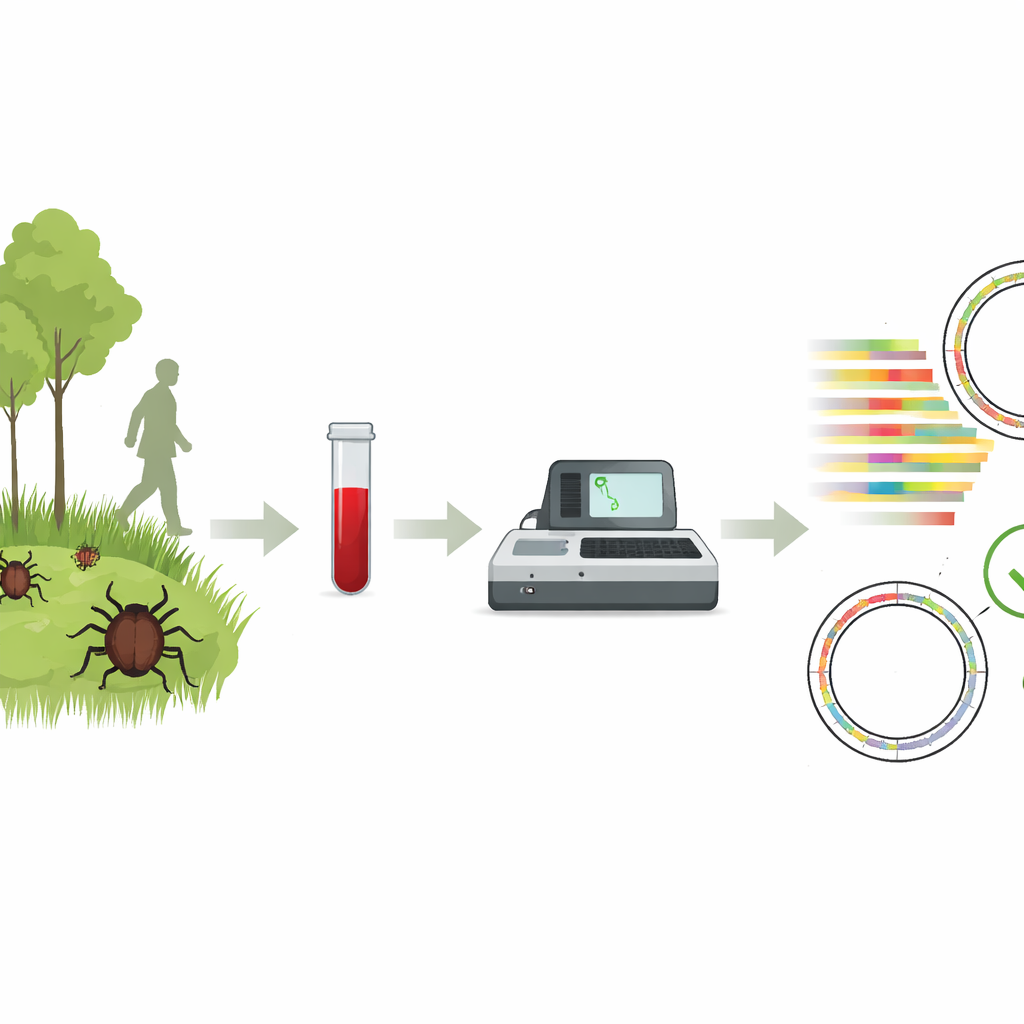
Hunting for Hidden Threats in Ticks
Blacklegged ticks are now the main source of locally acquired vector-borne disease in the United States and can carry at least seven different human pathogens. Traditional surveillance usually relies on PCR, a method that looks for specific genetic targets one at a time. PCR is sensitive but narrow: it confirms whether a known suspect is present but tells us little about other microbes that might be riding along. As tick ranges expand across the Midwest and other regions, scientists need ways to spot both familiar and emerging threats in the same experiment, without having to guess in advance which germs to test for.
A New Way to Read Tick DNA
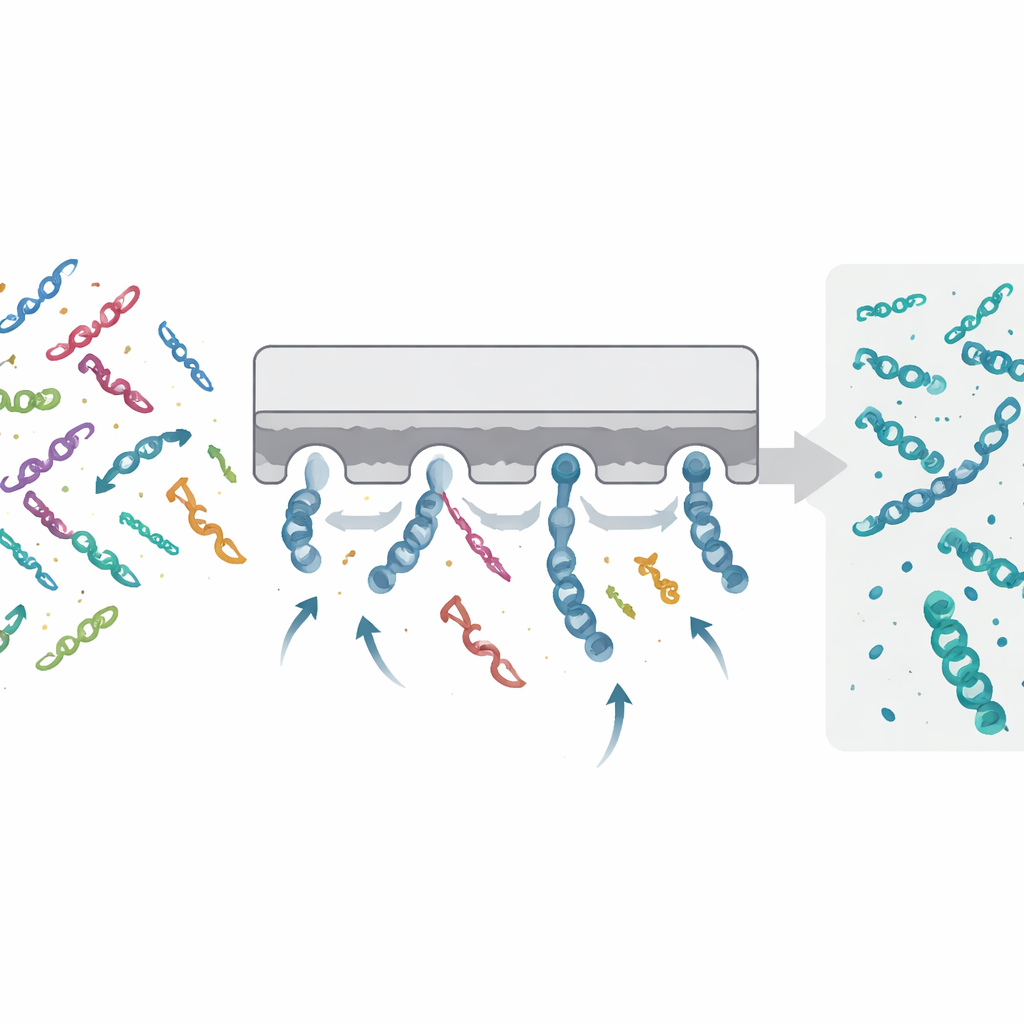
The researchers turned to Oxford Nanopore Technologies’ "nanopore adaptive sampling," a portable sequencing system that reads single DNA molecules as they thread through tiny pores. Crucially, this platform can make decisions on the fly: as each fragment begins to be read, the device rapidly checks whether it resembles any of a set of reference genomes loaded by the user. If the fragment looks like it belongs to a target pathogen, sequencing continues; if not, the system reverses the electrical current and ejects the DNA, freeing the pore for the next molecule. In this study, the team used this strategy to enrich for Borrelia burgdorferi and several other tick-borne microbes in DNA extracted from 168 wild-caught blacklegged ticks collected in Minnesota, then compared these results to conventional nested PCR for Lyme bacteria.
What the Sequencer Found Inside Ticks
Across seven sequencing runs, the nanopore system generated more than 100 billion DNA bases from multiplexed libraries, each containing 24 ticks. Only a tiny fraction of these bases matched the Lyme bacterium directly, reflecting the reality that most DNA in a tick comes from the tick itself and from harmless bacteria. When the team mapped the reads back to the Borrelia burgdorferi reference genome, they saw that PCR-positive ticks generally produced more pathogen-matching reads, longer read lengths, and genome coverage patterns that fit the low GC content of the Lyme bacterium. By applying increasingly strict quality filters and requiring a minimum number of matching reads, they were able to eliminate apparent false positives—ticks that looked positive by sequencing but negative by PCR—but this came at the cost of losing many true positives.
Balancing Certainty and Missed Cases
When the authors directly compared nanopore calls to PCR results, a clear trade-off emerged. On average, the nanopore adaptive sampling approach showed very high specificity (about 97 percent) and an excellent positive predictive value (about 98 percent), meaning that when the sequencer declared a tick infected, it was almost always correct. However, sensitivity was moderate, around 48 percent: roughly half of the ticks that were PCR-positive for Lyme bacteria were missed by the sequencing approach under the tested conditions. Stricter filtering made positive calls even more reliable but also increased the number of missed infections. The authors traced these limitations to technical issues such as short DNA fragments, heavy multiplexing of many ticks per run, and the naturally low abundance of pathogen DNA compared with tick and symbiotic bacterial DNA.
What This Means for Lyme Disease Surveillance
The study concludes that nanopore adaptive sampling is not yet ready to replace PCR for highly sensitive Lyme disease surveillance but already works well as a confirmatory and exploratory tool. Its strength lies in generating real-time genomic information on confirmed infections and co-infections, which can reveal how tick-borne pathogens are evolving and spreading. With improved DNA extraction methods, fewer samples per run, and refined data-processing rules, the authors argue that this technology could become a field-deployable first pass for scanning ticks, flagging likely infections, and uncovering unexpected microbes, while PCR or other methods provide the final word on infection status.
Citation: Cassens, J., Kipp, E.J., Frank, L.E. et al. Evaluating the detection capabilities of nanopore sequencing for Borrelia burgdorferi detection in blacklegged ticks. Sci Rep 16, 12914 (2026). https://doi.org/10.1038/s41598-026-42373-7
Keywords: Lyme disease, blacklegged ticks, nanopore sequencing, pathogen surveillance, Borrelia burgdorferi