Clear Sky Science · en
Preliminary insights into gut microbiome shifts as screening proxy for MASLD disease progression
Why your gut may reveal what is happening in your liver
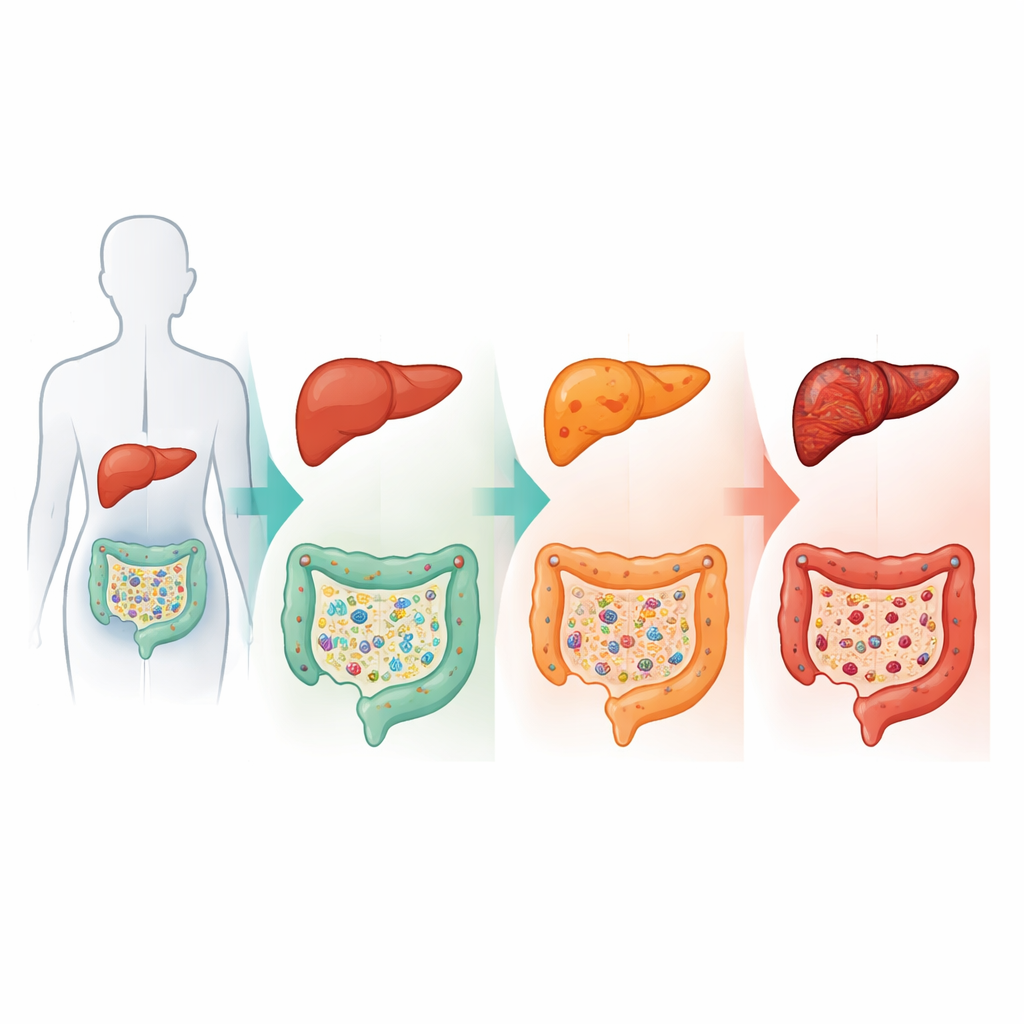
Metabolic Dysfunction-Associated Steatotic Liver Disease (MASLD), formerly known as non-alcoholic fatty liver disease, is becoming one of the most common liver problems worldwide. It ranges from simple fat build-up in liver cells to scarring, cirrhosis, and liver cancer. Because the liver is difficult to examine directly, doctors rely on blood tests, scans, and sometimes painful biopsies. This study asks a simple but powerful question: can changes in the trillions of microbes living in our gut serve as an early, non-invasive warning system for how far MASLD has progressed?
From fatty liver to cancer: a rising health concern
MASLD is strongly linked to obesity, type 2 diabetes, and other metabolic disorders, but it can also affect people who are not overweight. The disease spans several stages: simple fat accumulation without clear damage, an inflamed stage called steatohepatitis, progressive scarring (fibrosis), and finally cirrhosis and liver cancer. Today, the most reliable way to judge how far the disease has advanced is still liver biopsy, an invasive procedure that samples a tiny piece of tissue through a needle. Non-invasive scores based on blood tests and ultrasound help, but they are best at identifying severe cases, not early or intermediate stages. Meanwhile, a growing body of research suggests that imbalances in the gut microbiome—often called dysbiosis—may contribute to liver injury through the gut–liver connection.
Peeking into the microbiome in patients with liver disease
In this pilot study from a hospital in Catalonia, Spain, researchers recruited 46 people with MASLD at different disease stages and 8 individuals without liver disease. Patients were grouped into simple fat accumulation without inflammation, early steatohepatitis with little or no scarring, steatohepatitis with advanced fibrosis, and a small group with liver cancer on top of cirrhosis. All participants provided stool samples and clinical data. The team used two main approaches: targeted DNA tests to count specific bacteria, and high-throughput DNA sequencing of a bacterial marker gene (16S rRNA) to map the broader community of microbes living in the gut.
When the liver worsens, gut life thins out
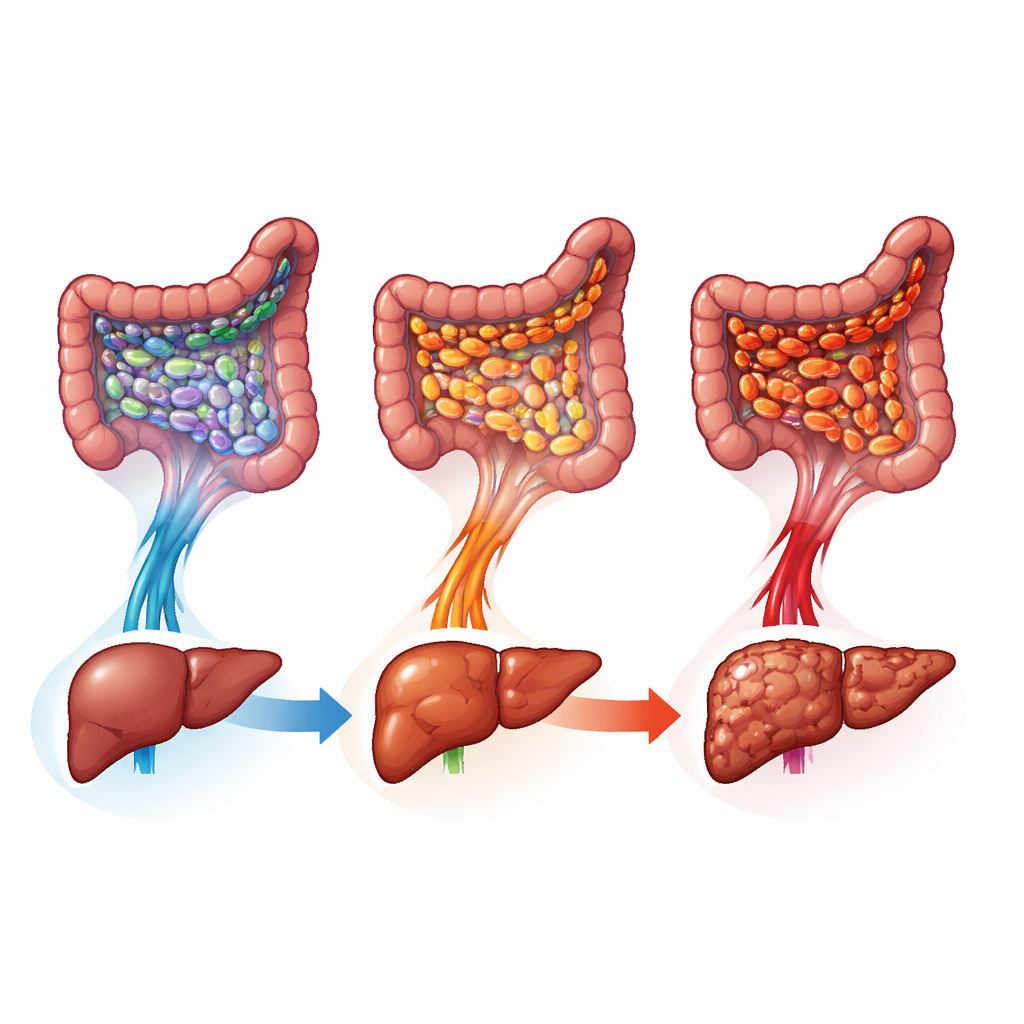
The sequencing results revealed clear patterns. Healthy controls had the richest and most diverse gut microbiomes. As MASLD became more severe, overall microbial richness and diversity generally declined, especially in patients with significant fibrosis. Even though the very small number of liver cancer cases limited statistical power, these individuals tended to have the poorest microbial diversity. Certain beneficial bacteria, including Faecalibacterium prausnitzii, known for producing anti-inflammatory molecules, decreased in abundance as disease advanced. In contrast, potentially less favorable groups such as Escherichia coli tended to increase. The mix of dominant genera shifted from a balanced profile in healthy people toward communities more heavily dominated by a handful of groups in those with advanced disease.
Can gut patterns help sort patients without a biopsy?
To test whether these microbial changes could help distinguish between clinical groups, the researchers applied a statistical method designed specifically for compositional microbiome data. This method identifies combinations of bacterial taxa whose relative balance best separates two conditions—for example, healthy versus early disease, or early versus more advanced steatohepatitis. The study did find bacterial “signatures” that could modestly tell some groups apart, especially between healthy individuals and those with simple fat accumulation, and between adjacent disease stages. However, because this was a small pilot study, especially for the most advanced stages, the ability to predict disease status from the microbiome alone was limited.
What this means for patients and doctors
The authors conclude that gut microbiome changes track, at least in broad strokes, the worsening of MASLD—from fat accumulation to scarring and cancer—and that stool-based microbial profiles hold promise as non-invasive companions to existing blood tests and imaging. While the current work is too small to support a clinical test on its own, it strengthens the idea that the gut community reflects the health of the liver. With larger, multi-center studies that also integrate microbial metabolites and human metabolic markers, it may become possible to screen and stratify MASLD patients using nothing more than a stool sample, guiding who truly needs invasive procedures and who can be safely monitored over time.
Citation: Dupré, M.L., Buxó, M., Virolés, S. et al. Preliminary insights into gut microbiome shifts as screening proxy for MASLD disease progression. Sci Rep 16, 13493 (2026). https://doi.org/10.1038/s41598-026-42368-4
Keywords: gut microbiome, fatty liver disease, MASLD, liver fibrosis, noninvasive diagnostics