Clear Sky Science · en
Antibodies induced by antigen-containing liposomes as immunogens preferentially recognize their antigens present on lipid vesicles
Targeting Tiny Messengers
Our bodies constantly release minuscule bubbles made of fat, called extracellular vesicles, that ferry signals between cells and can reveal the presence of diseases such as cancer. Detecting what sits on the surface of these bubbles is difficult, yet doing so could improve diagnostics and drug delivery. This study explores a clever way to train the immune system to make antibodies that are especially good at spotting specific fat-linked sugars on the surface of both artificial bubbles and the natural vesicles shed by cancer cells.
Artificial Bubbles as Training Dummies
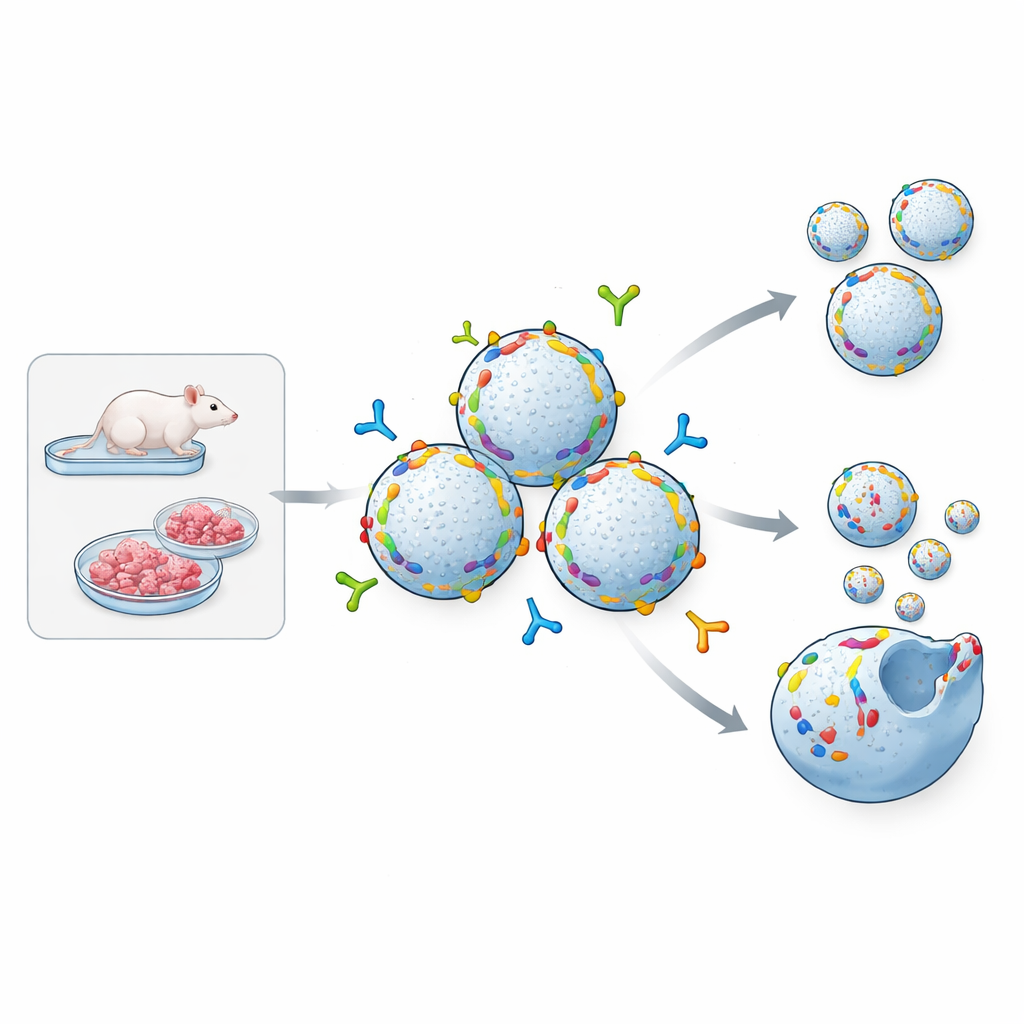
The researchers used liposomes—tiny fat-based spheres already familiar from vaccine and drug delivery research—as training dummies for the immune system. They decorated these liposomes with special fat–sugar molecules called glycosphingolipids, which normally sit in cell membranes and change in characteristic ways during disease or cell development. By injecting mice with liposomes carrying these molecules, the team encouraged the animals’ immune systems to make antibodies tailored to the exact way the sugars are displayed in a lipid membrane, closely mimicking how they appear on cells and the vesicles those cells release.
Measuring How Well Antibodies See
To test how effectively the antibodies recognized their targets, the authors built a sensitive flow cytometry assay capable of detecting individual liposomes and vesicles about a thousandth of a millimeter across. They mixed the liposomes with different monoclonal antibodies and measured how strongly each antibody bound. Antibodies that had been raised using glycosphingolipid-containing liposomes showed strikingly strong signals when their matching sugar was present on liposomes, outperforming antibodies that had been generated using whole cells or protein carriers. This suggested that presenting the antigen on a simple lipid bubble focuses the immune response on the desired sugar structure.
From Model Antigen to Cancer Signals
The team then turned to Globo-H, a well-known sugar–lipid molecule found on several cancer types, including breast cancer. Mice were repeatedly immunized with liposomes carrying Globo-H, and their blood was examined. The researchers detected several classes of antibodies that bound strongly to Globo-H on liposomes, particularly of the IgG3 and IgM types. From one mouse, they isolated individual antibody-producing cells and established two new monoclonal antibodies that recognized Globo-H with high specificity and sensitivity when it was displayed on liposomes.
Spotting Vesicles Shed by Cancer Cells
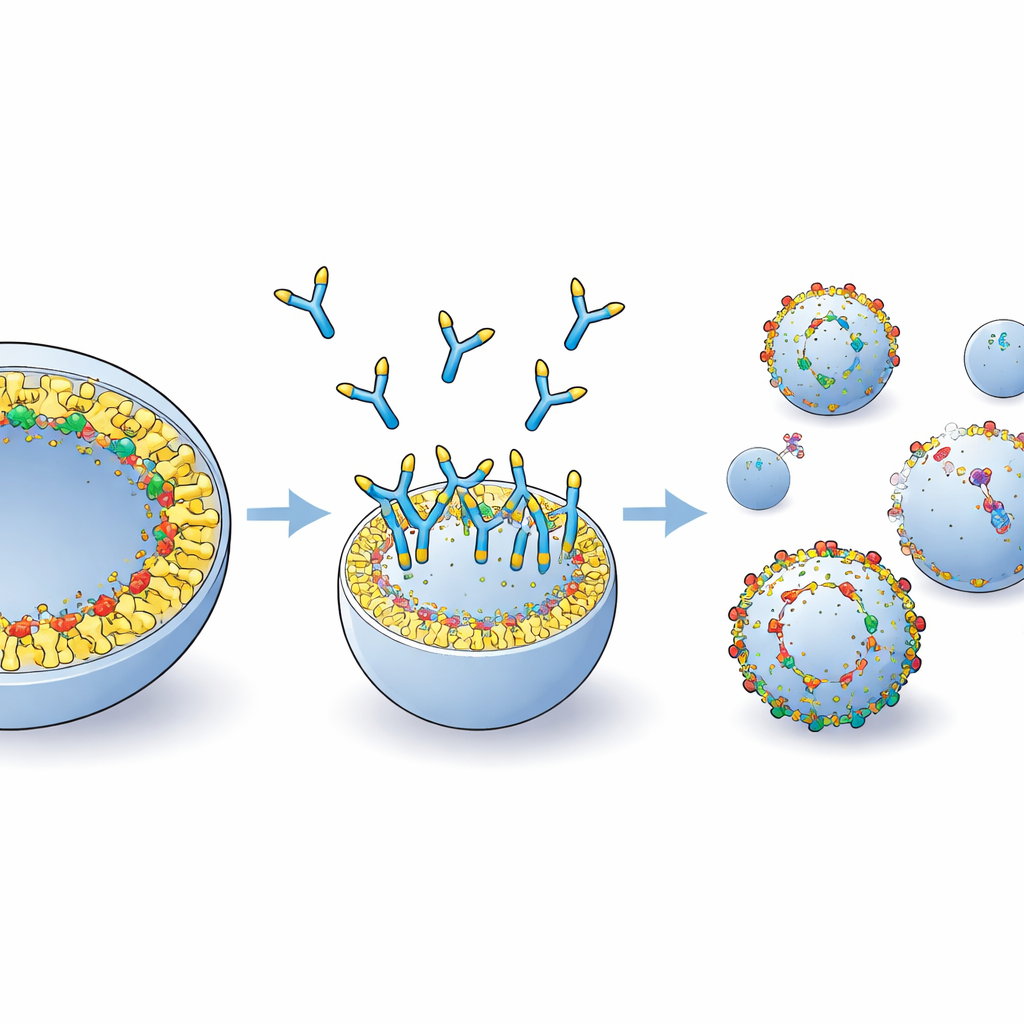
Next, the investigators asked whether these antibodies could find Globo-H on real biological material. They isolated extracellular vesicles released by human breast cancer cells that naturally express Globo-H, as well as vesicles from another human tumor cell line known for a related marker. Flow cytometry showed that the newly generated antibodies, especially those induced by liposome-based immunization, bound strongly to Globo-H on these vesicles. Interestingly, some antibodies that barely recognized the cancer cells themselves reacted robustly with vesicles, hinting that the composition and organization of sugars and lipids on vesicles can differ from that on the cell surface. The study also revealed that antibodies raised against liposome-displayed sugars could detect other glycosphingolipid precursors that are abundant inside cells but become exposed on vesicles, offering additional diagnostic handles.
New Tools for Diagnostics and Drug Design
Overall, the work shows that using antigen-decorated liposomes as immunization tools is a powerful way to generate antibodies that excel at recognizing the same molecules on lipid vesicles, including the natural vesicles secreted by tumor cells. For non-specialists, this means scientists now have a more precise method to craft antibodies that can home in on subtle sugar patterns carried on tiny membrane bubbles in blood or other body fluids. Such antibodies could help monitor the quality of liposome-based medicines, improve minimally invasive cancer tests that analyze circulating vesicles, and deepen our understanding of how the immune system reads the molecular language written on cell membranes.
Citation: Okuda, T., Maruyama, M. Antibodies induced by antigen-containing liposomes as immunogens preferentially recognize their antigens present on lipid vesicles. Sci Rep 16, 13161 (2026). https://doi.org/10.1038/s41598-026-42358-6
Keywords: liposomes, glycosphingolipids, extracellular vesicles, cancer biomarkers, monoclonal antibodies