Clear Sky Science · en
Association between β-blocker use and outcomes in patients with heart failure and chronic obstructive pulmonary disease: a retrospective cohort study
Why this matters for people with heart and lung problems
Many older adults live with both a weak heart and damaged lungs. Doctors know that certain heart medicines called beta-blockers can help people with heart failure live longer, but they have long worried that these drugs might make breathing worse for those with chronic obstructive pulmonary disease (COPD). This study looked at real-world data from intensive care units (ICUs) to ask a simple but crucial question: for people who have both heart failure and COPD and are sick enough to be in the ICU, does taking a beta-blocker help or hurt their chances of survival?
Two serious illnesses in the same patient
Heart failure and COPD are each common long-term diseases, and they often appear together in the same person. When that happens, patients have more hospital stays, more complicated care, and a higher risk of death than if they had only one of the conditions. In the ICU, where patients are already very sick and may need breathing machines or drugs to support blood pressure, these twin problems make treatment decisions especially tricky. One of the toughest choices is whether to use beta-blockers, which slow the heart and protect it, but have long been feared to tighten the airways in fragile lungs.
Looking back at ICU records for answers
To explore this dilemma, the researchers used the MIMIC-IV database, a large collection of detailed hospital records from more than 70,000 ICU patients treated at a Boston hospital between 2008 and 2019. From this resource, they identified 1,386 adults who had both diagnosed heart failure and COPD and stayed in the ICU for at least 24 hours. They then divided these patients into two groups: those who received any beta-blocker while in the ICU and those who did not. Because patients given beta-blockers might differ in important ways from those who were not, the team used a matching technique to pair up patients with similar ages, vital signs, lab results, and other illnesses, creating 417 carefully balanced pairs for fair comparison. 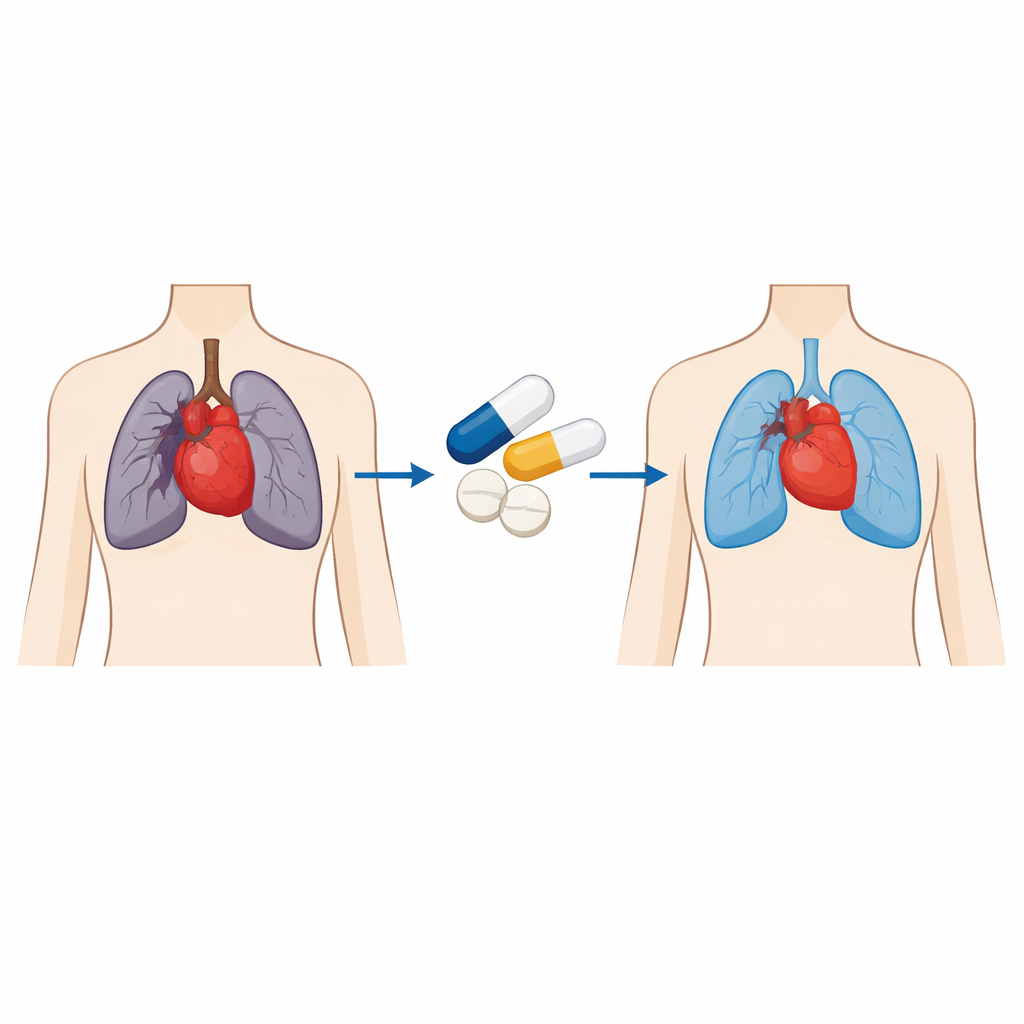
Survival gains but longer hospital stays
After matching, people who received beta-blockers in the ICU were less likely to die in the short term than those who did not. Within 28 days of ICU admission, deaths occurred in about 18 out of 100 beta-blocker patients versus 24 out of 100 patients who did not get the drugs. The survival advantage continued when the researchers looked 60 and 90 days out, and the pattern held up across several different statistical checks. At the same time, patients who received beta-blockers tended to stay in the ICU and in the hospital a bit longer, suggesting they survived the most dangerous phase of their illness but needed more time to recover. Importantly, the study did not find signs that beta-blockers were causing obvious harm to the lungs on a large scale.
Special benefit for the sickest patients
The team also examined how the effect of beta-blockers differed among subgroups of patients. One striking finding involved people who needed mechanical ventilation, meaning a breathing machine was assisting their lungs. In this very fragile group, those who received beta-blockers had a much lower risk of death over 28 days than similar patients who did not receive them. In contrast, among patients who did not need a breathing machine, the benefit of beta-blockers was smaller and not clearly different from no treatment. The researchers caution that these patterns could partly reflect differences in how sick patients were, but they suggest that stabilizing the heart during severe breathing crises may be particularly helpful. 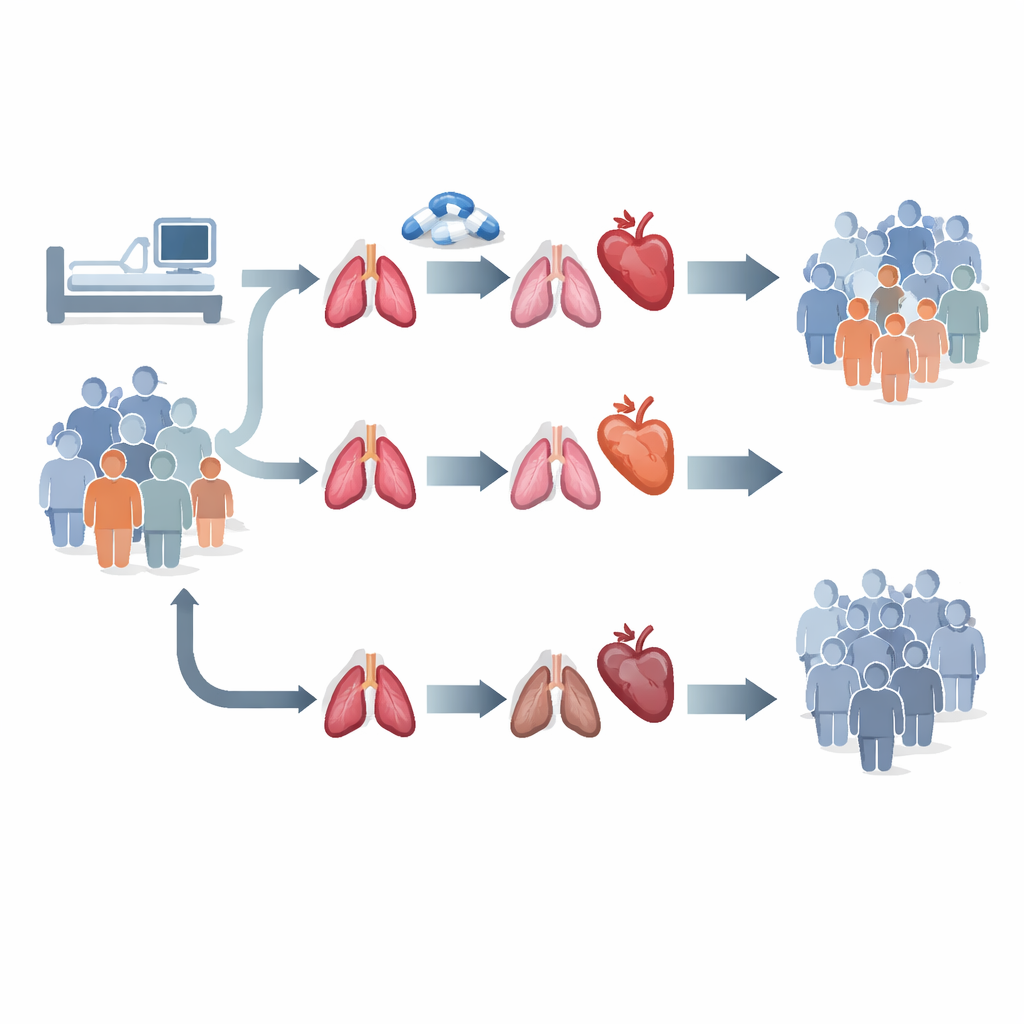
What this means for patients and doctors
Overall, this study suggests that, in a real-world ICU setting, beta-blocker treatment was linked to better short-term survival for patients with both heart failure and COPD, even though it did not shorten hospital stays. Because the research is observational rather than a randomized trial, it cannot prove cause and effect, and some hidden differences between treated and untreated patients may still influence the results. Still, the findings support the idea that fears of beta-blockers in people with COPD may be overstated, especially when there is a strong heart-related reason to use them. For patients and families, the message is that these medications, when carefully managed by ICU teams, may offer meaningful protection in some of the most dangerous moments of combined heart and lung disease.
Citation: Wang, G., Shang, D., Liu, T. et al. Association between β-blocker use and outcomes in patients with heart failure and chronic obstructive pulmonary disease: a retrospective cohort study. Sci Rep 16, 13573 (2026). https://doi.org/10.1038/s41598-026-42291-8
Keywords: beta-blockers, heart failure, COPD, intensive care, mortality