Clear Sky Science · en
Trimester-specific lipid profile reference intervals in healthy pregnant women; A cross-sectional study at Debre Markos comprehensive specialized hospital, 2022/2023
Why This Matters for Expecting Families
Pregnancy checkups often include blood tests, but most people never hear how the “normal ranges” used to judge those results are chosen. This study from Northwest Ethiopia focuses on fats in the blood—cholesterol and triglycerides—in healthy pregnant women, and shows that these ranges shift across the three trimesters. The findings suggest that using one-size-fits-all values, or values borrowed from other countries or from non-pregnant adults, can mislead doctors about what is truly normal in pregnancy.

How Doctors Decide What Is Normal
When a lab report says that a result is high or low, it is being compared to a reference interval—a range built from test results in many healthy people. Typically, the middle 95 percent of those values are treated as normal. But these ranges are not universal. They can differ by age, sex, ethnicity, altitude, lifestyle, and even by the particular machine used to run the test. International guidelines now stress that each community should, whenever possible, define its own normal ranges rather than relying on numbers developed in distant populations that may not share the same environment or biology.
Pregnancy and Changing Blood Fats
Pregnancy transforms the mother’s body to support the growing baby. Hormones such as estrogen and progesterone rise sharply, the placenta becomes a major organ, and the mother’s metabolism shifts to provide energy and building blocks for the fetus. One key adaptation involves fats in the blood. As pregnancy progresses, the liver produces more cholesterol and other blood fats; tissues break down stored fat more readily; and blood fats tend to rise, especially in the third trimester. These shifts are part of a normal strategy to stockpile fuel for the baby and prepare the mother for birth and breastfeeding, but they can easily be mistaken for disease if judged against ranges from non-pregnant adults.
The Ethiopian Study and What Was Measured
To capture what healthy looks like in their setting, the researchers studied 459 apparently healthy pregnant women attending antenatal care at Debre Markos Comprehensive Specialized Hospital between early 2022 and mid-2023. Women with infections such as HIV, hepatitis, or malaria, or with chronic conditions like diabetes, kidney, liver, or heart disease were carefully screened out. After an overnight fast, blood was drawn and analyzed on a modern automated chemistry machine for four standard parts of the lipid profile: total cholesterol, triglycerides, high-density lipoprotein (often called the "good" cholesterol), and low-density lipoprotein (often called the "bad" cholesterol). The women were grouped by trimester based on gestational age, and the team used recommended non-parametric statistics to define the middle 95 percent range for each fat in each trimester.
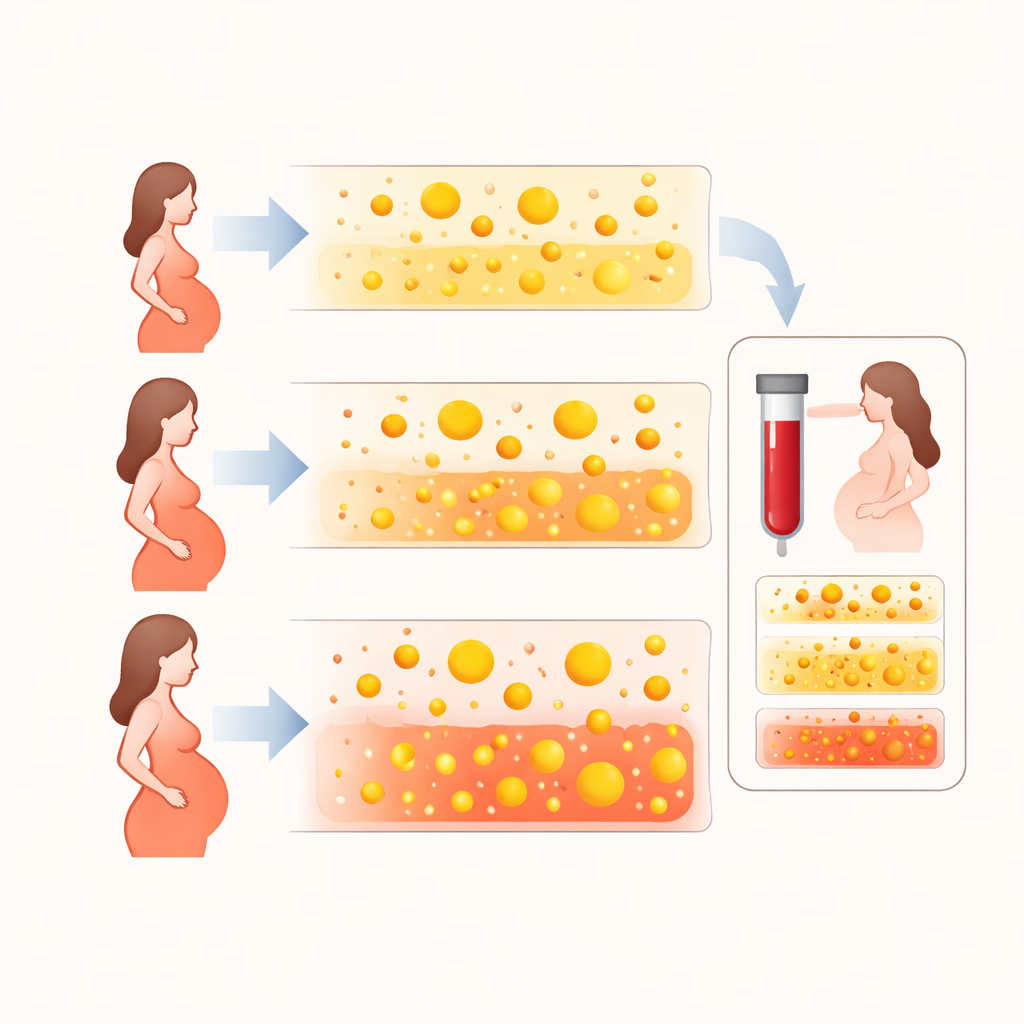
How Blood Fats Shift Across the Three Trimesters
The study showed that all four blood fat measures changed noticeably as pregnancy advanced. On average, total cholesterol and triglycerides climbed from the first to the third trimester, with the highest values appearing late in pregnancy. High-density lipoprotein tended to be higher early in pregnancy and somewhat lower by the third trimester, while low-density lipoprotein generally rose from the first to later trimesters. Statistical tests confirmed that many of these differences between one trimester and another were unlikely to be due to chance alone. Equally important, the newly established trimester-specific ranges did not match the generic reference intervals supplied by the test kit manufacturers, which were being used in the hospital’s laboratory.
Why Local and Trimester-Specific Ranges Matter
Because the new ranges are both trimester-specific and tailored to this Ethiopian population, they offer a more realistic picture of healthy pregnancy in that setting. Using inappropriate ranges could cause doctors to label normal pregnancy changes as abnormal, or to overlook genuine problems masked by broad, non-pregnant reference values. The authors therefore recommend that laboratories and clinicians adopt locally derived, trimester-based reference intervals for lipid tests in pregnancy. Doing so can sharpen diagnosis, guide better treatment decisions, and ultimately improve care for mothers and babies by aligning medical judgments with the actual biology of their community.
Citation: Tamir, W., Abebaw, A., Atnaf, A. et al. Trimester-specific lipid profile reference intervals in healthy pregnant women; A cross-sectional study at Debre Markos comprehensive specialized hospital, 2022/2023. Sci Rep 16, 12507 (2026). https://doi.org/10.1038/s41598-026-42128-4
Keywords: pregnancy lipid levels, reference intervals, maternal health, Ethiopia clinical chemistry, prenatal laboratory testing