Clear Sky Science · en
Prevalence and risk factors of headaches in middle-aged and older Chinese adults with hypertension: a cross-sectional study based on CHARLS
Why Headaches and High Blood Pressure Matter
Many people think of high blood pressure as a “silent” problem, but for a surprising number of middle-aged and older adults, it comes with a very loud companion: frequent headaches. This study looks at Chinese adults with high blood pressure to find out how common headaches really are in this group, and what everyday factors—like sleep, home environment, and general well-being—may make those headaches more likely. The findings point to simple, practical changes that could help reduce pain and improve quality of life for millions of people.
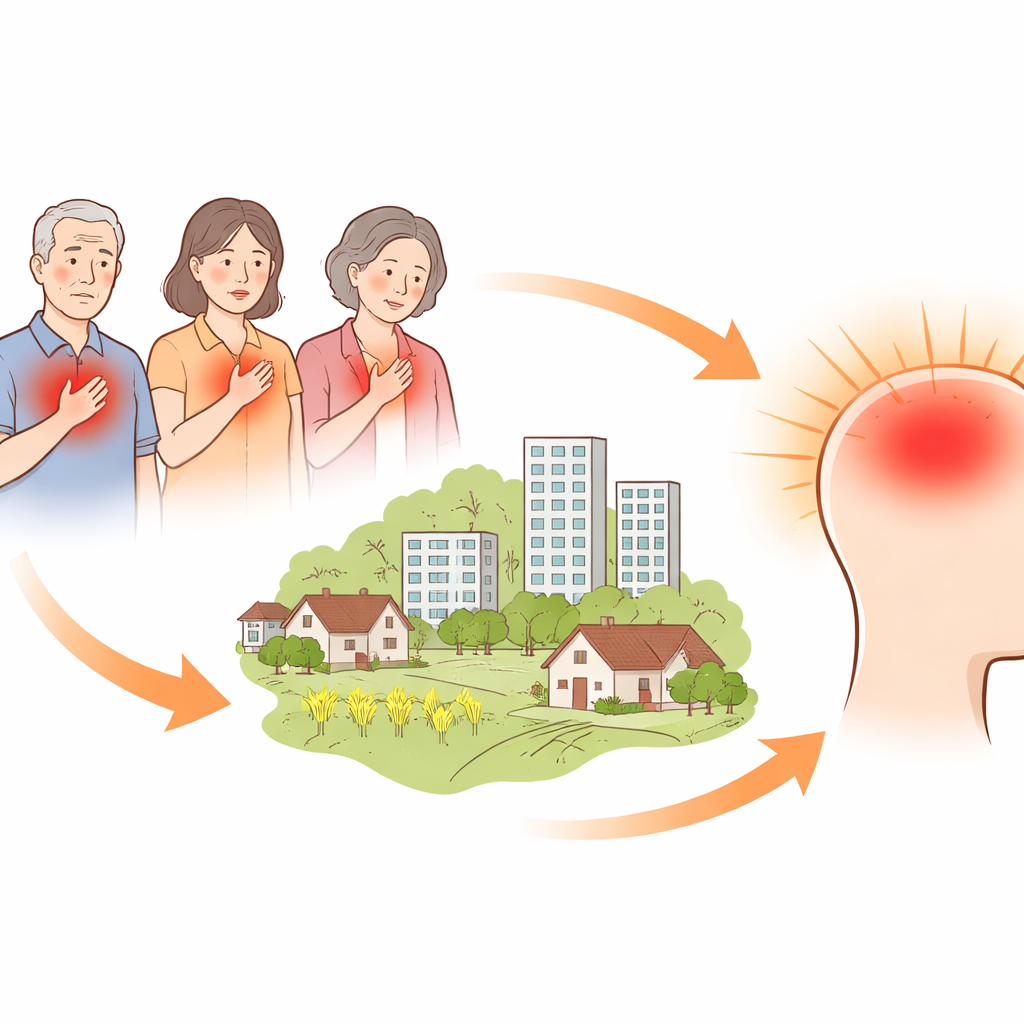
Who Was Studied and What Was Measured
The researchers used data from a large national survey in China called the China Health and Retirement Longitudinal Study, which regularly interviews adults aged 45 and older across the country. From nearly twenty thousand participants, they focused on 2,186 people who said a doctor had told them they had high blood pressure. These participants answered questions about whether they had pain in different parts of the body, including the head, and provided detailed information about their health, habits, family situation, and living conditions. Instead of looking at just one cause, the team used a “health ecology” approach, which views health as the result of many interacting layers—from personal traits and behaviors to the home and wider environment.
How Common Are Headaches in This Group?
The study found that almost one in three middle-aged and older adults with high blood pressure—32 percent—reported having headaches. Women were much more likely to report headaches than men, and people who rated their own health as only fair or poor had headaches far more often than those who felt their health was good. Interestingly, within this group of patients with high blood pressure, younger participants were more likely to say they had headaches than older ones, suggesting that headache complaints may fade with age or be overshadowed by other health problems later in life.
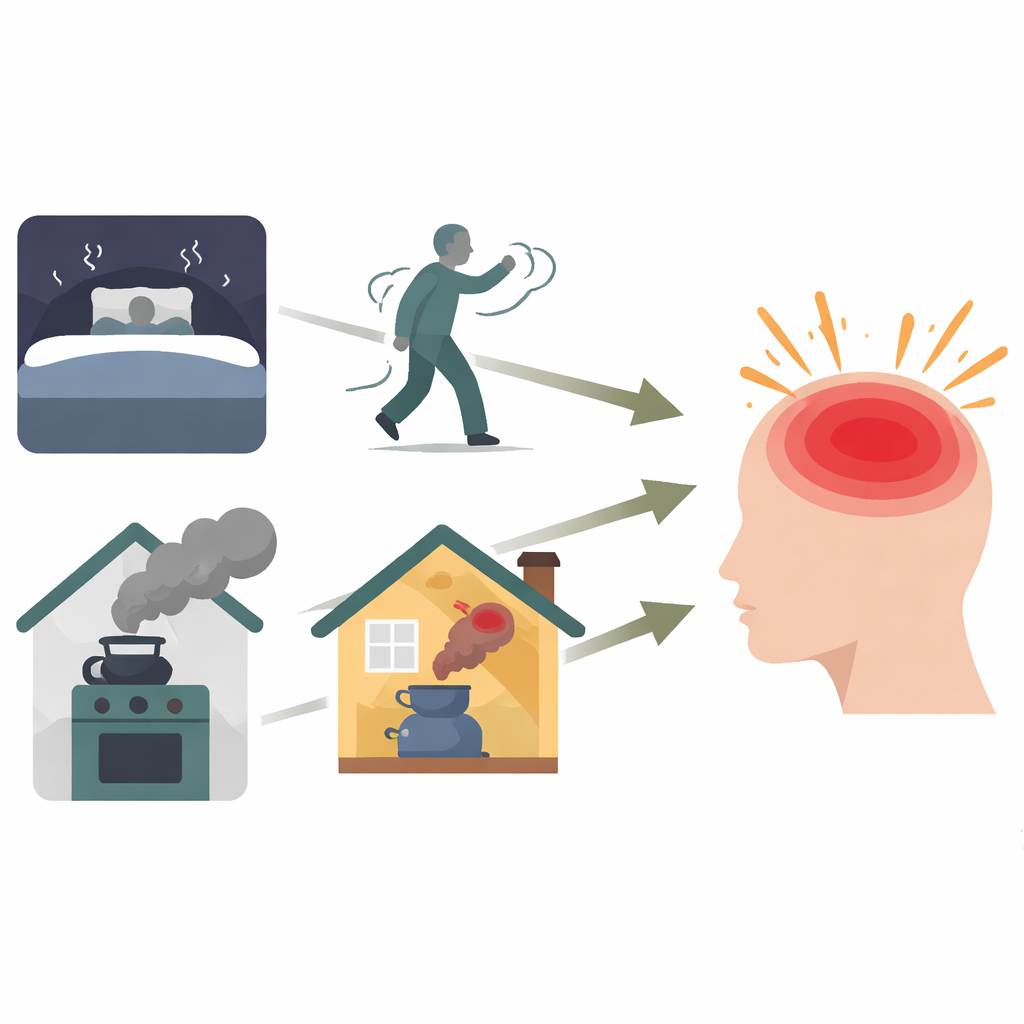
Sleep, Falls, and Home Air as Hidden Triggers
Several everyday experiences turned out to be closely linked with headaches. People who slept fewer than seven hours a night, or who said they slept poorly, had higher odds of headaches than those who got seven to nine hours of decent sleep. A history of falling was also tied to more frequent headaches, which may reflect lingering effects of mild head injury or the stress and fear that often follow a fall. The environment inside the home mattered too: those who cooked with smoky or otherwise “non-clean” fuels—such as certain types of coal or wood—were more likely to report headaches than people using cleaner fuels. These patterns held even after accounting for many other health conditions and lifestyle factors.
Differences Between City and Countryside
Where people lived shaped how strongly some of these factors were linked to headaches. Among rural residents, poor self-rated health, a history of falls, and the use of non-clean cooking fuels were especially powerful signals of headache risk. The researchers suggest that this may be because people in rural areas often have less access to regular checkups and organized care for long-term illnesses. In that setting, simply asking someone how they feel overall may capture not just mood but also undiagnosed or poorly controlled health problems, making self-rated health a particularly telling indicator.
What This Means for Everyday Life
For middle-aged and older adults living with high blood pressure, this study shows that headaches are far from a minor annoyance. They are common and closely tied to a mix of personal and environmental factors: being female, feeling generally unwell, sleeping too little or too poorly, having experienced a fall, and breathing smoke from dirty cooking fuels. At the same time, older age within this group was linked to fewer reported headaches, perhaps because pain is underreported or overshadowed by other conditions later in life. Taken together, the findings suggest that better sleep habits, fall prevention, cleaner household fuels, and closer attention to how people rate their own health could all play a role in easing headache burden in this vulnerable population.
Citation: Wang, W., Wu, Y., Xian, X. et al. Prevalence and risk factors of headaches in middle-aged and older Chinese adults with hypertension: a cross-sectional study based on CHARLS. Sci Rep 16, 12421 (2026). https://doi.org/10.1038/s41598-026-42124-8
Keywords: hypertension, headache, older adults, sleep problems, household air pollution