Clear Sky Science · en
Smart technologies for enhancing greenhouse production management under climate and economic challenges
Feeding People in a Changing Climate
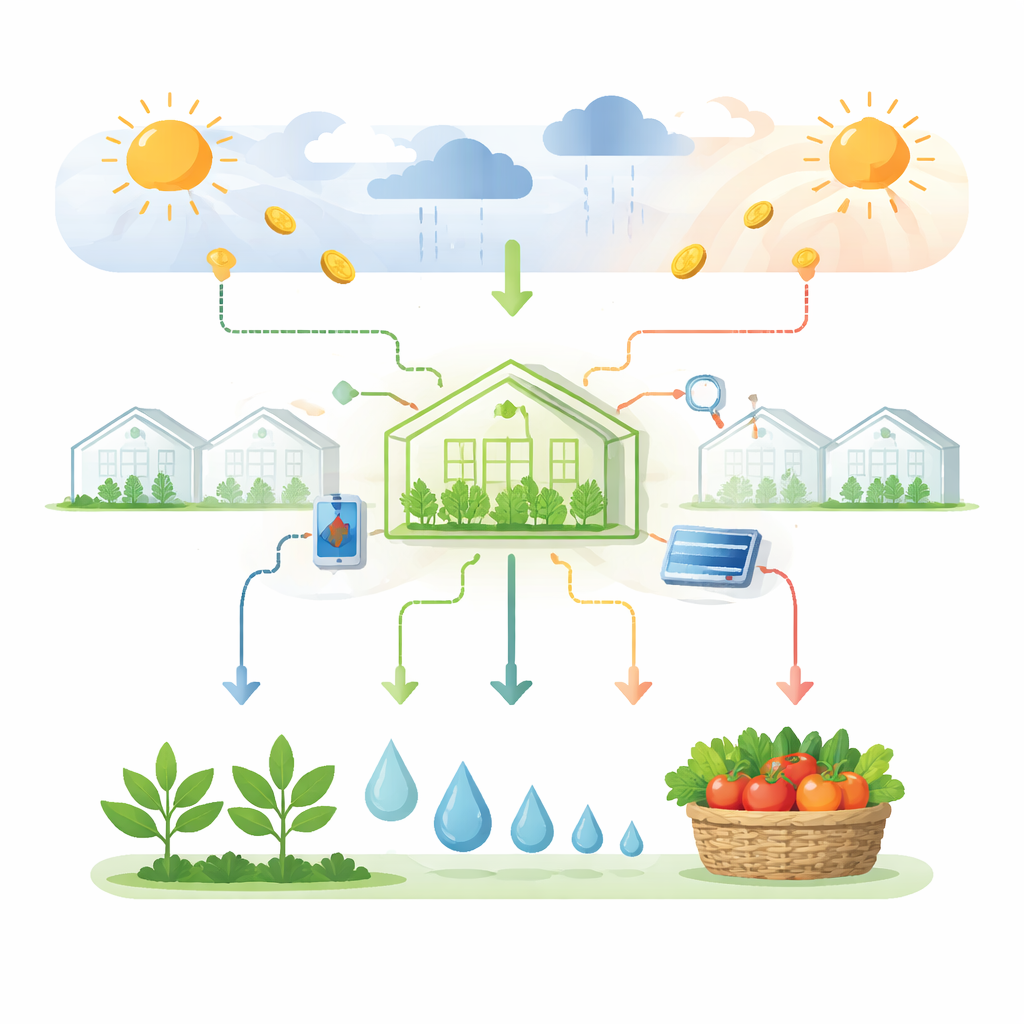
As the planet warms and weather grows more unpredictable, growing enough food becomes harder, especially in dry regions. Greenhouses offer a way to shield crops from heat waves, droughts, and storms, but building more greenhouses alone is not enough. This study explores how "smart" tools—such as sensors and automated controls—can help greenhouse farmers use water, energy, and money more wisely, so they can produce more food while reducing environmental damage.
Why Smarter Greenhouses Matter
The researchers focus on Tehran province in Iran, a dry to semi-dry region where greenhouse farming is expanding rapidly to strengthen food security. Greenhouses there already produce over a million tons of vegetables and tens of millions of flowers each year. Yet many of these facilities are run with traditional methods: manual heating and cooling, basic irrigation, and little attention to post-harvest handling. In a world facing both climate stress and rising food demand, the authors argue that such production must be managed more intelligently to avoid wasting scarce water, energy, and money.
What the Study Measured
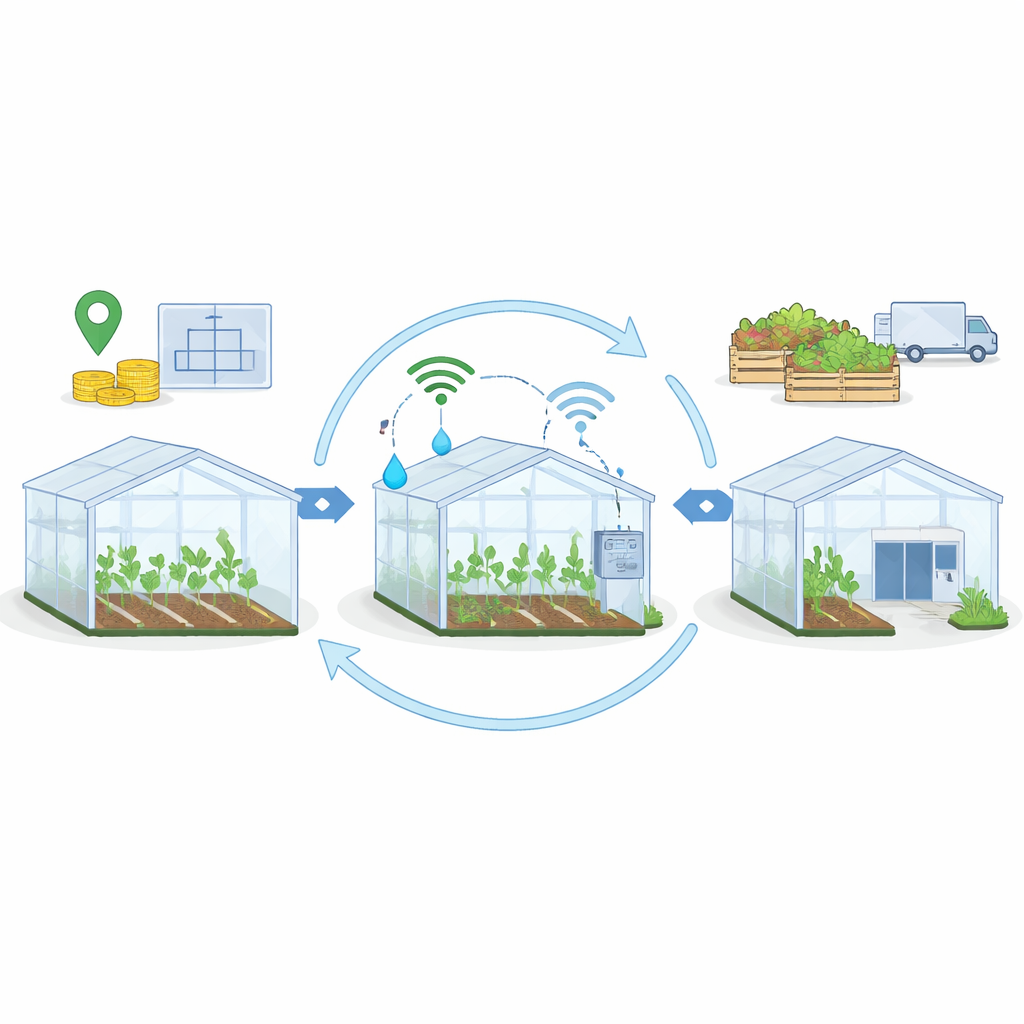
To understand what drives good greenhouse management, the team surveyed 141 greenhouse managers. They built a "Good Greenhouse Management Practices" index that scores how well each greenhouse handles three stages: before planting (planning, design, training, financing), during production (watering, fertilizing, pest control, temperature and light), and after harvest (storage, packaging, transport, and financial tracking). They also measured five broad influences: local climate conditions, economic situation, the technical quality of the greenhouse structures, the presence of rules and standards, and the use of smart technologies such as sensors, control systems, and automation.
How Well Greenhouses Are Managed Today
The results show a mixed picture. Greenhouse managers in Tehran do reasonably well at the early stage: choosing locations, studying the local climate, and investing in basic equipment earn average scores above 7 out of 10. Management quality drops during crop production, with weaker performance in fertilization, pest control, and especially in adding carbon dioxide to boost growth. The weakest area by far is what happens after harvest. Storage, packaging, transport, and financial management all score below 5, pulling the overall average management score down to about 5.85 out of 10. Only around 30 percent of greenhouses reach what the authors classify as a satisfactory level of management; the rest are moderate or weak.
How Climate, Money, and Technology Interact
Using a statistical technique that traces direct and indirect influences, the study shows that smart technologies have the strongest direct impact on better management. Greenhouses that use sensors, automated climate control, and smarter pest and water management tend to handle all stages—from planning to post-harvest—more effectively. However, the decision to invest in these tools is strongly shaped by climate and economics. Harsher or more variable climates push growers toward better structures and technology, which in turn improve management. Economic conditions do not automatically improve management by themselves; instead, they matter because they make it easier to buy equipment, access loans and subsidies, and comply with regulations and standards that encourage good practice.
What This Means for Future Food
For non-specialists, the core message is clear: simply building more greenhouses is not a guaranteed path to secure food supplies in a warming world. Smart technologies, backed by supportive economic policies and sensible rules, are key to making greenhouses productive and sustainable. The study suggests that governments and planners should help farmers overcome the high upfront costs of sensors and automation, through credit, subsidies, or incentives, and should pay special attention to the often-neglected post-harvest stage, where much value is currently lost. When climate challenges, good design, clear standards, and smart tools come together, greenhouses can produce more food with less waste of precious water and energy.
Citation: Barati, A.A., Zandi Nezami, M. & Shabanali Fami, H. Smart technologies for enhancing greenhouse production management under climate and economic challenges. Sci Rep 16, 13199 (2026). https://doi.org/10.1038/s41598-026-42106-w
Keywords: smart greenhouses, climate-smart agriculture, greenhouse management, precision farming, sustainable food production