Clear Sky Science · en
Counterproductive: coinfection of a water flea by a fungus and a microsporidium reduces the reproductive outputs of all parties
Why tiny water fleas matter
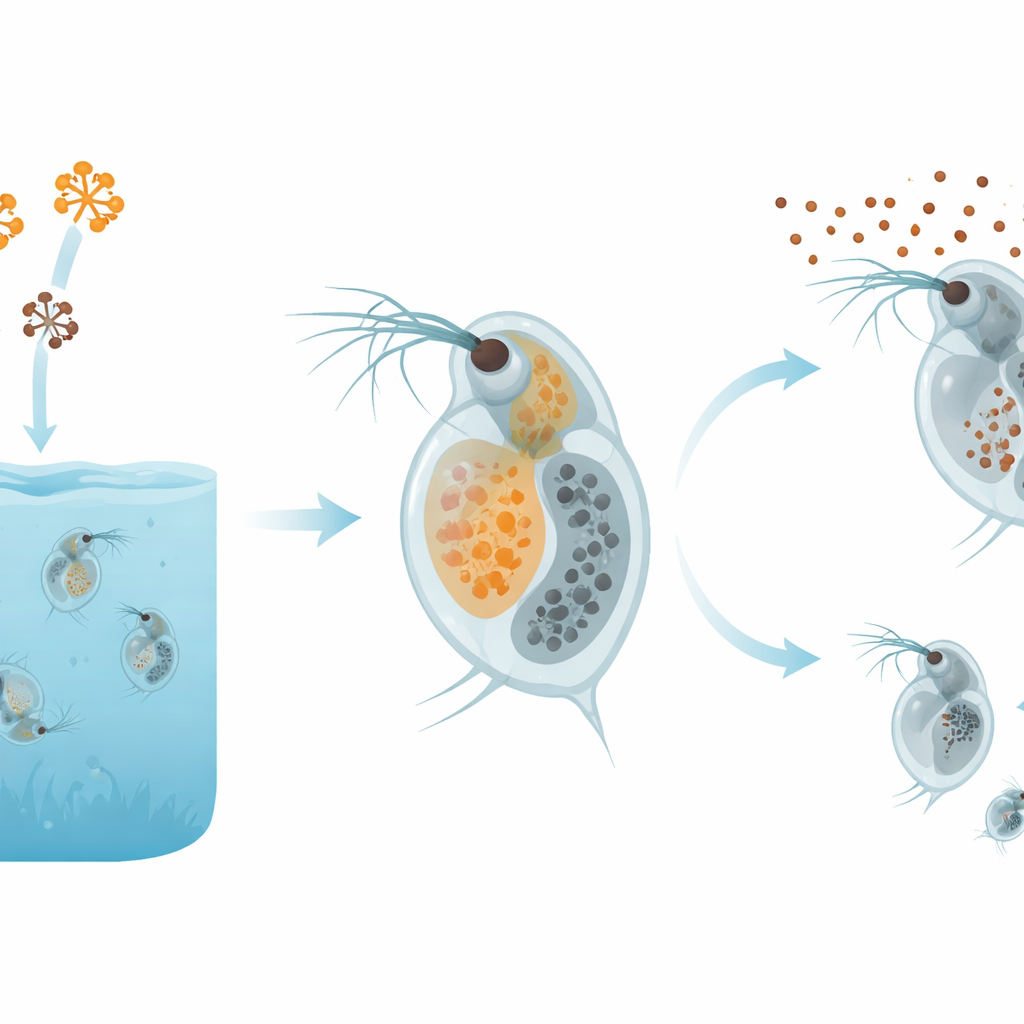
In ponds and lakes around the world, microscopic dramas unfold that can ripple through entire ecosystems. This study follows the fate of a small freshwater animal, the water flea Daphnia magna, when it is attacked not by one parasite, but by two at the same time: a parasitic fungus and a microsporidian. The researchers show that when both germs share the same host, the result is not just a sicker animal—it is a near collapse of its ability to reproduce, which in turn affects the parasites themselves and potentially the whole food web.
Two very different parasites in one small body
Daphnia are key grazers in fresh waters, feeding on algae and helping keep water clear. They are also favorite hosts for many microscopic parasites. The team focused on two common ones. The fungus Metschnikowia bicuspidata lives in the host’s body fluids and spreads mainly when the host dies, releasing spores into the water. The microsporidium Hamiltosporidium tvaerminnensis can do something cleverer: it not only infects through spores in the water, but can also be passed directly from mother to offspring, growing inside fat tissue and reproductive organs. Earlier work suggested that the fungus mainly shortens life, while the microsporidium mainly cuts down on reproduction. This study asked what happens when both invade the same animal.
A carefully staged infection experiment
The researchers raised hundreds of genetically similar female Daphnia in the lab and assigned them to ten treatment groups. Some remained uninfected controls. Others were exposed only to fungus spores, only to microsporidium spores, or to both together. The timing was varied: some infections began early in life, some later, and some Daphnia were already born carrying the microsporidium via their mothers. Over three months, the team recorded daily who lived, who died, how many offspring each female produced, and how many spores each parasite produced inside the host. In the end, they crushed each animal and counted parasite spores under the microscope to measure parasite “success.”
Coinfection hurts everyone—but mostly reproduction
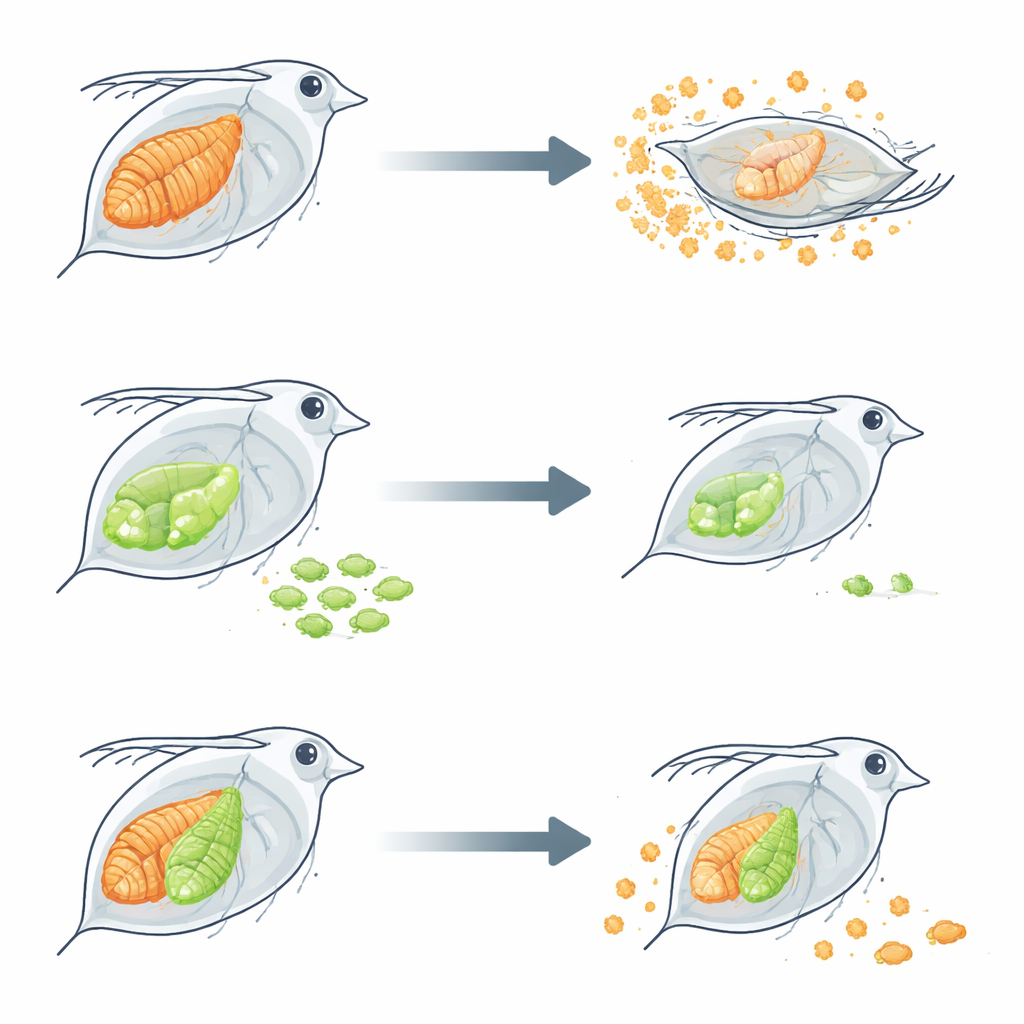
The fungus and the microsporidium competed strongly when they shared a host. Both produced far fewer spores in coinfected Daphnia than in animals carrying only one parasite. Yet despite this competition, each parasite still expressed its particular kind of harm. Survival patterns were largely dictated by the fungus: Daphnia carrying it died about three times faster than uninfected animals, and adding the microsporidium did not make them die noticeably sooner. Reproduction, however, told a different story. The microsporidium, especially when passed from mother to offspring, sharply reduced the size of each clutch of young. In coinfected animals, this effect was amplified: clutch size dropped by about three quarters, and the time between clutches stretched out by roughly two thirds. Some survivors eventually became effectively castrated, living on but producing no more offspring.
When fewer babies matter more than early death
Looking at total offspring produced over the first 39 days of life, the contrast was stark. Healthy Daphnia produced nearly two hundred young. Those infected only with the fungus produced about one eighth of that number, mostly because they died early. Those infected only with vertically transmitted microsporidium lost about two thirds of their offspring through reduced clutch size. Coinfected animals fared worst of all: on average they produced fewer than one full clutch over the same period. The parasites paid a price too—each made many fewer spores in coinfected hosts, likely because they were competing for the same limited resources inside the animal, such as nutrients needed to form eggs and spores.
What this means for lakes and their inhabitants
To a non-specialist, the key message is that disease in nature is not just about whether an animal dies, but also about whether it manages to have babies. This study shows that when two different parasites infect the same small grazer, the host’s lifetime reproduction can be nearly wiped out even if its lifespan is not much shorter than under a single, deadly infection. Because Daphnia help control algae and feed larger animals like fish, such reproductive losses can affect population sizes and the stability of whole lake ecosystems. The work suggests that to understand and predict the impact of infections in the wild, scientists need to measure not only survival but also how coinfections quietly erode the ability of hosts to leave descendants.
Citation: Halle, S., Sofer, A. & Ben-Ami, F. Counterproductive: coinfection of a water flea by a fungus and a microsporidium reduces the reproductive outputs of all parties. Sci Rep 16, 12940 (2026). https://doi.org/10.1038/s41598-026-41996-0
Keywords: coinfection, parasite competition, host reproduction, Daphnia magna, freshwater ecology