Clear Sky Science · en
Resveratrol alleviates neuropathic pain associated with restoration of mitochondrial fission–fusion balance in CCI mice
Pain Relief From an Unlikely Source
Neuropathic pain—the burning, shooting, or electric shock–like pain that lingers long after a nerve injury—can be stubbornly resistant to existing drugs. This study explores whether resveratrol, a natural compound famously found in red grapes and peanuts, can ease this kind of pain in mice by protecting tiny power stations inside nerve cells called mitochondria. The work connects a familiar dietary molecule to the inner workings of injured nerves, offering clues that could one day inspire gentler, more targeted treatments for chronic pain.
When Nerves Misfire
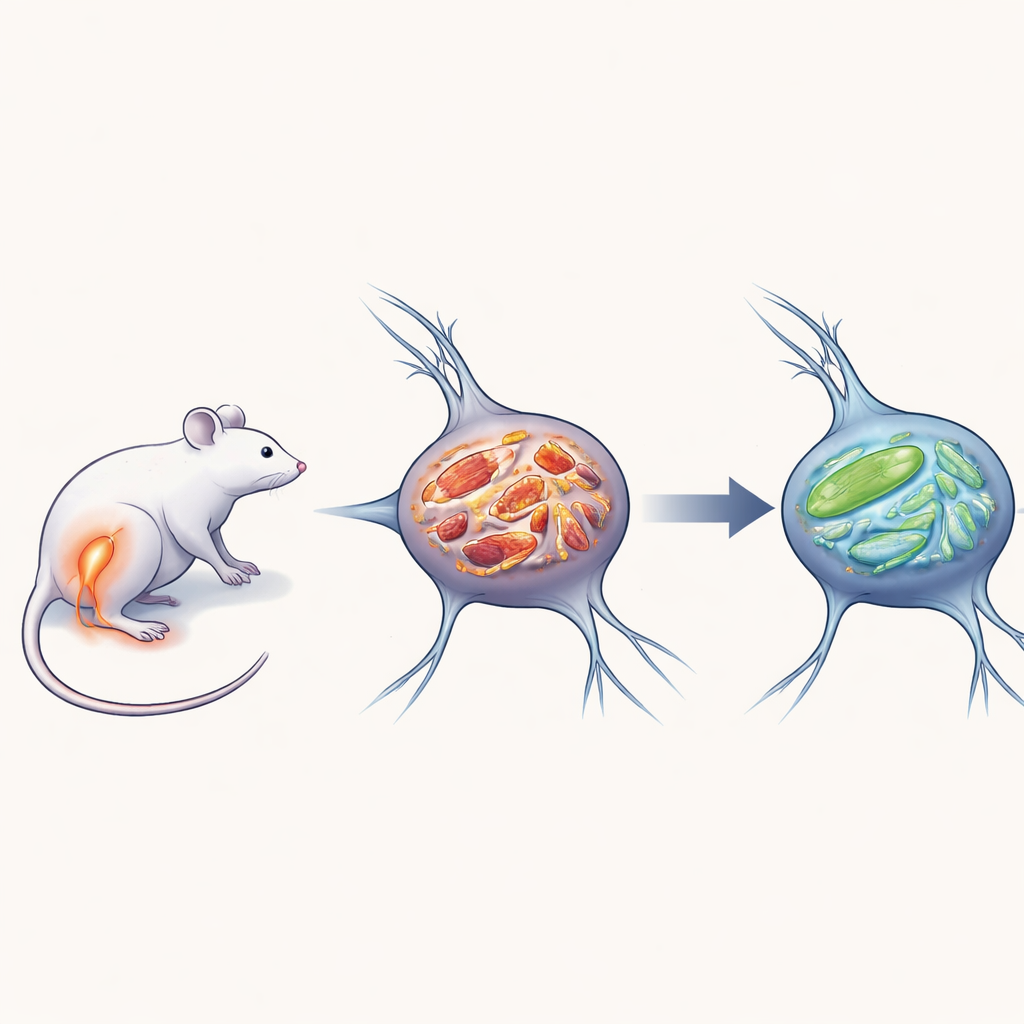
Neuropathic pain arises when the nervous system itself is damaged—for example after surgery, diabetes, or viral infection. Instead of simply carrying normal touch or temperature signals, injured nerves start sending exaggerated danger messages to the brain. In this study, researchers used a well-established mouse model called chronic constriction injury, in which the sciatic nerve in the leg is loosely tied to mimic long-lasting nerve damage. As expected, these mice became highly sensitive to gentle touch and heat on the injured paw, closely resembling human neuropathic pain.
The Powerhouses Under Stress
The team focused on the dorsal root ganglia, clusters of sensory nerve cells that relay signals from the body to the spinal cord. Inside these cells, mitochondria generate energy and help control the buildup of harmful reactive oxygen species—chemically aggressive molecules that can damage proteins, fats, and DNA. After nerve injury, the researchers found signs of intense oxidative stress: reactive oxygen species were elevated and the activity of a key protective enzyme, superoxide dismutase, dropped. At the same time, parts of the mitochondrial energy–producing machinery, specifically complexes I and II of the respiratory chain, were weakened, suggesting that the powerhouses of the cells were faltering just when the neurons needed them most.
A Delicate Balance of Splitting and Joining
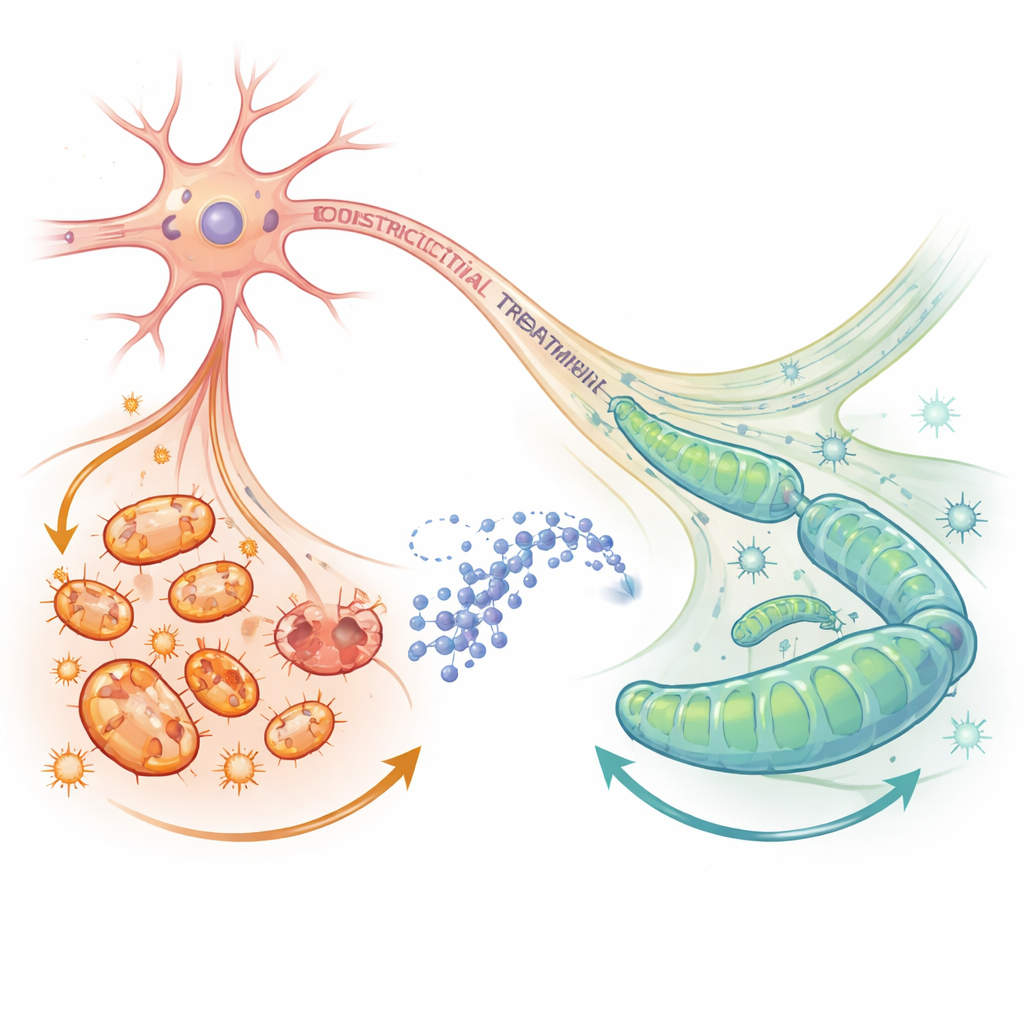
Mitochondria are not static blobs; they constantly divide and merge in a dynamic network. Healthy cells carefully balance these processes of “fission” and “fusion” to keep mitochondria working well and to remove damaged parts. In the nerve cells of injured mice, this balance tipped toward excessive splitting. Levels of a fission-supporting protein (DRP1) rose, while a fusion-supporting protein (OPA1) fell. Under the microscope, mitochondria in these cells looked smaller, more numerous, and more fragmented, with reduced area, shorter perimeter, and poorer connectivity—features of a broken network that struggles to supply energy evenly throughout the cell.
Resveratrol Steps In
Starting one week after the nerve injury, the researchers delivered a low dose of resveratrol directly around the spinal cord for three days. This treatment lessened the mice’s exaggerated responses to touch and heat on the injured side, indicating a real reduction in pain behavior. In the dorsal root ganglia, resveratrol sharply reduced reactive oxygen buildup and boosted the activity of the protective enzyme. It also restored the levels of mitochondrial complexes I and II. Most strikingly, resveratrol shifted the fission–fusion balance back toward normal: DRP1 levels fell, OPA1 levels rose, and mitochondria became larger and more interconnected again, forming networks that more closely resembled those in uninjured animals.
What This Could Mean for Future Pain Care
Taken together, the findings suggest that resveratrol eases neuropathic pain in this mouse model partly by calming oxidative stress and rebuilding healthier mitochondrial networks in sensory nerve cells. The study stops short of proving that these molecular changes directly cause the pain relief, and it examines only short-term effects in one animal model. Still, it supports a powerful idea: targeting the health and shape of mitochondria, rather than just blocking pain signals, could open a new path to treating chronic nerve pain. Resveratrol itself, or drugs that mimic its actions on mitochondrial balance, may one day help transform how we manage this debilitating condition.
Citation: Xie, L., Xu, Y., Yang, Q. et al. Resveratrol alleviates neuropathic pain associated with restoration of mitochondrial fission–fusion balance in CCI mice. Sci Rep 16, 11978 (2026). https://doi.org/10.1038/s41598-026-41965-7
Keywords: neuropathic pain, resveratrol, mitochondria, oxidative stress, nerve injury