Clear Sky Science · en
Study on the spatiotemporal evolution characteristics and simulation prediction of urban metabolic efficiency in China’s urban agglomerations
Why City “Metabolism” Matters
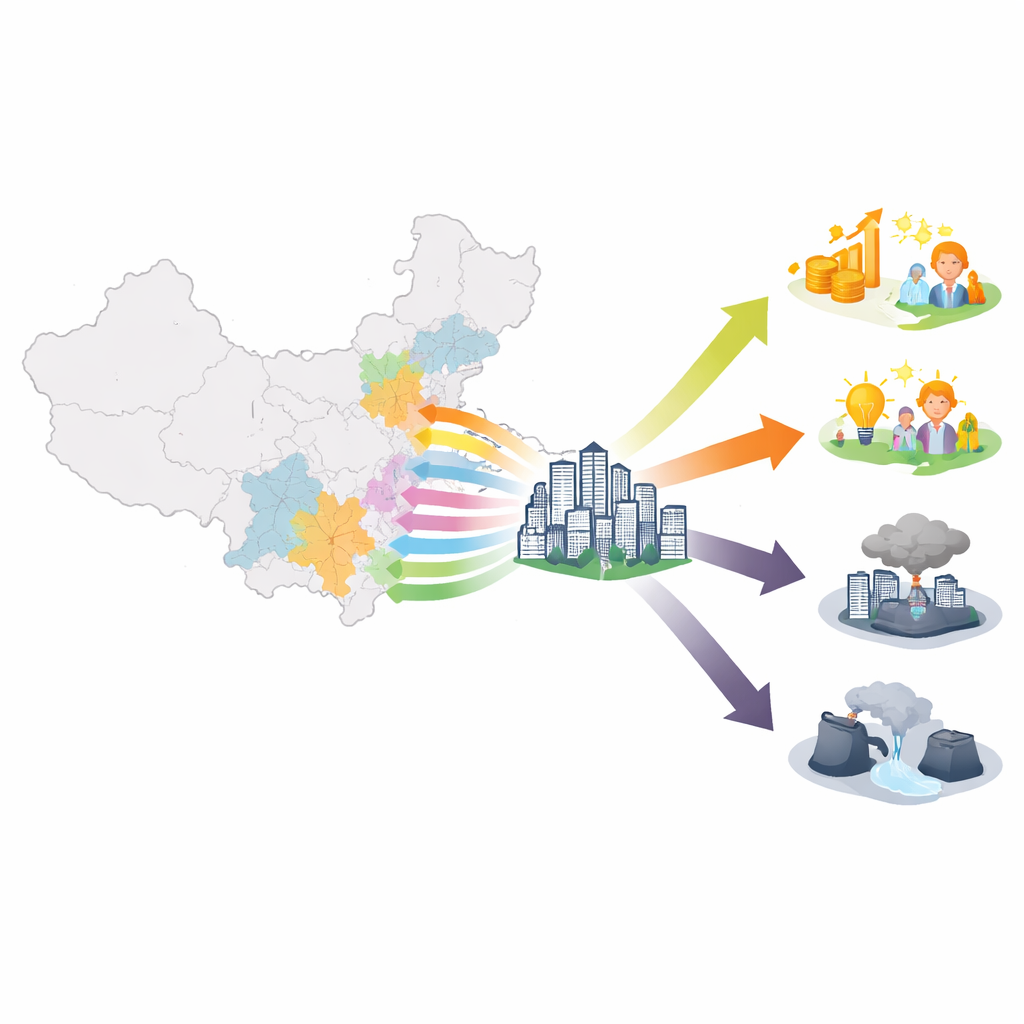
Modern cities behave a bit like living organisms: they gulp in water, energy, food and materials, and push out goods, services and pollution. This paper asks how efficiently China’s biggest city clusters perform that feat. By treating 19 major urban regions and their 201 cities as a connected metabolic system, the authors explore which places turn resources into prosperity with the least environmental damage, how that pattern has changed since 2006, and what might help crowded city regions grow without choking on their own waste.
Taking the Pulse of City Clusters
The study focuses on China’s officially designated urban agglomerations—large constellations of core cities and surrounding satellites that drive regional growth. Instead of simply counting how much energy or water they consume, the authors measure how well each city converts inputs like biomass, water, imported goods and fossil energy into economic activity and social welfare, while limiting pollution and carbon emissions. They build a detailed index using agricultural output, water supply, electricity and gas use, trade flows, nighttime light data, public service indicators, and multiple pollution measures, then feed all of this into an efficiency model that compares every city against both its peers and national best practice.
Unequal Efficiency Across the Map
The results reveal a China where urban metabolic efficiency is neither uniformly poor nor steadily improving. Most city clusters sit at a middling efficiency level that changes only slowly over time, but clear “tiers” separate higher- and lower-performing regions. Some less-developed inland agglomerations rank surprisingly well, while famous coastal powerhouses such as the Yangtze River Delta and Pearl River Delta do not always top the charts once environmental stress is taken into account. Within each cluster, high- and low-efficiency cities often sit side by side, with relatively few in the middle. Contrary to expectations, a notable share of core cities actually lag behind nearby satellite cities, suggesting that sheer size and concentration can bring congestion, heavy pollution and resource waste that drag down overall performance.
Hidden Gaps and Stuck Clubs
To understand where inefficiency comes from, the authors separate two components. One is the gap between each agglomeration’s typical technology and structure and the national frontier; the other is how far individual cities fall short of the best within their own region. They find that most of the shortfall arises from differences between city clusters—longstanding contrasts in industry mix, infrastructure and ecological conditions—rather than from mismanagement inside a single agglomeration. Using Markov chain simulations, they then track how cities move between low-, medium- and high-efficiency groups over time and space. High- and low-efficiency “clubs” prove very sticky: cities that are already very efficient or very inefficient tend to stay that way, while medium-efficiency cities are unstable and easily pushed up or down by their neighbors, sometimes getting squeezed between booming cores and struggling peripheries.
Growth, Digital Tools and Education
The study also investigates what drives changes in efficiency. It uncovers a U-shaped link between income and metabolic performance: in early development, rising output tends to come with more waste and pollution per unit of resource, but after a certain income level, further growth is associated with cleaner, more efficient metabolism. This pattern echoes the classic “Kuznets curve,” but applied to how cities use resources. Among potential policy levers, two stand out. Greater digital connectivity—captured by the density of 5G base stations—is strongly tied to better efficiency, likely because data and networks help coordinate energy use, transport and pollution control. Higher public spending on education also improves performance, reflecting the importance of skilled people and capable institutions. By contrast, openness to trade, fiscal reforms, industrial upgrading and deeper finance show weaker and less consistent links, hinting that simply doing more of the same is not enough to fix wasteful urban systems.
What This Means for City Futures
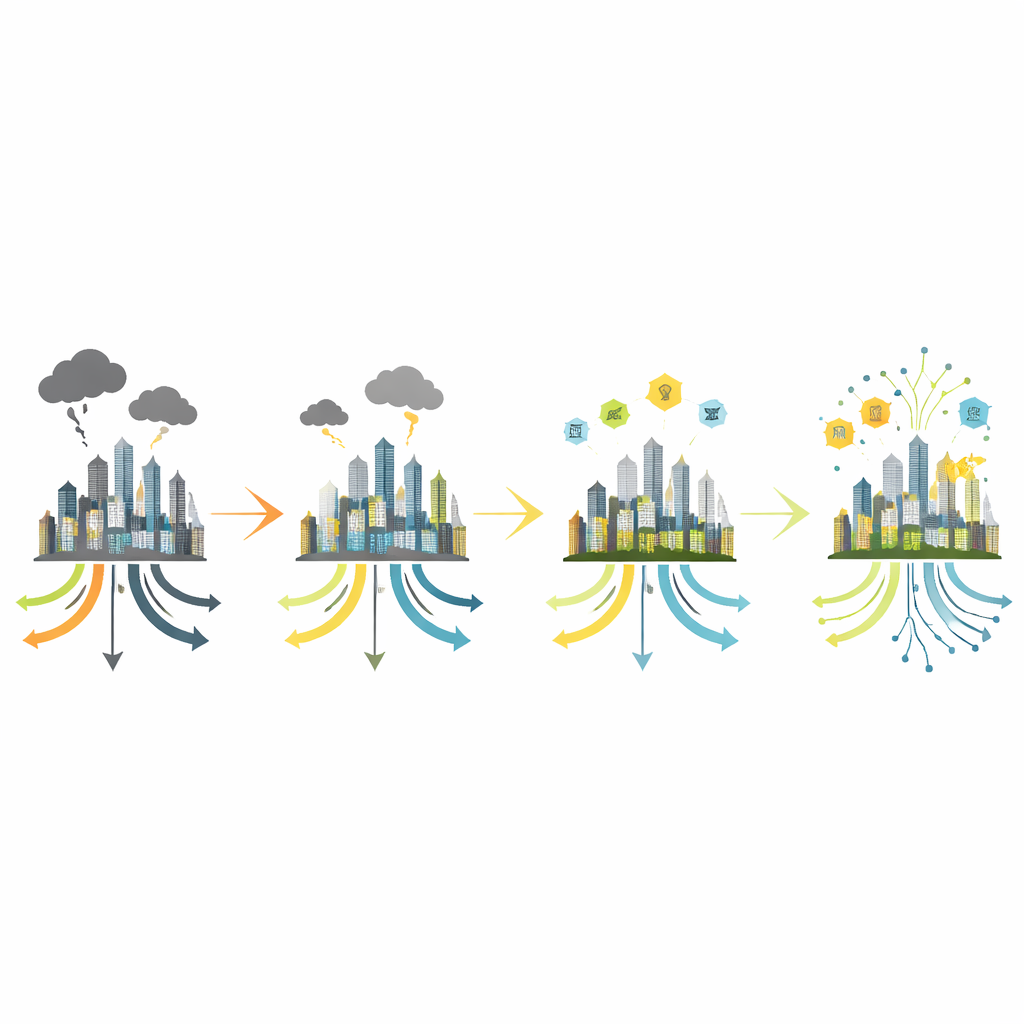
For non-specialists, the takeaway is that a big, rich or fast-growing city cluster is not automatically a well-run one. China’s urban regions sit on different rungs of an efficiency ladder, and many are locked into their current tier by past choices about industry, infrastructure and land use. The authors argue that policy should focus less on expanding the “size” of metabolism and more on improving its “fitness”: narrowing technology gaps between regions, helping lagging cities close in on their local frontier, and supporting vulnerable medium-efficiency cities so they are not left behind. Investments in digital systems and education, they suggest, are especially promising tools for allowing dense urban regions to support millions of people with fewer resources and less pollution.
Citation: Wang, W., Li, H. Study on the spatiotemporal evolution characteristics and simulation prediction of urban metabolic efficiency in China’s urban agglomerations. Sci Rep 16, 12342 (2026). https://doi.org/10.1038/s41598-026-41959-5
Keywords: urban metabolism, city clusters, resource efficiency, China urbanization, digitalization