Clear Sky Science · en
Refractive outcomes after cataract surgery using swept-source OCT biometry and image-guided toric IOL alignment: a prospective comparative study in normal versus long axial length eyes
Sharper Sight After Cataract Surgery
Cataracts, a clouding of the eye’s natural lens, are one of the most common reasons people need eye surgery as they age. Many patients today hope not only to clear their vision, but also to reduce or even eliminate their need for glasses afterward. This is especially challenging in people with very long, highly nearsighted eyes. This study explores whether a combination of two advanced tools for measuring and guiding eye surgery can deliver equally precise results in both typical eyes and very long eyes.
Why Long Eyes Are Trickier
Highly nearsighted people tend to have eyes that are stretched and longer from front to back. That extra length changes how light focuses, and it also makes standard eye measurements less reliable. Traditional machines often treat the entire eye as if it had a single optical makeup, which can misjudge the true length of a long eye and lead to small but important focusing errors after surgery. For patients who invest in premium lenses designed to correct both distance and astigmatism, even a modest miscalculation can mean more blur and a continued need for glasses.
A New Way to Measure and Guide Surgery
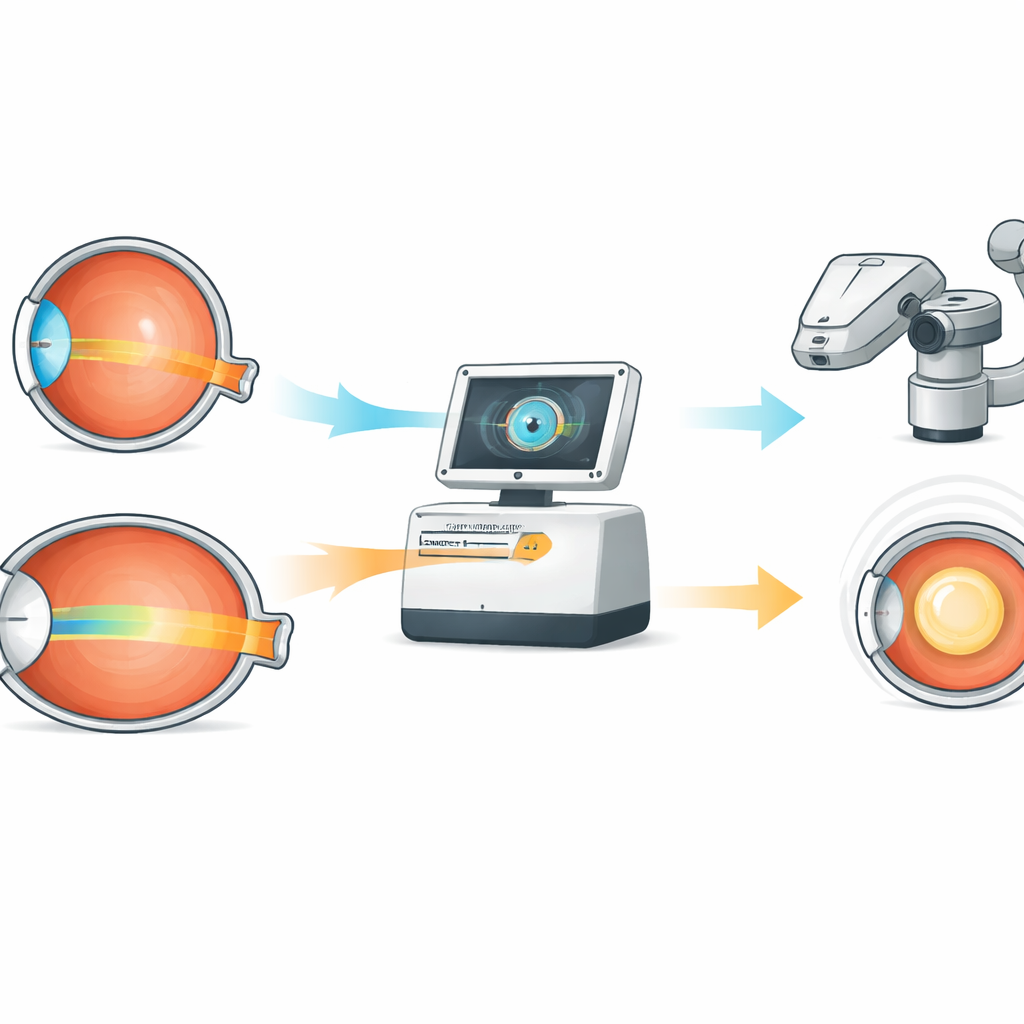
The research team used a modern measuring device called a swept-source OCT biometer, which scans the eye with gentle light and separately measures the cornea, the front chamber, the lens, and the gel-filled back portion. By assigning each part its own optical properties and then adding them together, the system estimates eye length more faithfully, particularly in long eyes. During surgery, a digital image-guided system projects a virtual template onto the surgeon’s view, helping place incisions and rotate a special toric lens so that it lines up with the patient’s unique pattern of astigmatism. Together, these tools aim to take much of the guesswork out of cataract surgery.
Putting the Tools to the Test
The study followed 90 eyes from 62 cataract patients. All received the same type of premium multifocal toric lens, which is designed to improve distance, intermediate, and near vision while reducing astigmatism. The eyes were split into two groups based on length: a normal-length group and a long-eye group typical of high myopia. One month after surgery, the researchers compared how closely each eye’s actual focusing power matched the planned target, and how much astigmatism remained. They also measured vision at far, mid-range, and reading distances without glasses.
Equally Precise Results in Long and Normal Eyes
The findings were striking: in both normal and long eyes, the difference between the planned and actual focusing power was very small and nearly identical. Almost every eye in each group landed within a half diopter of the target, a tight range that usually feels crisp to patients, and every eye was within one diopter. Residual astigmatism was low and similar between the two groups, even though the long-eye group started out with more astigmatism before surgery. Vision without glasses was excellent across the board at distance, arm’s length, and reading range, with no meaningful differences between normal and long eyes.
What This Means for Patients
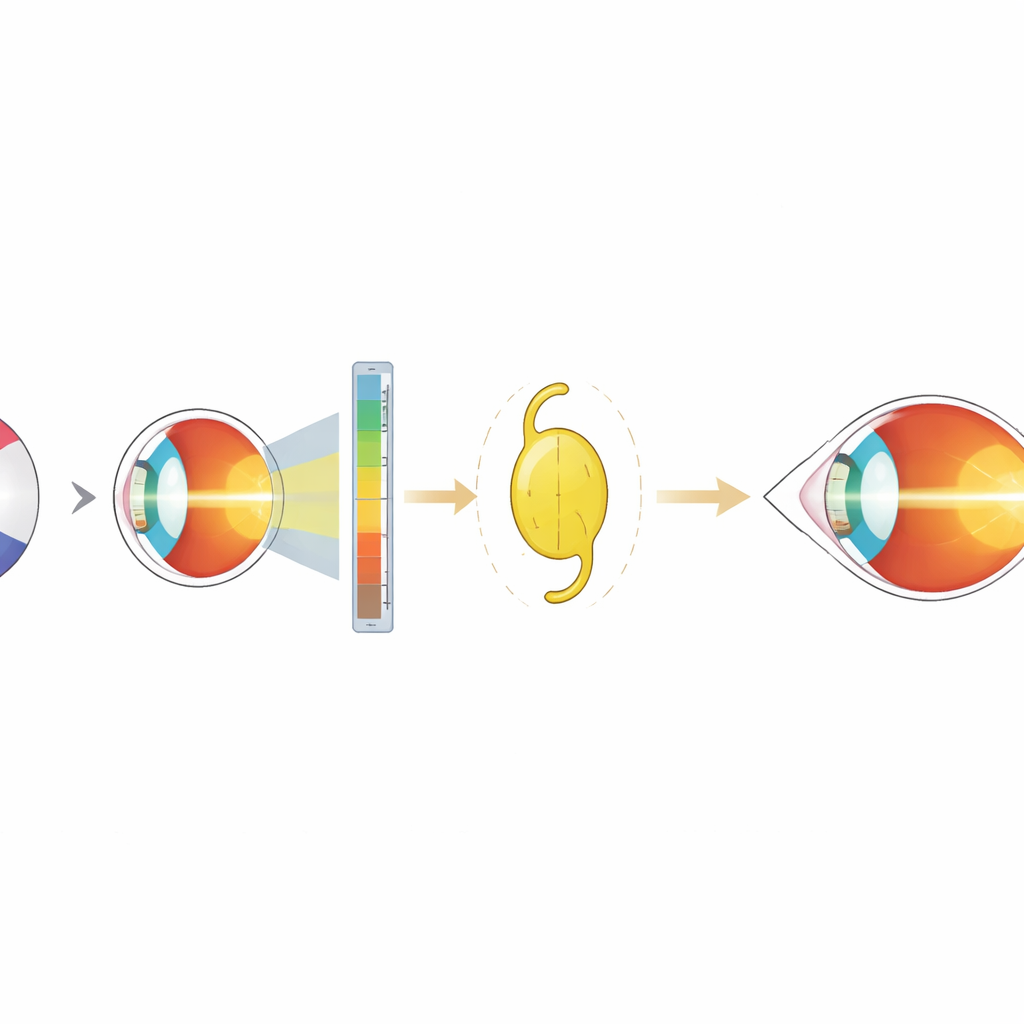
For people with very nearsighted, elongated eyes, cataract surgery has long carried a reputation for being harder to fine-tune. This study suggests that when surgeons combine advanced, segment-by-segment eye measurements with precise digital guidance in the operating room, they can achieve focusing accuracy in long eyes that matches that of typical eyes, at least in the early weeks after surgery. While longer-term follow-up is still needed to confirm that the implanted lenses stay perfectly aligned over time, these results support offering premium, astigmatism-correcting multifocal lenses to carefully selected patients with high myopia, expanding access to clear, glasses-sparing vision after cataract surgery.
Citation: Hung, KC., Ho, TC. & Lin, PJ. Refractive outcomes after cataract surgery using swept-source OCT biometry and image-guided toric IOL alignment: a prospective comparative study in normal versus long axial length eyes. Sci Rep 16, 11566 (2026). https://doi.org/10.1038/s41598-026-41920-6
Keywords: cataract surgery, high myopia, intraocular lens, ocular biometry, astigmatism correction