Clear Sky Science · en
Structural and functional atypicality in the temporal cortex are associated with auditory perception in maltreated children
Why early experiences shape how children hear feelings
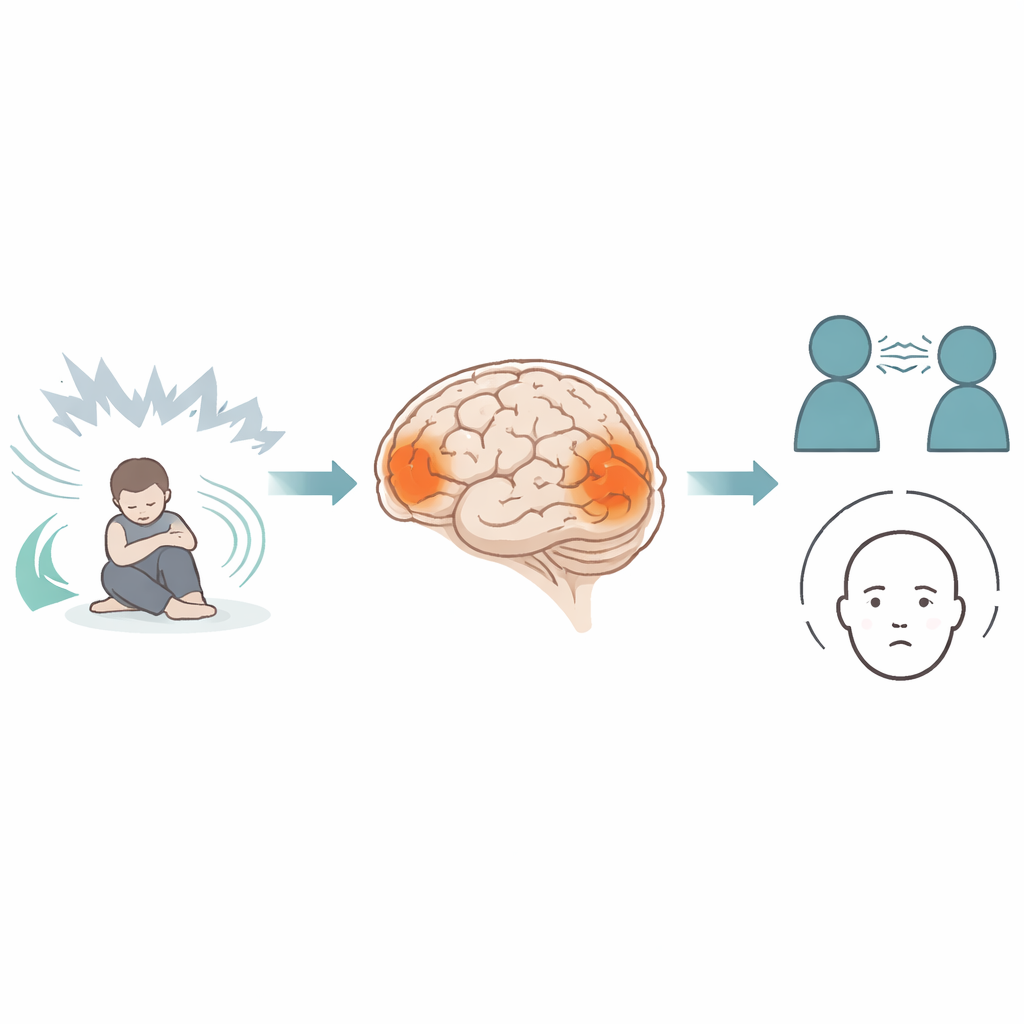
Words are not just sounds; they carry tone, warmth, anger, and fear. For children who grow up with abuse or neglect, those sounds can be a constant source of stress. This study explores a troubling but important question: does maltreatment in childhood leave a mark on the parts of the brain that help us hear and understand speech and emotion? By combining brain scans with hearing tests, the researchers show that early adversity appears to reshape how the brain’s hearing and emotion centers are built and how they talk to each other, in ways that could subtly change how children pick up on emotional cues in voices.
Looking inside the brains of affected children
The researchers studied 57 Japanese children and adolescents. Nineteen had documented histories of maltreatment, including physical or emotional abuse and neglect, and were now living in protective environments. Thirty-eight peers of similar age and sex had no known history of maltreatment. All participants underwent detailed hearing tests and two types of MRI scans. One scan measured gray matter volume, a rough indicator of how much brain tissue is present in different regions. The other measured functional connectivity during rest — how strongly activity in one brain area rises and falls in step with another, revealing which regions tend to work together.
A key language-and-voice area that looks different
When the team compared brain structure between the two groups, one region stood out: the left middle temporal gyrus, a strip of tissue on the side of the brain that plays a central role in recognizing voices, decoding speech sounds, and linking what we hear to meaning. Children who had experienced maltreatment had significantly less gray matter in this region than their peers, even after statistically controlling for age, sex, and overall brain size. No other parts of the temporal cortex showed such robust differences. This suggests that the brain’s left-sided speech and language circuitry may be especially sensitive to early hostile or chaotic sound environments.
Stronger wiring between hearing and feeling centers
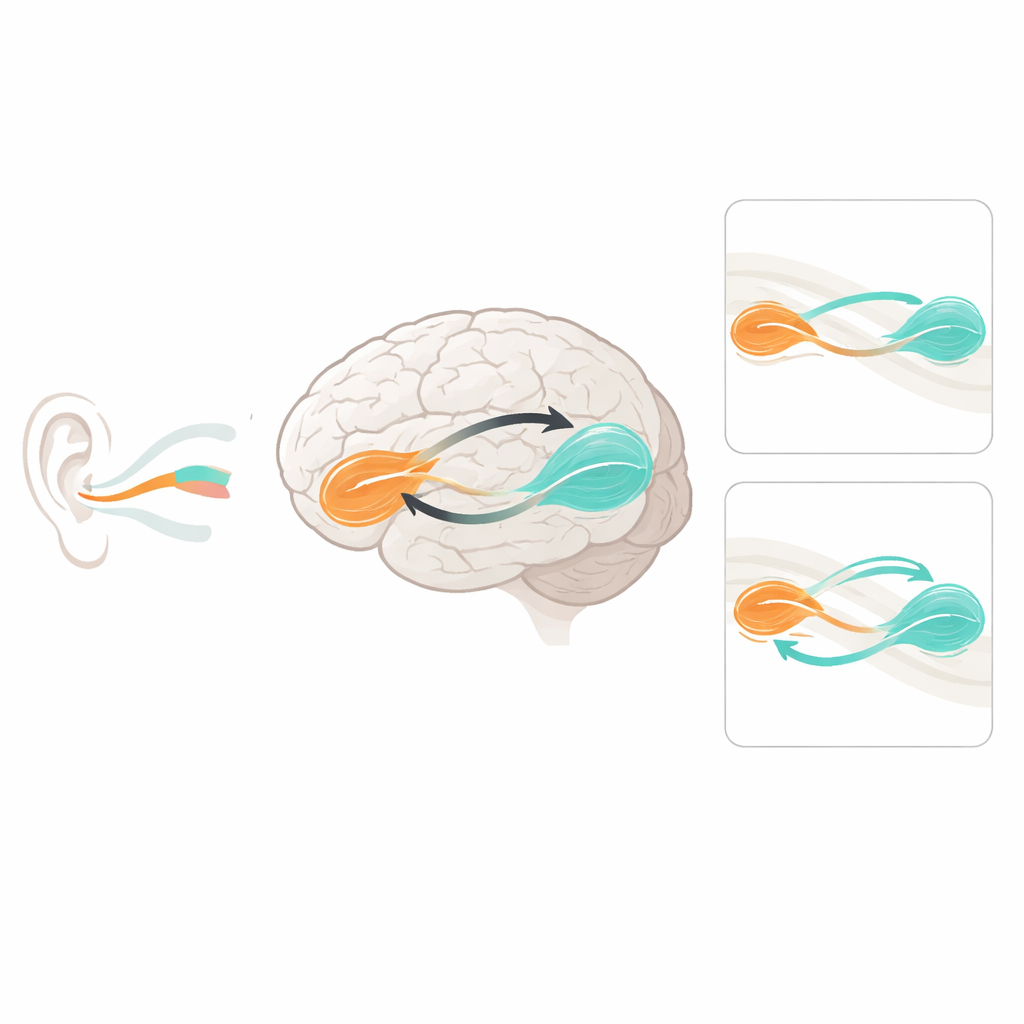
Structural changes were only part of the story. The scientists then used the altered left middle temporal gyrus as a starting point to probe its communication with the rest of the brain. They found that maltreated children showed stronger functional connectivity between this left-side voice-and-language hub and a region on the right side called the temporal pole, which is deeply involved in processing the emotional tone of voices and other social cues. In other words, the bridge between hearing what is said and sensing how it is said appeared to be more tightly coupled in children with histories of abuse or neglect, potentially reflecting an adaptation to environments where decoding emotional intent in voices may be critical for safety.
Subtle changes in hearing linked to emotional sound processing
Interestingly, standard hearing tests did not show frank hearing loss in either group; most children could detect everyday tones within the normal range. Yet, when the researchers looked more closely, they found that stronger connectivity between the left middle temporal gyrus and the right temporal pole was tied to slightly worse sensitivity at a specific pitch around 2 kilohertz in the left ear. This frequency band is especially important for understanding speech and for emotionally charged sounds such as cries and alarms. The finding hints that, even in the absence of obvious hearing problems, maltreated children may process certain emotionally salient sounds differently, possibly as a result of the brain’s attempt to adapt to early stress.
What this means for children’s voices and feelings
Taken together, the study suggests that childhood maltreatment is linked to both structural thinning and stronger functional links in brain regions that connect hearing with feeling. These neurodevelopmental changes seem to affect how children tune in to key speech-related frequencies, which in turn may influence how well they pick up emotional signals in other people’s voices. While the work has limitations — including a modest sample size and the complexity of separating maltreatment from other hardships — it underscores that harmful early experiences can quietly reshape the brain systems that support language, emotion recognition, and social communication. Understanding these changes may eventually guide therapies that help vulnerable children better interpret voices, regulate emotions, and build healthier social relationships.
Citation: Kawata, N.Y.S., Fujisawa, T.X., Yao, A. et al. Structural and functional atypicality in the temporal cortex are associated with auditory perception in maltreated children. Sci Rep 16, 11525 (2026). https://doi.org/10.1038/s41598-026-41884-7
Keywords: child maltreatment, auditory perception, temporal cortex, functional connectivity, emotional prosody