Clear Sky Science · en
Comparative evaluation of YOLO and RT-DETR models for real-time defect detection in wood-based 3D printing
Why keeping 3D printed wood parts flawless matters
As 3D printing moves from plastic toys to real products, wood-based printing stands out for its warm look and climate-friendly appeal. But tiny flaws in the loose wood powder that forms each layer can weaken parts, spoil surfaces, and waste material. This study asks a practical question: which modern AI tools are best at spotting these defects quickly enough to fix problems while the printer is still running?
Wood powder, cameras, and hidden flaws
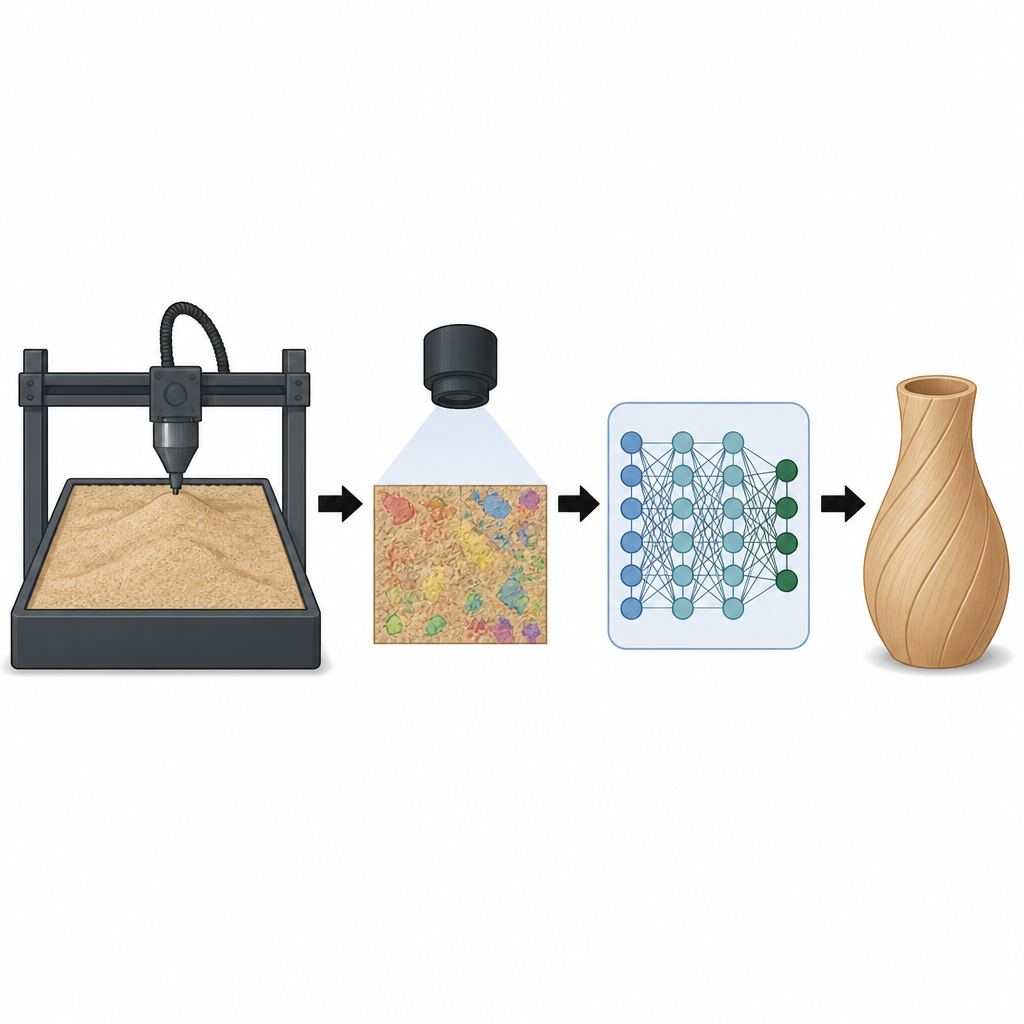
The researchers worked with a custom 3D printer that builds wooden objects by spreading thin layers of wood powder and gluing them together with a liquid binder. After each layer is spread, a high-resolution camera photographs the powder bed. These images capture subtle problems in the powder, such as stray debris, streaks from the roller, or patches where the powder has not spread evenly. From hundreds of such images, the team built a dataset of 599 samples and marked six main defect types, including contamination, dragged powder, insufficient spreading, and irregular motions of the roller. This labeled collection became the foundation for training and testing several competing AI models.
Teaching machines to see trouble in the powder
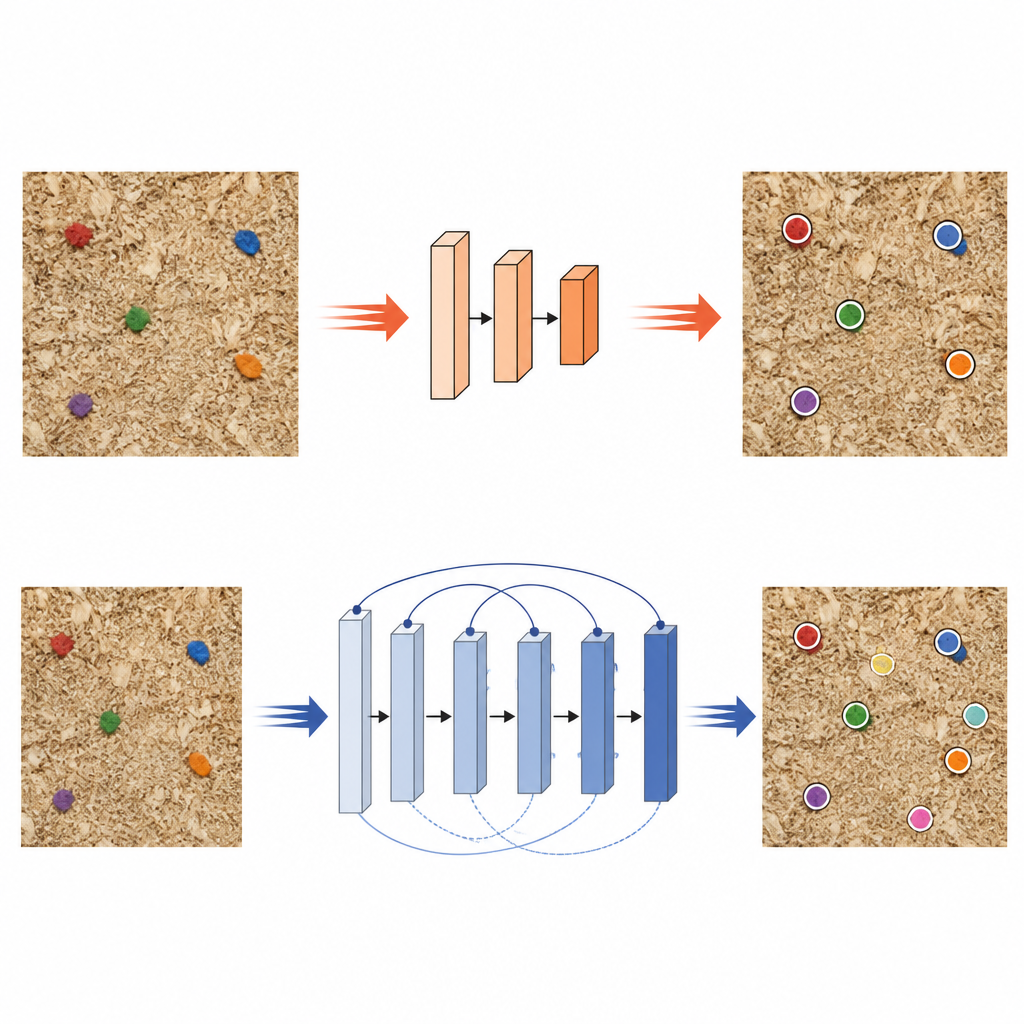
To turn images into rapid quality checks, the team used object detection networks, a kind of deep learning that draws boxes around items of interest in a picture. They compared four versions of a popular family called YOLO, which is known for speed, with a newer Transformer-based model called RT-DETR that focuses on accuracy. All models were trained under matched conditions, using the same image size, number of training rounds, and basic settings. The goal was to measure how well each model could find and classify powder-bed defects, and how long it took to process each image.
Speed versus accuracy on real print data
Across the board, the models excelled at spotting some defects while struggling with others. Problems like patches of missing powder and roller hopping were recognized very reliably, while small debris and subtle streaks in the powder texture were much harder to separate from the background. Among the YOLO models, YOLOv11 produced the cleanest predictions, with the highest share of correct detections and fewer false alarms, but it ran slower than earlier versions. YOLOv5 and YOLOv8 offered a more balanced profile: they were fast enough for tight real-time needs and still delivered solid accuracy, making them attractive for practical monitoring systems that must keep up with the printer.
A closer look at the most accurate model
The RT-DETR model, which relies on a Transformer design similar to those used in modern language tools, came out on top for overall detection accuracy. It achieved the best score for correctly finding defects across all categories and was especially strong at capturing the common but critical issue of insufficient powder spreading. However, this extra thoroughness came at a cost: it took several times longer to analyze each image than the fastest YOLO versions. For factories that need instant responses layer after layer, such delays could limit its use unless more computing power is added.
What this means for smarter 3D printing
For someone running a wood-based 3D printer, these findings offer a menu of options. If catching as many defects as possible is the top priority and a small delay is acceptable, RT-DETR is the best choice. If keeping up with the printer in real time matters more, YOLOv5 or YOLOv8 provide a better balance of speed and accuracy, while YOLOv11 suits cases where avoiding false alarms is key. The study also shows where current systems fall short, especially with tiny bits of debris and faint streaks. By pointing to specific trade-offs and gaps, the work helps guide future designs of smarter, camera-based watchdogs that can cut waste and improve the reliability of wood-based 3D printing.
Citation: Wang, X., Yan, C., Li, X. et al. Comparative evaluation of YOLO and RT-DETR models for real-time defect detection in wood-based 3D printing. Sci Rep 16, 14672 (2026). https://doi.org/10.1038/s41598-026-41855-y
Keywords: wood 3D printing, defect detection, YOLO models, RT-DETR, additive manufacturing