Clear Sky Science · en
Association between stress hyperglycemia ratio and all-cause mortality in neurocritical patients
Why Blood Sugar Spikes Matter in Brain Emergencies
When someone is rushed to an intensive care unit with a severe brain problem—such as a stroke, brain bleed, or head injury—the focus is naturally on the brain. But this study shows that a hidden clue in the blood, a kind of “stress sugar” signal, may quietly predict who is most at risk of dying in the months that follow. By looking not just at how high blood sugar is on the day of admission, but how high it is compared with a person’s usual level, the researchers found a simple ratio that could help doctors spot high‑risk patients earlier and make smarter treatment decisions.
A Common Thread in Different Brain Crises
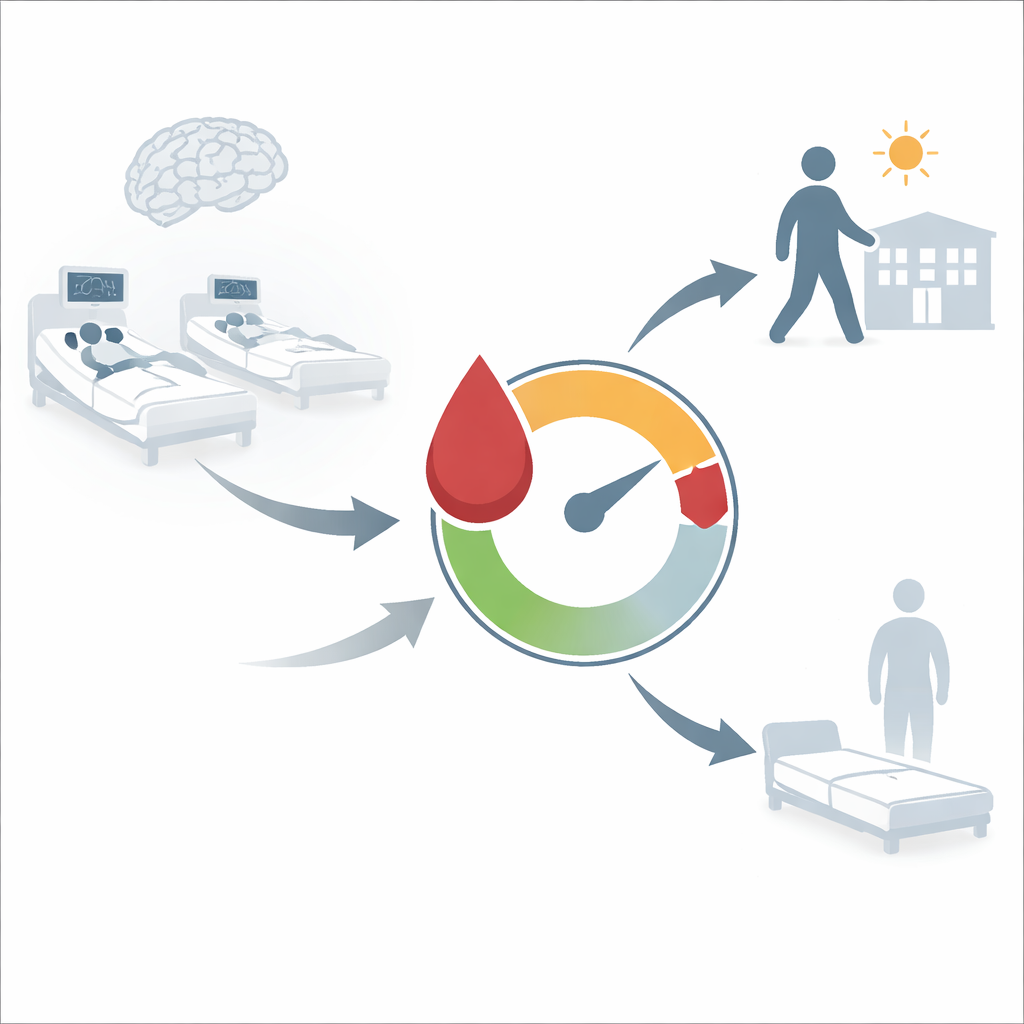
Acute brain conditions like intracerebral hemorrhage, subarachnoid hemorrhage, ischemic stroke, and traumatic brain injury differ in cause, but they share a brutal feature: the body is plunged into intense stress. That stress activates hormones that drive blood sugar up, even in people who do not have diabetes. Ordinary blood sugar tests, however, can be misleading, because they cannot tell whether a high reading is new or simply reflects a long history of poor sugar control. To solve this problem, the team used the stress hyperglycemia ratio (SHR), which compares the admission blood sugar to a measure of average sugar over several months. In simple terms, SHR answers the question: “How much higher is today’s sugar than this person’s usual baseline?”
Digging into a Large ICU Database
The researchers turned to MIMIC‑IV, a massive U.S. database of intensive care patients, and pulled records for 2,376 adults admitted with one of the four major neurocritical conditions. Everyone included had blood sugar and long‑term sugar (HbA1c) measured within the first day in the ICU. The team calculated each patient’s SHR and grouped them into four bands from lowest to highest. They then tracked whether patients died within 30, 90, 180, and 360 days after ICU admission. Using standard survival statistics, they asked a simple but powerful question: did those with relatively higher stress‑related sugar surges fare worse over time?
Higher Stress Sugar, Higher Death Risk
The answer was a consistent yes. Patients in the highest SHR group had clearly lower survival than those with more modest stress sugar responses, and this pattern held across all follow‑up times up to one year. The risk began to climb once SHR reached about 0.86, and rose steadily beyond that threshold. Interestingly, very low SHR values did not seem to change risk, suggesting there may be a “safe” range below which stress sugar spikes do not add extra danger. The link between high SHR and death was strongest in people without diabetes, implying that a sudden sugar surge in someone whose body is not used to high sugar may be especially harmful to the injured brain. In contrast, the signal was weaker and sometimes absent in people who already lived with chronically high sugar.
Adding a New Layer to Existing Risk Scores
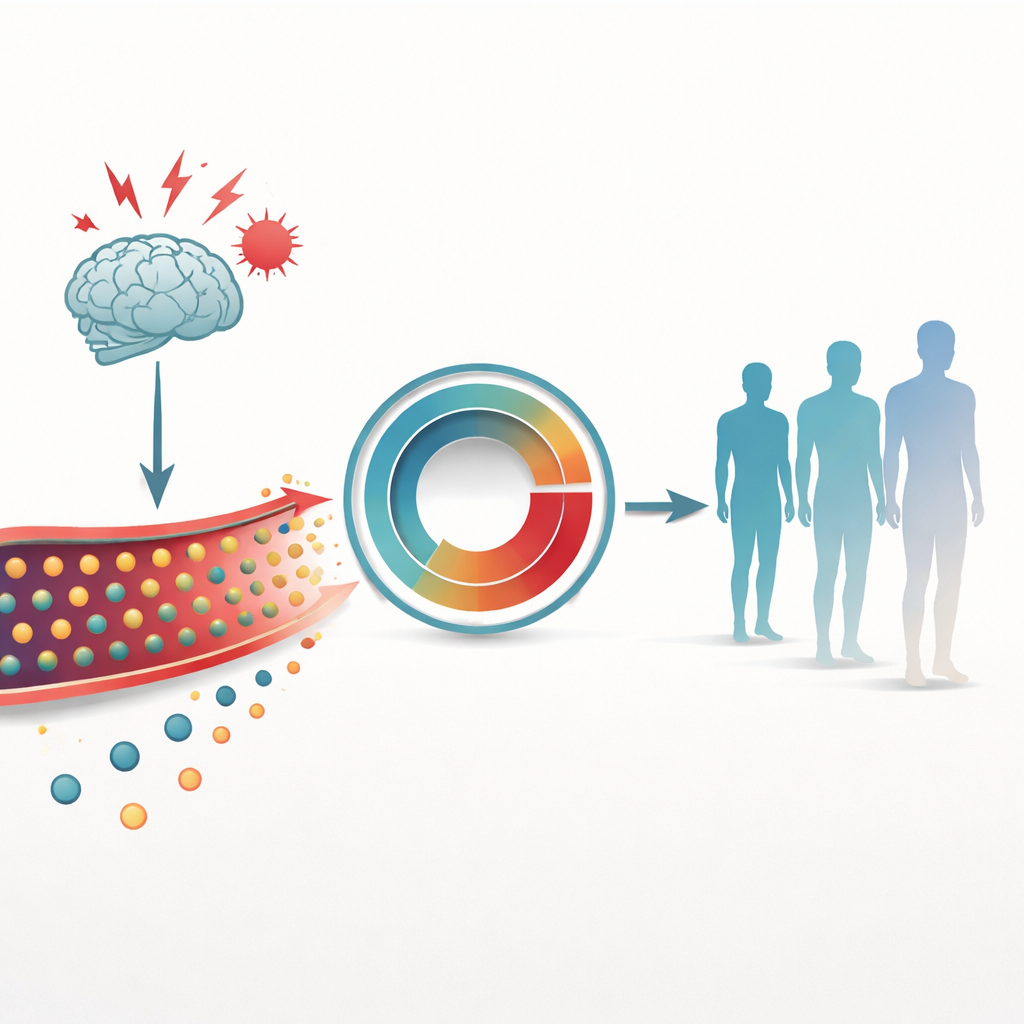
Doctors already rely on the Glasgow Coma Scale (GCS), a bedside score of how awake and responsive a patient is, to judge the severity of brain injury and estimate the odds of survival. This study tested whether combining SHR with GCS could sharpen those predictions. It did: the paired score was slightly but consistently better at forecasting death at 30 days and out to one year than GCS alone. The team went further by building several computer‑based prediction models, including a neural network, using SHR and other clinical factors. These models performed well in identifying patients who would die within 30 days, and when the researchers opened the “black box” of the best model, SHR emerged as one of the top contributors to its decisions—second only to the coma score itself.
What This Means for Patients and Care
For patients and families, the message is that a single combined measure of “how stressed” the blood sugar is, relative to usual levels, carries important information about the road ahead after a severe brain event. A higher stress hyperglycemia ratio was tightly linked to a greater chance of death over the following year, especially in people without diabetes. While this study does not prove that lowering SHR will save lives, it suggests that carefully watching and managing stress‑related sugar spikes—rather than focusing on raw sugar numbers alone—could become a valuable part of neurocritical care. Future studies will need to test whether targeting this ratio can actually change outcomes, but SHR already looks like a promising, easy‑to‑calculate warning light for doctors treating the sickest brain‑injured patients.
Citation: Pan, Y., Tan, W., Peng, J. et al. Association between stress hyperglycemia ratio and all-cause mortality in neurocritical patients. Sci Rep 16, 12414 (2026). https://doi.org/10.1038/s41598-026-41822-7
Keywords: stress hyperglycemia, neurocritical care, stroke and brain injury, intensive care outcomes, blood sugar and mortality