Clear Sky Science · en
Integrative mendelian randomization approaches for therapeutic target prioritisation in immune-mediated diseases
Why our own DNA can point to better treatments
Many common conditions such as asthma, eczema, inflammatory bowel disease and rheumatoid arthritis arise when the immune system misfires and attacks the body. These immune‑mediated diseases affect up to one in ten people worldwide and often require life‑long treatment, yet new drugs are slow and costly to develop. This study asks a simple but powerful question: can we use natural genetic differences between people as a gigantic human experiment to reveal which immune‑related drug targets are most likely to work, and where existing drugs might safely be reused for new conditions?
Reading nature’s own clinical trial
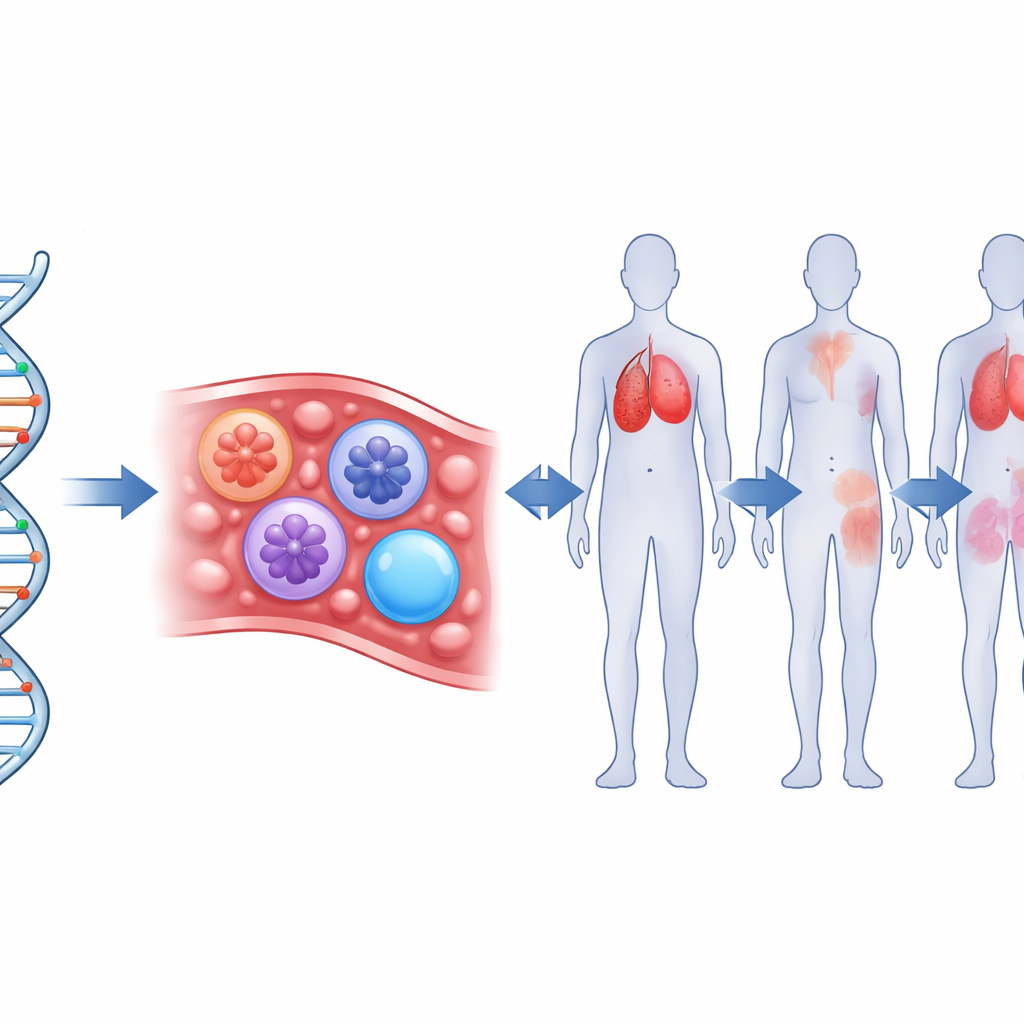
The researchers build on a method called Mendelian randomization, which treats genetic variants as tiny, randomly assigned tweaks to the body’s biology. Because these variants are fixed from birth and not shaped by lifestyle, they can act like the randomization step in a clinical trial. The team focused on two kinds of genetic signals: variants that alter the numbers of different white blood cells in our blood, and variants that change levels of specific proteins circulating in blood plasma. Both sets of signals are tightly linked to how the immune system behaves and to the molecules that many drugs already target.
Immune cells as clues to disease risk
First, the authors asked how broad categories of white blood cells influence fourteen immune‑mediated diseases, from asthma and sinusitis to Crohn’s disease and type 1 diabetes. Using data from very large genetic studies, they showed that higher genetically predicted levels of eosinophils—an immune cell type involved in allergy and parasite defense—raise the risk of several atopic conditions, including asthma, eczema, sinusitis and eosinophilic esophagitis. Surprisingly, the same cells were also linked to higher risk of autoimmune conditions such as rheumatoid arthritis, juvenile arthritis, type 1 diabetes and ulcerative colitis. In contrast, a higher proportion of neutrophils among certain white cells appeared to protect against allergic diseases, while higher lymphocyte counts were linked to lower risk of several disorders, hinting that overall balance among immune cells matters as much as their sheer abundance.
From immune signals to concrete drug targets
Next, the team turned these broad cell‑level insights into a finer map of potential drug targets. They tracked down genetic variants located inside genes that influence immune cell counts and asked how those variants affect disease risk. This strategy highlighted 261 genes whose subtle lifelong perturbation was associated with at least one immune‑mediated disease, with especially rich signals for asthma, inflammatory bowel disease, eczema and chronic sinusitis. To guard against false leads caused by nearby but unrelated variants, the authors added a second, independent check called colocalisation, which tests whether the same underlying genetic change appears to drive both the molecular trait and the disease. More than 160 gene–disease pairs passed this stricter test, and over 60% of these did not match any current clinical use of drugs against that gene, pointing to fresh repurposing opportunities.
Blood proteins offer a complementary view
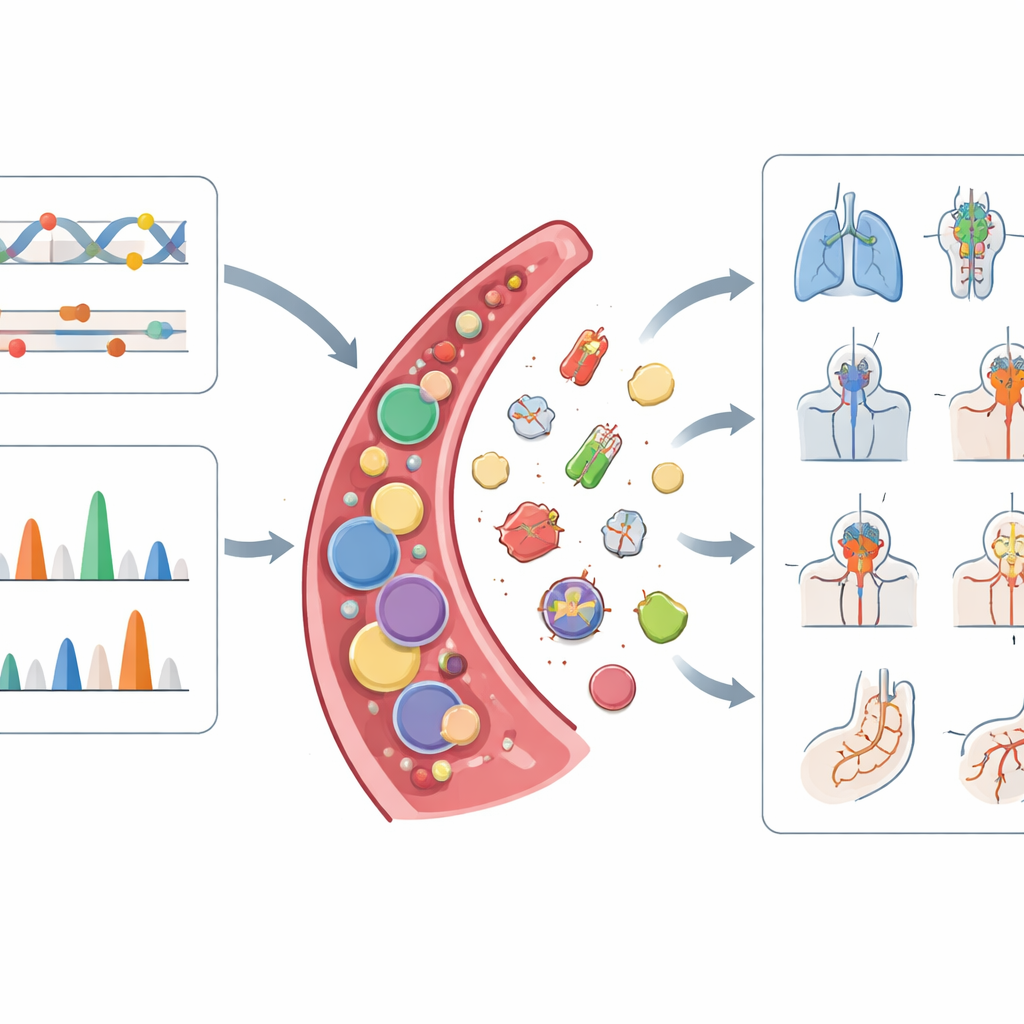
In parallel, the study examined genetic variants that change the levels of specific proteins in blood plasma, again using them as natural experiments to test effects on disease. Across four large datasets measured with two different laboratory platforms, the authors evaluated 361 potential protein targets and uncovered 284 proteins linked to one or more immune‑mediated conditions. Although individual datasets often highlighted different proteins, combining them and applying the same colocalisation filter yielded 83 high‑confidence protein–disease pairs, about two‑thirds of which suggest new indications for existing or developing drugs. Strikingly, there was only modest overlap between the gene‑based and protein‑based approaches, meaning each method adds unique information about which targets are promising.
What this means for future treatments
Bringing the two genetic strategies together, the researchers assembled a short list of drug targets with support from both immune cell–based and protein‑based analyses. For some, such as the interleukin‑1 receptor and the interleukin‑7 receptor, the results reinforce ongoing clinical trials and argue that certain asthma or eczema indications are especially well founded. For others, they suggest new uses for drugs originally developed for different conditions, or warn that some targets may have opposite effects in different diseases and so are poor candidates for broad repurposing. Overall, the work shows that by treating human genetics as a massive, pre‑run experiment, we can more rationally choose which immune pathways to target, which drugs to test in which diseases, and where to proceed with caution, potentially speeding the arrival of safer, more effective therapies for people living with immune‑mediated illnesses.
Citation: Sobczyk, M.K., Gaunt, T.R. Integrative mendelian randomization approaches for therapeutic target prioritisation in immune-mediated diseases. Sci Rep 16, 11851 (2026). https://doi.org/10.1038/s41598-026-41818-3
Keywords: immune-mediated diseases, Mendelian randomization, drug repurposing, immune cell genetics, protein biomarkers