Clear Sky Science · en
Effects of unilateral step training along with rhythmic auditory stimulation on balance and postural stability in stroke patients
Why this matters for everyday life
After a stroke, many people can walk again but still feel unsteady, fearful of falling, and unable to move confidently in daily life. This study tested a simple idea: can practicing one-legged stepping on a treadmill, timed to a steady beat, help stroke survivors stand and walk more safely than standard treadmill exercise? The answer, based on twelve weeks of training, appears to be yes.
Three different ways to retrain walking
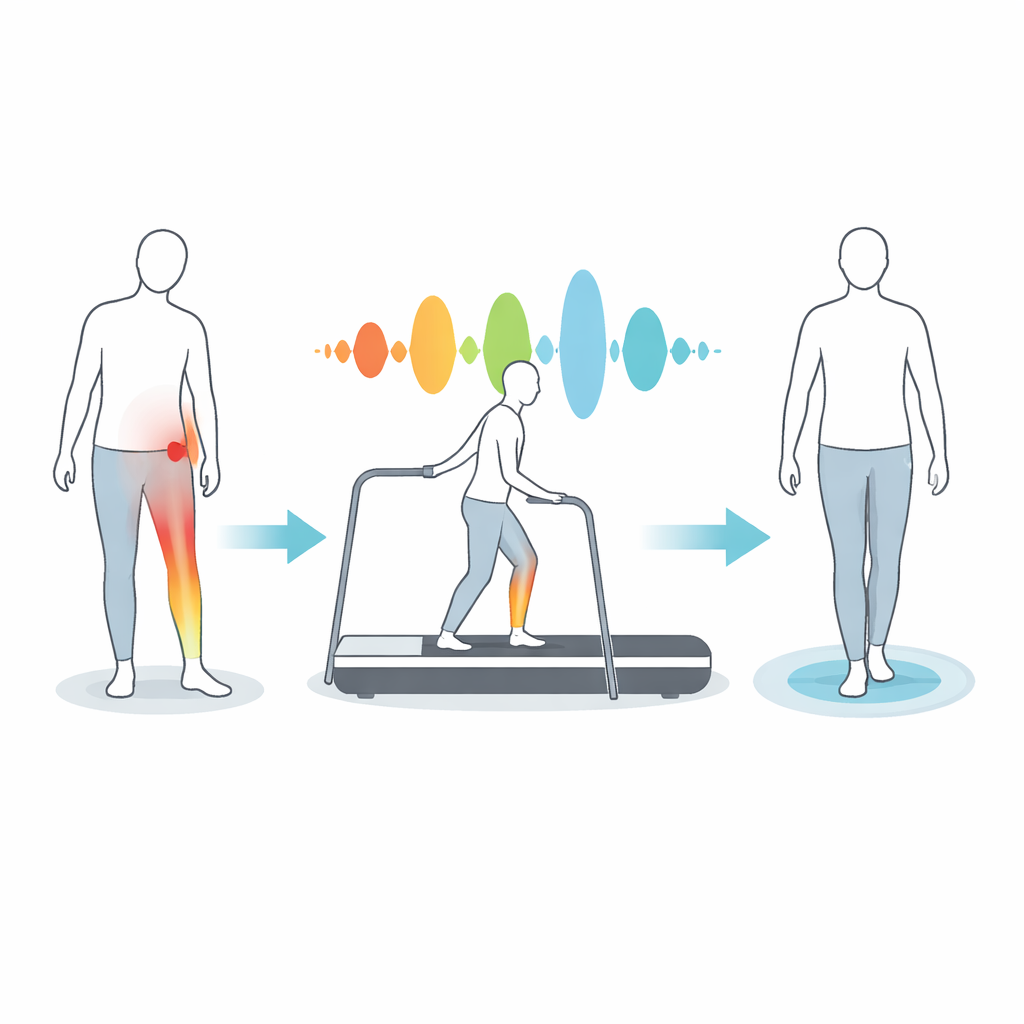
The researchers worked with 61 adults who had experienced an ischemic stroke within the past year. All participants could already walk but had clear problems with balance and stability. They were randomly assigned to one of three groups. One group practiced unilateral step training, standing with one leg on the treadmill belt while the other rested on a side platform, then switching legs. A second group did the very same one-legged stepping, but synchronized each step to a regular sound beat played through speakers. The third group followed a more familiar program: regular two-legged treadmill walking. All groups trained three times a week for twelve weeks, with each session lasting 45 minutes and including both treadmill work and task-oriented exercises such as stepping onto a stool or practicing sit-to-stand.
Using sound to guide the body
The sound-enhanced program, called rhythmic auditory stimulation combined with unilateral step training, was designed to give the brain a clear external rhythm to follow. Before training, each person’s natural stepping rate was measured while walking over the ground. This rhythm was then used to set the beat for the metronome. As the weeks went on, both the treadmill speed and the beat were gently increased to challenge participants while still keeping movements coordinated with the sound. The idea is that the brain naturally locks onto rhythm, helping to smooth out timing, even out step length, and encourage better loading of the weaker leg.
Measuring balance, falls, and mobility
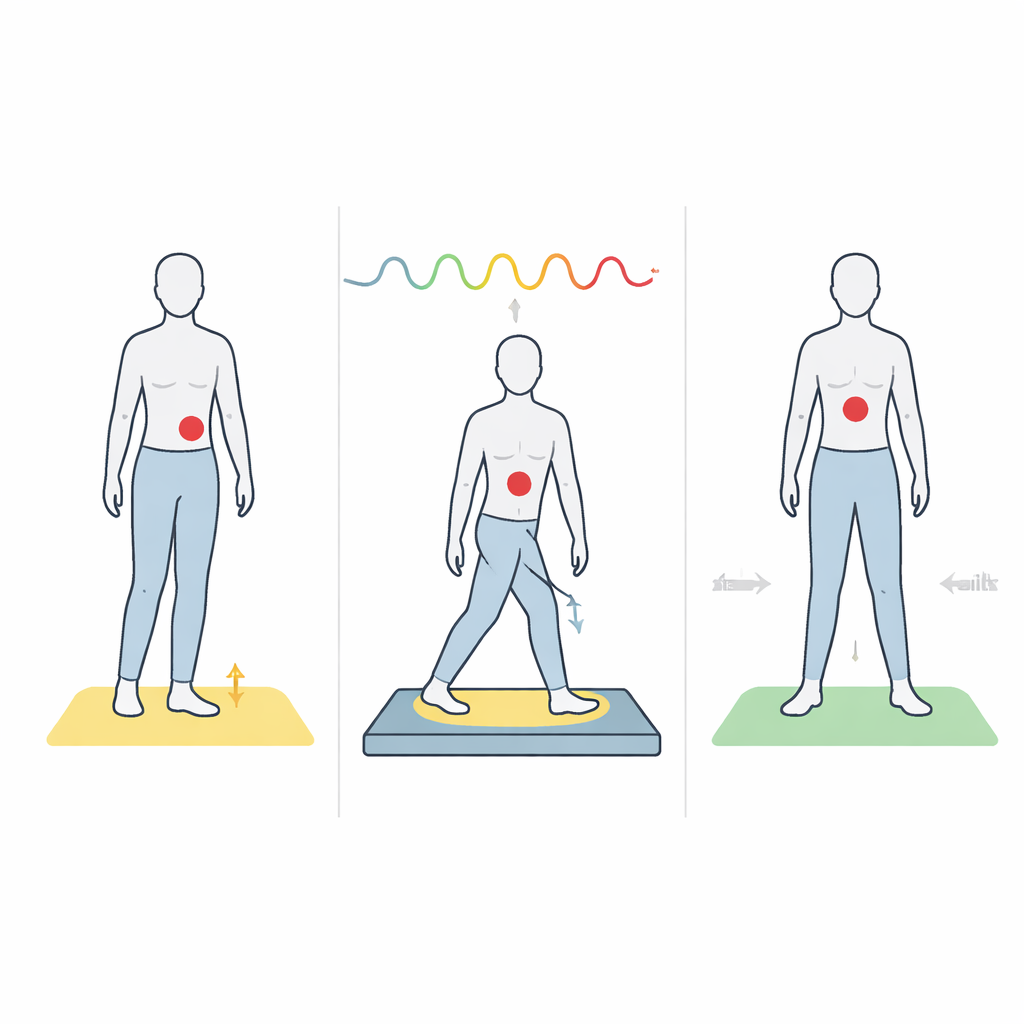
To judge which approach worked best, the team used several well-established tests at the start of the study and again after 4, 8, and 12 weeks. These included the Berg Balance Scale, which scores how safely someone can perform tasks like standing, reaching, and turning; the Timed Up and Go test, which measures how quickly a person can stand up, walk a short distance, and sit down; and specialized platform tests that capture how steady a person is while standing and how far they can lean in different directions without losing balance. They also calculated an overall stability index and a fall risk score, giving a broad picture of how secure each participant was on their feet.
What changed after twelve weeks
All three groups improved over time, showing that structured treadmill and balance training are helpful after stroke. However, the group that combined one-legged stepping with rhythmic sound cues showed the largest gains. By week twelve, this group had significantly better overall stability, a lower risk of falling, and greater ability to shift their weight in multiple directions compared with those who did standard treadmill walking. They also improved more on the balance scale and completed the stand–walk–sit test more quickly, reflecting smoother, more confident movement. The group that practiced unilateral stepping without sound also outperformed the conventional treadmill group on several measures, suggesting that targeting each leg separately is especially useful for correcting the imbalance between the stronger and weaker side.
What this means for stroke recovery
For people rebuilding their lives after a stroke, these findings point to a practical, low-cost strategy. Practicing single-leg stepping while following a steady beat appears to help the brain and body relearn how to share weight more evenly, keep the body’s center better aligned over the feet, and move with greater security. Unlike sophisticated split-belt treadmills, this approach uses standard equipment plus simple sound cues, making it realistic for many clinics. The study suggests that adding rhythm-based, task-focused one-leg training to rehabilitation programs could reduce falls and improve independence for stroke survivors.
Citation: Khalid, S., Malik, A.N. & Siddiqi, F.A. Effects of unilateral step training along with rhythmic auditory stimulation on balance and postural stability in stroke patients. Sci Rep 16, 12797 (2026). https://doi.org/10.1038/s41598-026-41790-y
Keywords: stroke rehabilitation, balance training, treadmill exercise, rhythmic cueing, fall prevention