Clear Sky Science · en
Inference under outcome misclassification in health risk models using a simulation study with a validation dataset
Why Mistakes on Death Certificates Matter
Most of what we know about how environmental hazards affect our health comes from large population studies that rely on official records, especially death certificates. But what if the cause of death listed on those forms is sometimes wrong? This study asks how such mistakes, even when they are not deliberately biased, can still mislead us about whether an exposure like low-level radiation truly raises the risk of dying from cancer. Using both real data from former nuclear workers and large computer simulations, the authors show that the usual comforting rule of thumb—"random mistakes only weaken evidence"—does not always hold for individual studies.
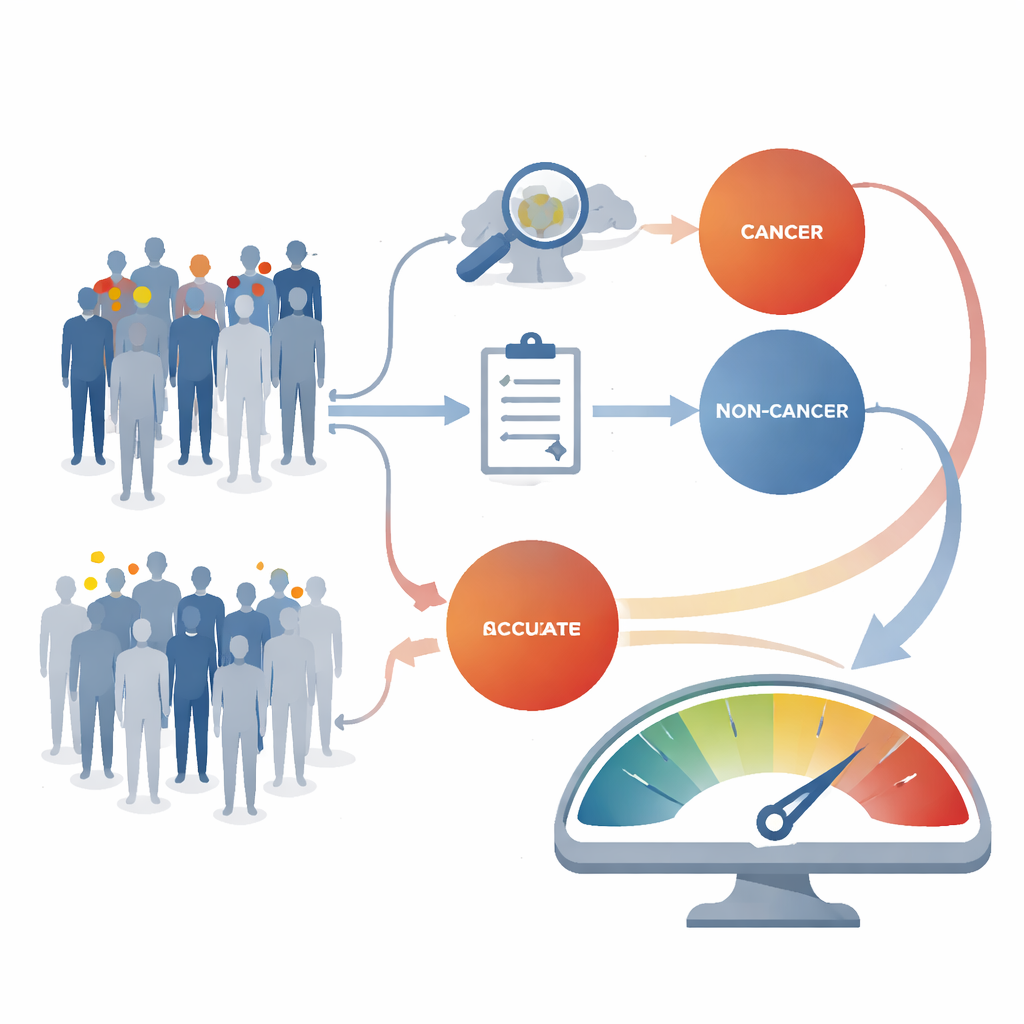
How Health Studies Use Imperfect Records
Epidemiologists often compare groups of people with different levels of exposure—for example, workers who received higher or lower doses of radiation—and then look at how many in each group died from cancer. Death certificates supply the official cause of death, but decades of research show that they frequently mislabel what people actually died from. The common belief is that if these errors are unrelated to exposure level, they mainly blur the signal, making a real risk look smaller than it truly is. Many researchers therefore assume that if they could correct the death records, any link they see between exposure and disease would only get stronger.
A Real-World Test Bed in Nuclear Workers
The authors based their simulations on a unique group of former nuclear workers who joined the United States Transuranium and Uranium Registries. These volunteers agreed to detailed autopsies after death, giving researchers unusually accurate information about what they really died from. For 229 workers, the team had both radiation dose histories and two competing versions of cause of death: the one from the autopsy and the one from the death certificate. Earlier work in this group showed that about one quarter of death certificates misclassified the underlying cause of death, but that these errors did not depend on radiation dose—making this a useful "validation" dataset to anchor more extensive simulations.
Simulating Many Alternate Realities
Building on this foundation, the researchers created thousands of artificial study datasets to see how outcome errors might play out in practice. They used both the real dose records and larger, computer-generated dose distributions that resembled the workers’ exposures. For the health outcome, they either used the actual autopsy-based cancer deaths or generated "true" cancer outcomes according to a simple rule that linked dose to cancer risk. From each starting dataset, they then simulated misclassification by randomly flipping some non-cancer deaths to cancer and some cancer deaths to non-cancer over a wide range of error rates. For every one of the 20,000 misclassified versions under each scenario, they recalculated how strongly dose appeared to be linked to cancer, and whether the result would be judged statistically significant.
When Random Errors Strengthen a Weak Signal
The simulations confirmed that if you could repeat a study infinitely many times and average the results, these kinds of errors typically do pull the estimated relationship toward "no effect." But the picture changes when you focus on a single, real-world study—the situation researchers and regulators actually face. A sizable fraction of simulated studies, sometimes approaching half, ended up with a stronger apparent dose–cancer link after misclassification than before. In scenarios where the original data were just shy of conventional statistical significance, even small levels of misclassification could push many simulated studies over the line into "significant" territory. In rare cases where the true relationship was essentially absent, misclassification alone still produced apparently convincing, but entirely spurious, associations.
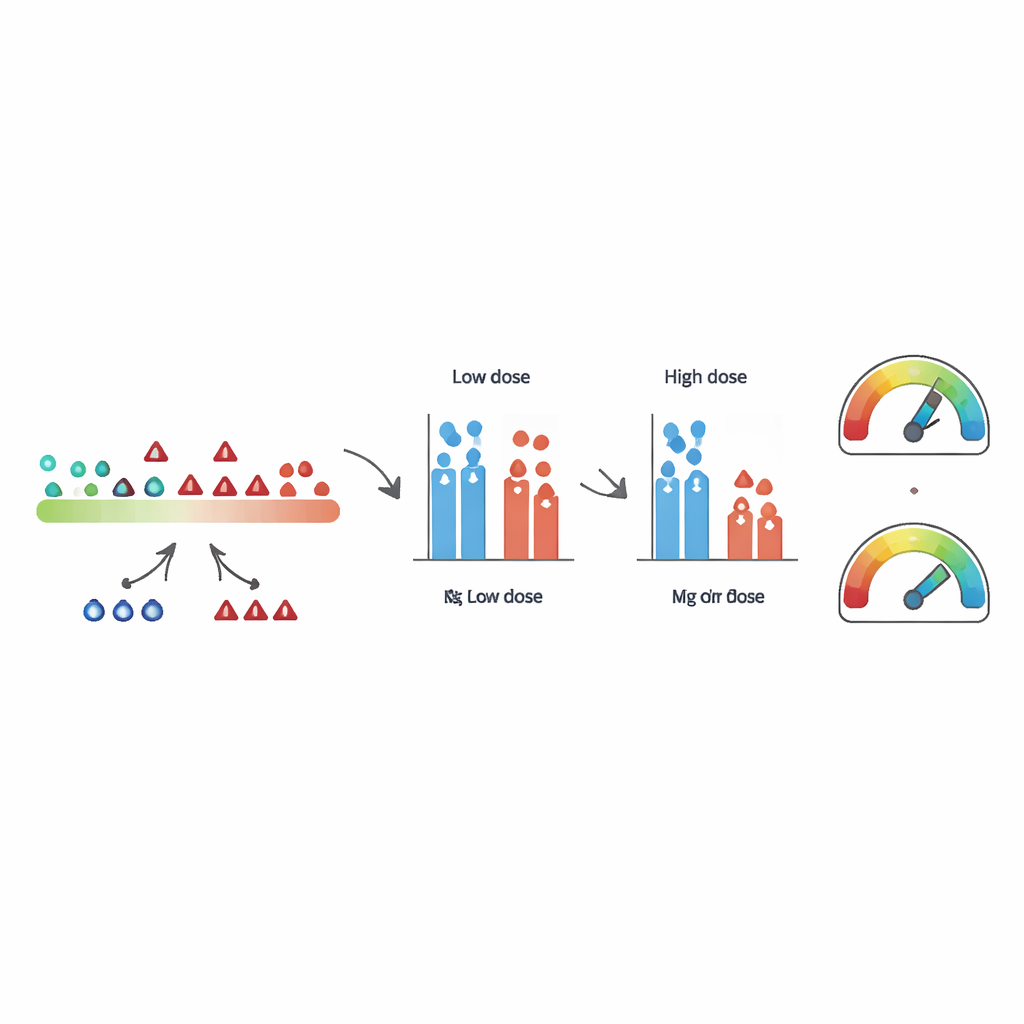
What This Means for Reading Health Risks
These findings show that even when cause-of-death errors are not obviously biased by exposure level, they can still distort the conclusions of individual studies in either direction. In particular, they warn against the casual assumption that an observed borderline association would necessarily grow stronger if only the data were cleaned up. For fields like low-dose radiation research, where estimated risks are small and debates hinge on p-values hovering around 0.05, the impact of even modest misclassification can be substantial. The authors argue that researchers and readers should treat such results with extra caution, and that future work should more routinely use validation data and correction methods to understand how robust a study’s conclusions really are to mistakes hidden in the outcome records.
Citation: Liu, X., McComish, S.L., Howard, S.C. et al. Inference under outcome misclassification in health risk models using a simulation study with a validation dataset. Sci Rep 16, 11981 (2026). https://doi.org/10.1038/s41598-026-41788-6
Keywords: death certificate misclassification, epidemiologic bias, low-dose radiation, cancer mortality, simulation study