Clear Sky Science · en
Elimusertib enhances cytotoxic effects of conventional chemotherapy and sensitizes to radiation in preclinical Ewing sarcoma models
Why this research matters to families
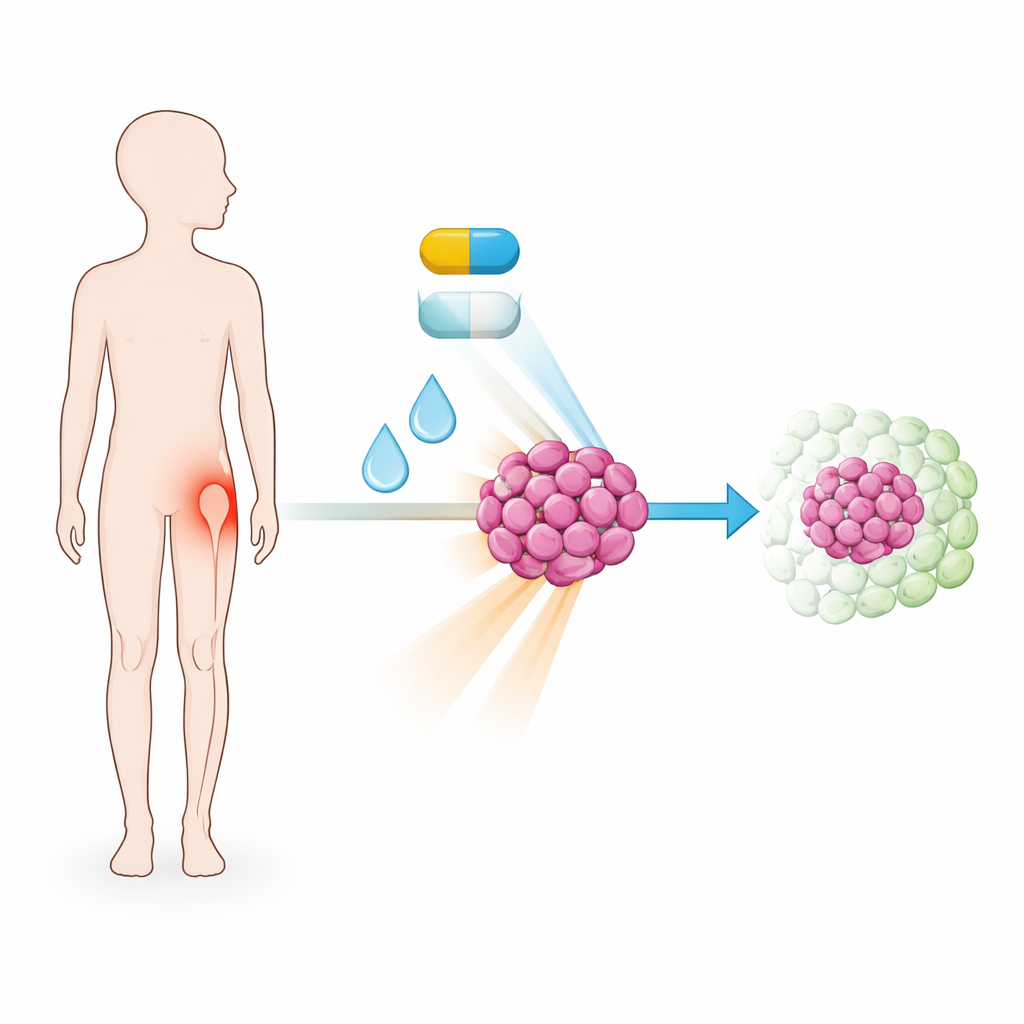
Ewing sarcoma is a rare but aggressive cancer that mostly strikes children, teenagers, and young adults. While modern treatment has improved survival for patients whose disease has not spread, outcomes for those with metastatic or relapsed tumors remain grim, and the intense chemotherapy and radiation can cause serious long‑term side effects. This study explores whether adding a newer type of drug, called elimusertib, could make existing treatments work better against Ewing sarcoma while potentially allowing lower doses of harsh therapies.
A weak spot in cancer’s repair system
Cancer cells grow quickly and often make mistakes when copying their DNA. Ewing sarcoma cells are driven by a fusion protein that pushes them to divide rapidly, leaving them heavily dependent on an internal emergency system that senses and repairs DNA stress. Elimusertib is designed to switch off a key controller in this system, known as ATR. The researchers first compared elimusertib with several other experimental drugs in multiple Ewing sarcoma cell lines. They found that elimusertib was the most effective at stopping cancer cell growth, working at very low concentrations, while similar non‑cancerous cells were about ten times less sensitive. This suggested that Ewing sarcoma cells have a particular vulnerability to ATR blockade.
Testing the drug in cell cultures and small tumors
To see how elimusertib affects cancer cells in more detail, the team examined whether treated cells simply slowed down or actually died. Using flow cytometry and protein tests, they showed that elimusertib triggered programmed cell death in several Ewing sarcoma cell lines. The drug increased markers of late‑stage cell death and activated molecular “self‑destruct” signals inside the cells. The researchers then moved to a three‑dimensional setting by growing tumors on the chorioallantoic membrane of developing chicken eggs, a common experimental model. When Ewing sarcoma cells were pre‑treated with elimusertib before implantation, they formed tumors less often, and the tumors that did grow were significantly smaller than those formed by untreated cells. This indicated that ATR inhibition can reduce both the ability of cancer cells to start tumors and the size of tumors that develop.
Working together with chemotherapy
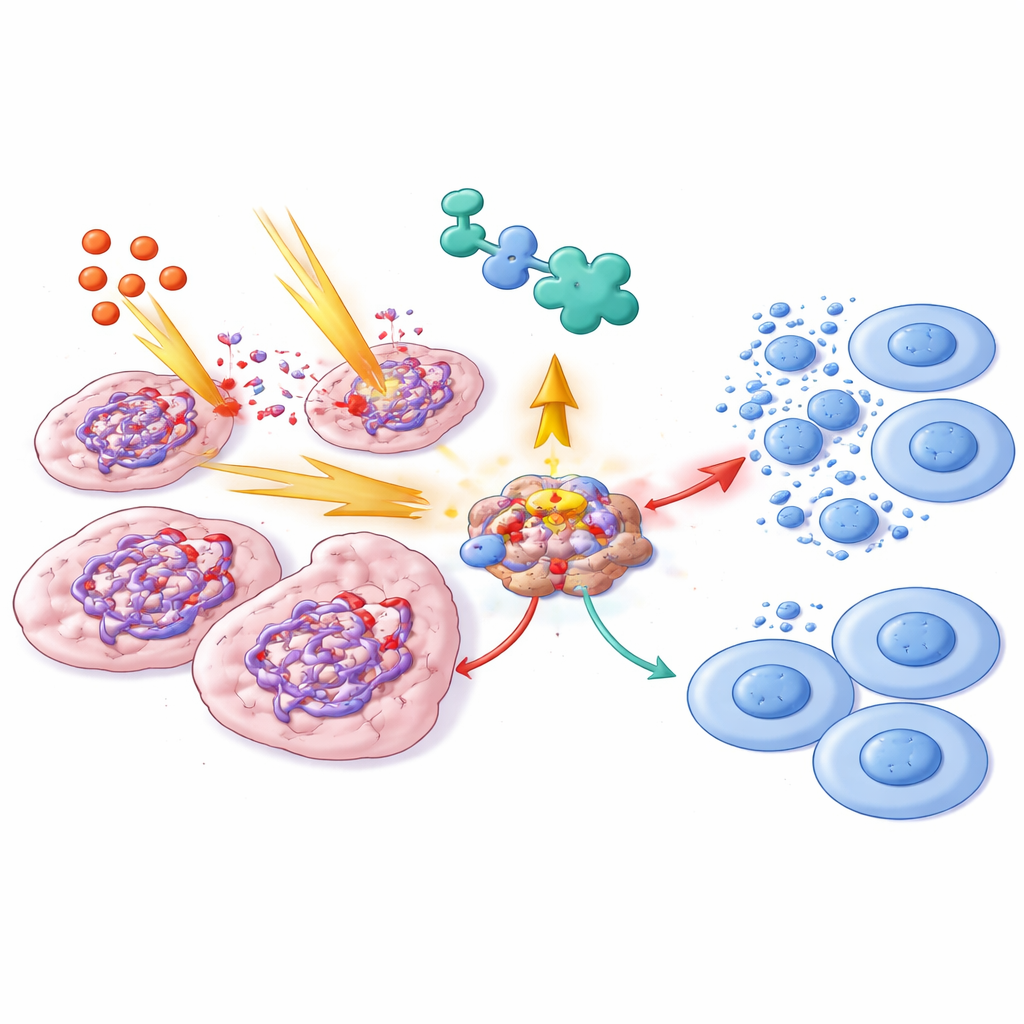
Because Ewing sarcoma is usually treated with combinations of standard chemotherapy drugs, the scientists next asked whether elimusertib would clash with or complement existing regimens. They combined the ATR inhibitor with four commonly used agents—ifosfamide, etoposide, doxorubicin, and vincristine—across a wide range of doses. Using mathematical models that compare the effects of each drug alone and in combination, they found clear synergy between elimusertib and both ifosfamide and etoposide, particularly at lower doses. In these settings, the drug pairs killed more cancer cells than would be expected from simply adding their individual effects. Doxorubicin showed mixed results, with synergy in some cell lines and additive effects in others, while vincristine’s impact was mostly additive. Only a few high‑dose combinations showed mild opposition, and these occurred where either drug alone already wiped out nearly all cells.
Boosting the punch of radiation
Radiation therapy is a crucial tool for controlling Ewing sarcoma but is limited by damage to healthy tissues, especially in young people who face a lifetime of possible late effects and secondary cancers. Because radiation causes DNA damage that normally activates ATR, the team tested whether elimusertib could act as a radiosensitizer—making cancer cells more vulnerable to lower doses of radiation. In cell‑death assays, combining elimusertib with X‑ray exposure produced far more dying cells than either treatment alone, and this effect grew stronger as the radiation dose increased. On a molecular level, the drug dampened the activation of a downstream checkpoint protein that usually helps cells pause and repair their DNA. In long‑term colony‑formation tests, a modest radiation dose paired with elimusertib was more effective than a much higher dose of radiation by itself, sharply reducing the number of surviving cancer cell clusters.
What this could mean for future treatment
Taken together, these preclinical experiments show that elimusertib alone can slow and shrink Ewing sarcoma models and that it powerfully enhances the effects of both DNA‑damaging chemotherapy and radiation. By disabling a repair pathway that Ewing sarcoma cells heavily rely on, the drug appears to turn standard treatments into a more decisive blow against the tumor. Although these studies were done in cells and experimental tumor models—not yet in patients—the results support testing ATR inhibitors like elimusertib in clinical trials for Ewing sarcoma. If similar benefits are seen in people, this approach could allow doctors to use lower doses of toxic therapies while improving chances of long‑term control, offering new hope for children and young adults facing this difficult cancer.
Citation: Koch, L., Kerkhoff, M., Bretschneider, M. et al. Elimusertib enhances cytotoxic effects of conventional chemotherapy and sensitizes to radiation in preclinical Ewing sarcoma models. Sci Rep 16, 10953 (2026). https://doi.org/10.1038/s41598-026-41751-5
Keywords: Ewing sarcoma, ATR inhibitor, elimusertib, chemoradiation, DNA damage repair