Clear Sky Science · en
Perception of AI-generated smile versus real orthodontic treatment outcomes among dentists, students, and laypeople
Why this matters for your next dental visit
Perfect teeth are everywhere online, from glossy ads to filtered selfies. But many of these smiles are now created by artificial intelligence (AI), not by braces or aligners. This study asked a simple question with big implications: can people actually tell the difference between real orthodontic results and AI-made “perfect” smiles—and which do they like more?
How the researchers tested real versus digital smiles
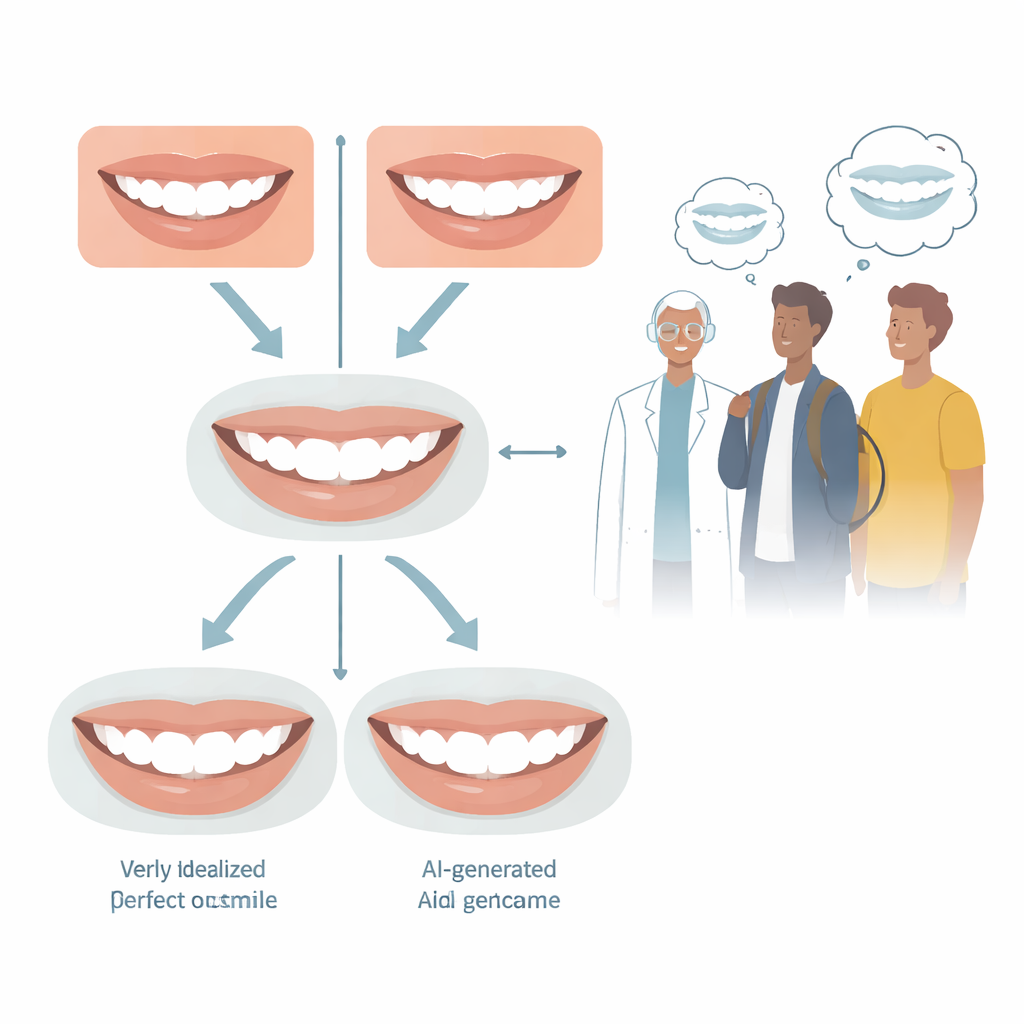
Researchers in Brazil collected photographs of three common dental situations: slightly crooked front teeth, a gap between the front teeth, and moderately crowded front teeth. For each case they had three versions of the smile: the original photo before treatment, a real “after” photo following orthodontic care, and a new image generated by an AI tool based on the original photo with the simple instruction to create a realistic perfect smile. These images were then shown online to 288 people—practicing dentists, dental students, and adults with no dental training.
What participants were asked to do
Each person saw the sets of smiles in random order so that no pattern would give away which image was which. For every image, participants had two tasks. First, they had to decide whether the smile was produced by AI or was a real photograph. Second, they rated how attractive they found the smile on a scale from zero (not attractive at all) to one hundred (extremely attractive). The researchers then used standard statistical tools to see how often people guessed correctly and how their beauty scores compared for AI-made and real treatment outcomes.
People struggled to spot the fake—but loved it more
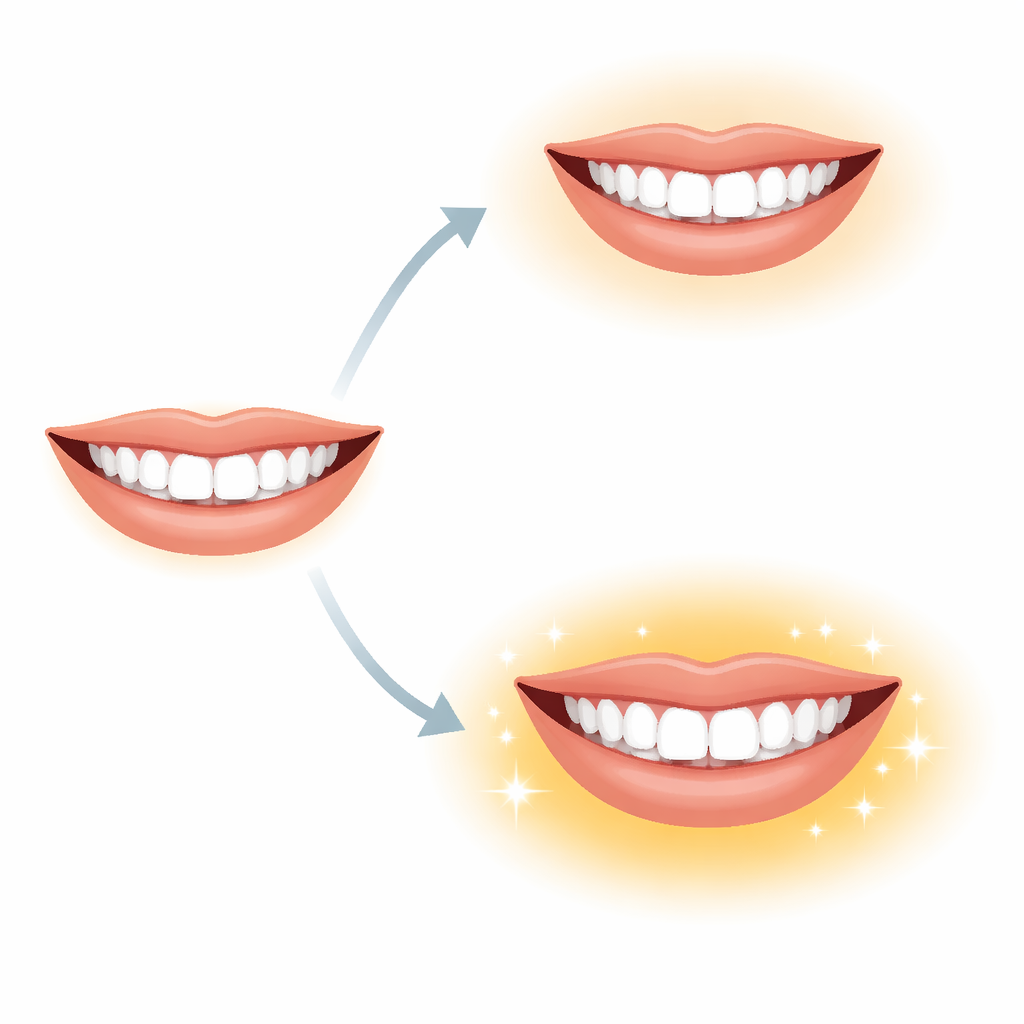
The results showed that all three groups—dentists, students, and laypeople—had a hard time recognizing AI-generated smiles. Fewer than half of the AI images were correctly identified as artificial, no matter who was looking at them or which dental problem was shown. In contrast, participants were very good at recognizing real “after” treatment photos as real, getting it right in nearly nine out of ten cases or more. Dental students performed best overall at telling real from artificial, but even they missed most of the AI-generated images.
The appeal of a flawless digital smile
When it came to attractiveness, AI easily won. On average, AI-generated smiles scored close to eighty out of one hundred, while real orthodontic results scored under forty. This pattern held across all groups. Dentists, students, and laypeople alike rated the digital smiles as much more appealing than the real-life outcomes actually achieved in the clinic. Very high ratings were common for AI images and rare for real ones, while very low ratings clustered around the real treatment photos and were almost never given to the AI-created smiles.
What this means for patients and professionals
To a non-specialist, the takeaway is clear: modern AI can produce dental images that look convincingly real and even more beautiful than what real-world treatment usually delivers. Because people—including trained professionals—often cannot tell these images apart from genuine results, there is a real risk that idealized digital smiles could raise patient expectations to unrealistic levels or blur the line between honest examples and marketing gloss. The authors argue that dentistry and other health fields will need clear rules, transparency, and digital literacy so that AI becomes a helpful tool for communication, not a source of confusion or disappointment.
Citation: Tirkkonen, O., Gasparello, G.G., Mota-Júnior, S.L. et al. Perception of AI-generated smile versus real orthodontic treatment outcomes among dentists, students, and laypeople. Sci Rep 16, 14377 (2026). https://doi.org/10.1038/s41598-026-41744-4
Keywords: AI-generated images, orthodontic outcomes, smile aesthetics, digital dentistry, health communication