Clear Sky Science · en
Risk factors for suicidal ideation among bereaved adolescents in a psychological support hotline
Why this matters to families and teens
When a teenager loses a parent, relative, or close friend, adults often ask, “Are they coping?” This study looks beneath the surface of that question. By analyzing calls to China’s largest psychological support hotline, the researchers explored how often bereaved adolescents think about ending their lives, and which emotional warning signs most strongly signal danger. Their findings help parents, teachers, counselors, and hotline staff understand which struggles should trigger urgent support.

Who called the hotline
The study focused on 850 adolescents aged 12 to 18 who phoned a psychological support hotline after the death of a family member or close person. All calls took place between mid‑2022 and mid‑2024. The hotline workers, who are specially trained in crisis intervention, recorded basic background information and used a structured interview to assess mood, grief, distress, feelings about the future, and any history of self‑harm. The teens were then divided into two groups based on whether they had seriously thought about death or suicide in the previous two weeks.
How common were suicidal thoughts
The numbers were troubling: nearly nine out of ten bereaved adolescents who called the hotline reported suicidal thoughts. This rate was higher than that seen among other adolescent callers to the same service. The teens with suicidal thoughts did not differ much from those without in terms of age, gender, or how long it had been since the loss. Instead, what set them apart was the intensity of their emotional pain. On average, they showed much higher levels of depression and grief, and more of them had previously attempted suicide.
Emotional warning signs that stood out
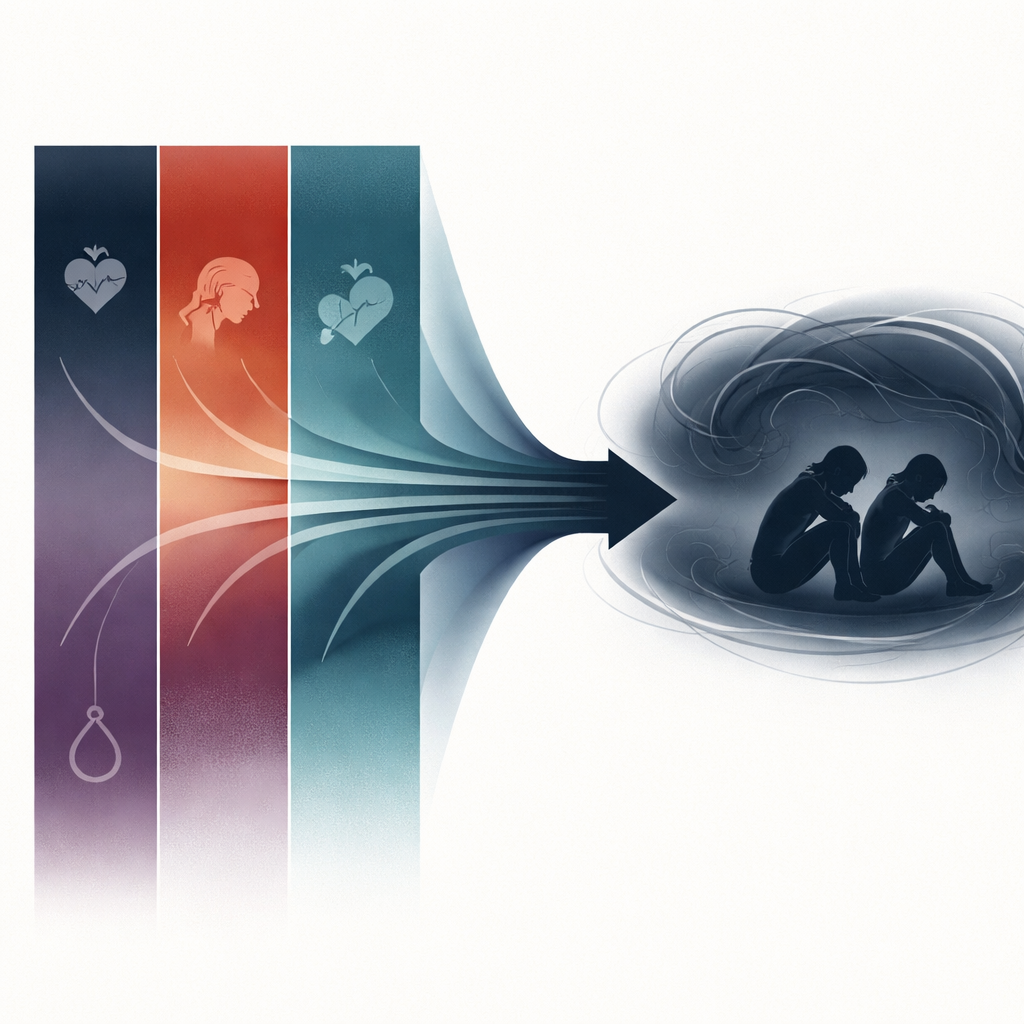
To pinpoint the strongest warning signs, the researchers used statistical models that considered many factors at once. Five stood out as independent risk factors for suicidal thoughts: feeling deeply hopeless about the future, experiencing very intense psychological distress, more severe depression, stronger grief reactions, and having a past suicide attempt. Even after accounting for other background problems such as ongoing life difficulties or past abuse, these five signals remained closely linked to whether a grieving teen reported suicidal ideas. In contrast, factors like alcohol or drug misuse and being afraid of being attacked showed smaller differences and were less useful for separating higher‑risk from lower‑risk callers.
When depression and past attempts combine
The team also asked whether certain risk factors magnify each other when they occur together. They found a particularly dangerous combination: marked depression together with a history of suicide attempts. Teens who were much more depressed and had previously tried to harm themselves were several times more likely to report suicidal thoughts than teens with lower depression and no such history. The joint effect of these two factors was greater than simply adding their individual risks, suggesting a powerful interaction between present mood and past behavior.
What this means for support and prevention
For families and professionals, the study’s message is clear. After a death, it is not just the fact of bereavement that matters, but how deeply a teen feels trapped in sadness and hopelessness. Very high levels of distress, depression, and grief, especially in a young person who has tried to end their life before, should prompt immediate, sustained support. Hotlines, schools, and clinics can use these clues to identify which bereaved adolescents most urgently need intensive care, while also offering broad grief support to all who are mourning.
Citation: Liu, Zk., Wang, Rf., Li, Xx. et al. Risk factors for suicidal ideation among bereaved adolescents in a psychological support hotline. Sci Rep 16, 10778 (2026). https://doi.org/10.1038/s41598-026-41739-1
Keywords: adolescent bereavement, suicidal thoughts, hotline support, grief and depression, suicide prevention