Clear Sky Science · en
A multicenter retrospective study of plasma d‑dimer levels for evaluating treatment response in multiple myeloma
Why tracking a blood clot marker matters
Multiple myeloma is a cancer of blood plasma cells that can damage bones, kidneys, and the body’s clotting system. Many patients live far from advanced cancer centers, where sophisticated scans and specialized lab tests are not always available. This study asks a simple question with big practical impact: can a routine blood test called D-dimer – usually used to check for blood clots – also help doctors tell whether treatment for multiple myeloma is working?

A common cancer with hidden clotting risks
Multiple myeloma causes abnormal plasma cells to build up in the bone marrow, crowding out healthy blood-making cells. Patients may develop anemia, fragile bones, kidney problems, and a tendency for blood to clot too easily. This overactive clotting system is not just a side effect; it is tightly connected to how active the cancer is. When many myeloma cells are present, the blood is more likely to form tiny clots, which are then broken down, releasing D-dimer into the bloodstream. That makes D-dimer an attractive candidate as a simple, repeatable marker of disease activity.
How the study was carried out
Researchers from three hospitals in China reviewed records from 160 people newly diagnosed with multiple myeloma. None had received chemotherapy, radiation, or immune therapy before entering the study, and anyone with conditions that strongly raise D-dimer – such as recent major clots, other cancers, trauma, or pregnancy – was excluded. All patients received modern myeloma treatments, including combinations of chemotherapy, targeted drugs, and immune-based therapies, along with standard blood-clot prevention medicines when indicated.
Measuring change before and after treatment
Each patient had a D-dimer test at their first hospital visit and again after eight cycles of chemotherapy. The researchers looked at three numbers: the starting D-dimer level; the absolute change after treatment; and the percentage change relative to the starting value. They then compared these values across four outcome groups: complete response, partial response, stable disease, and progressive disease. While starting D-dimer levels were commonly elevated and did not differ much between groups, the story changed once treatment was underway.
What falling or rising D-dimer really signaled
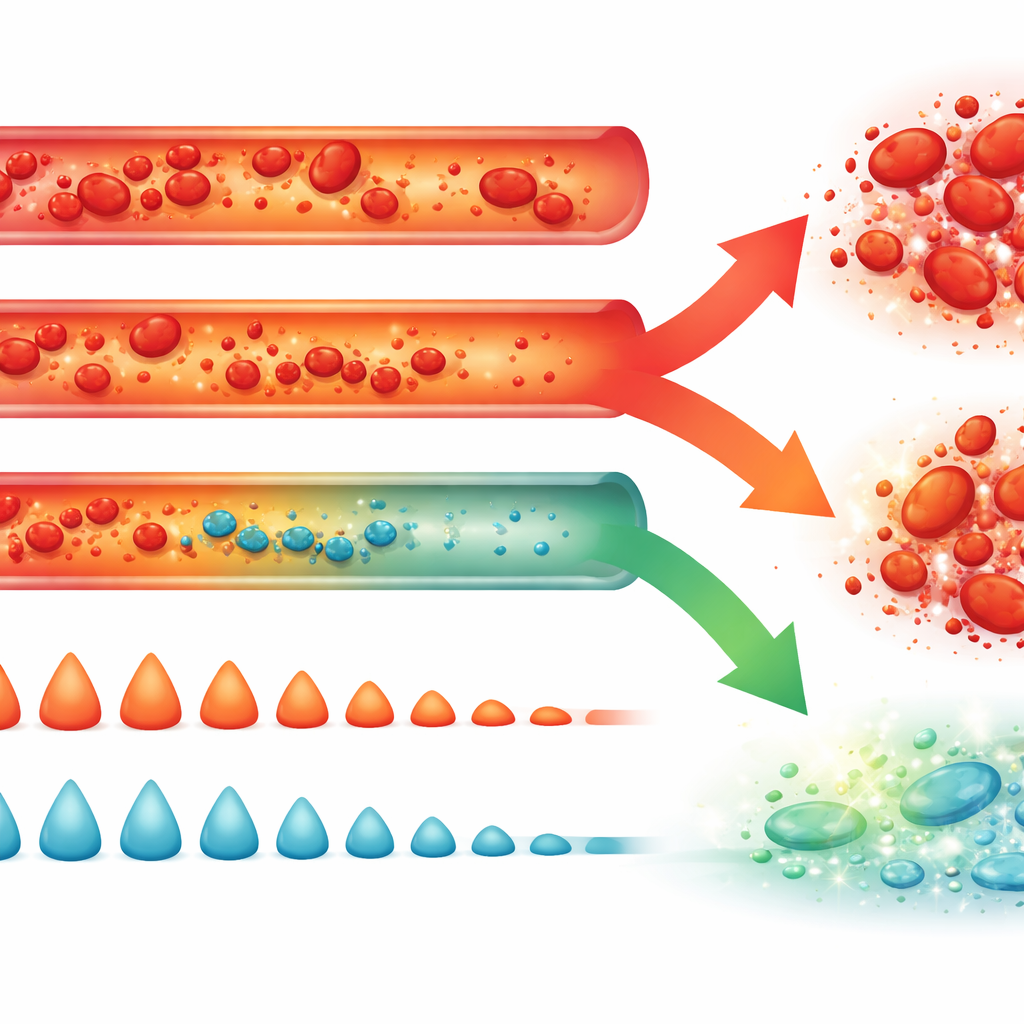
Patients whose cancer clearly shrank – those with complete or partial responses – tended to show marked drops in D-dimer after eight treatment cycles. By contrast, those whose disease stayed the same or worsened showed only small decreases, no change, or even increases. When the researchers combined patients into “overall responders” versus “non-responders,” the fall in D-dimer was much larger in the responder group, both in raw units and as a percentage of the starting value. Statistical models suggested that this link between D-dimer reduction and good treatment response held up even after accounting for age, kidney function, and standard staging measures.
Why a simple test could be so useful
These findings support the idea that D-dimer behaves like an indirect barometer of tumor activity and clotting stress in multiple myeloma. Because nearly all patients start out with high D-dimer levels, the single value at diagnosis is not very informative. But watching how D-dimer moves over time – especially whether it falls after several cycles of therapy – can provide a quick, low-cost, and non-invasive window into whether treatment is calming the disease. For patients in remote or resource-limited settings, and for those whose cancer does not produce easily trackable proteins, regularly checking D-dimer could become a practical way to complement scans and specialized tests when judging how well therapy is working.
Citation: Wu, A., Zuo, W., Gao, B. et al. A multicenter retrospective study of plasma d‑dimer levels for evaluating treatment response in multiple myeloma. Sci Rep 16, 12632 (2026). https://doi.org/10.1038/s41598-026-41696-9
Keywords: multiple myeloma, D-dimer, treatment response, blood biomarkers, cancer monitoring