Clear Sky Science · en
A novel strut injector with lateral extruded nozzle for efficient hydrogen mixing in supersonic combustors
Why fast fuel mixing matters for future flight
Scramjet engines, which burn fuel in an airflow moving faster than the speed of sound, are one of the leading candidates for hypersonic flight. But inside these engines, air rushes through the combustion chamber in just thousandths of a second, leaving very little time for fuel and air to mix before burning. This paper explores a new way of injecting hydrogen fuel into that rushing air so that it mixes more quickly and more evenly, a key step toward efficient, reliable high-speed flight. 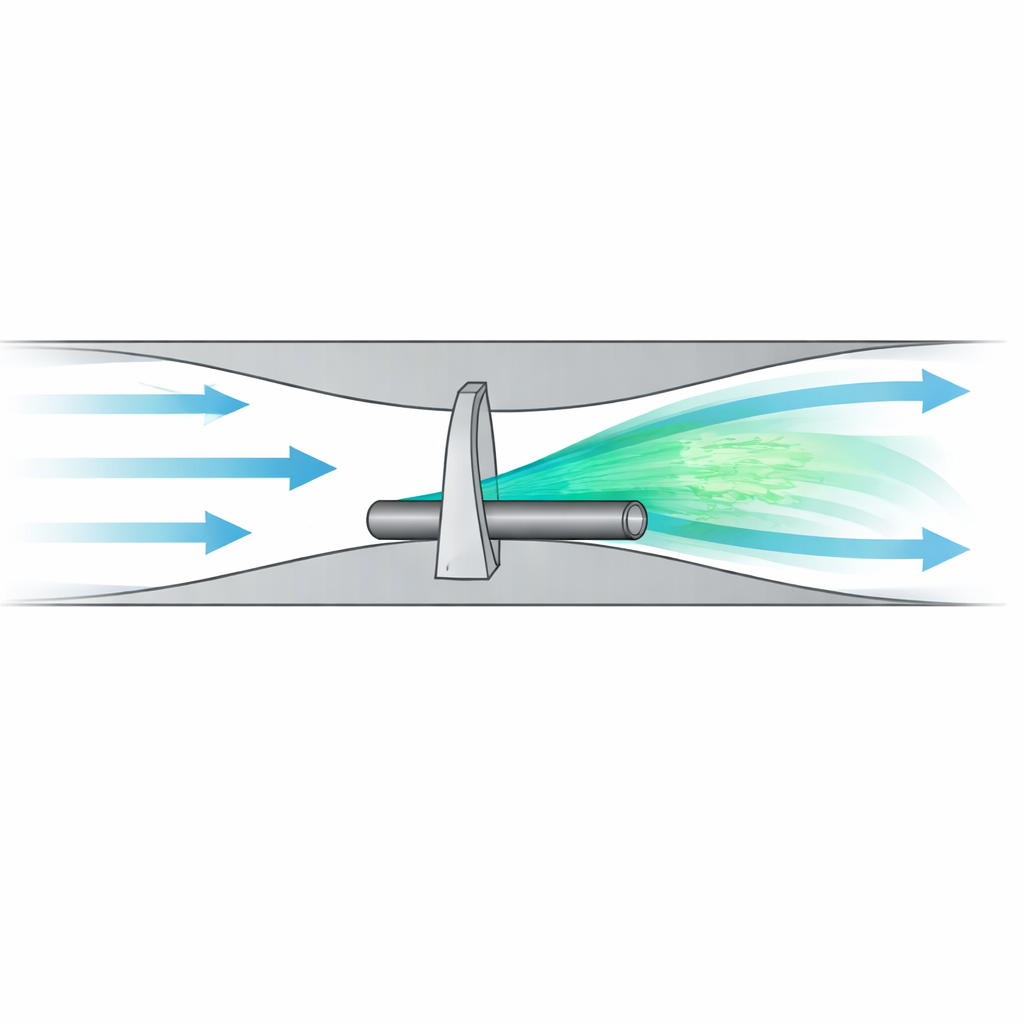
A new twist on how fuel enters the stream
Instead of injecting fuel from holes in the chamber wall, the study focuses on a slim fin, or strut, that sticks into the main airstream like a small wing. Behind this strut sits a short rod that carries hydrogen fuel. As the air passes the strut, it sheds swirling wakes and small low-speed pockets that can help stir fuel into air. The authors redesign the rod so that fuel can be fed sideways into the flow along its length, using either a few separate round holes or one continuous slot. The goal is to take advantage of the strut’s natural wake while shaping how the fuel enters the air to get better mixing without overly disturbing the flow.
Testing three ways to feed the fuel
The team compares three fuel layouts, all delivering the same overall fuel amount under the same conditions. In Case 1, hydrogen enters through three circular side holes in the rod, each sending a narrow jet into the supersonic air. Case 2 adds more, smaller holes, creating a denser set of jets. Case 3 replaces the holes with a single thin slot that runs along the rod, releasing a sheet of fuel sideways into the wake behind the strut. Using detailed computer simulations of the airflow, pressure, temperature, and hydrogen concentration, the researchers track how each design shapes shock waves, swirling regions, and the spread of fuel downstream.
How the flow behaves in each design
The simulations show that the hole-based designs (Cases 1 and 2) create strong local shock waves and large recirculation zones where the flow slows and folds back on itself. These regions stir the fuel strongly but also make the flow uneven, with clumps of high fuel concentration and patches of almost pure air. Adding more holes in Case 2 increases penetration and turbulence but also makes the pattern more chaotic. In contrast, the slot design in Case 3 produces a smoother sheet of hydrogen that hugs the wake and spreads out more evenly. Shock waves are weaker, temperature changes are more gradual, and the flow returns to supersonic conditions more quickly after the injector, indicating a gentler disturbance to the overall engine airflow.
Measuring mixing quality and energy cost
To move beyond visual impressions, the authors quantify how well mixed the fuel and air are as they travel downstream, how strong the swirling motions remain, and how much of the flow’s pressure is lost to shocks and turbulence. They find that the slot design maintains organized vortices farther downstream and achieves the highest mixing efficiency, meaning that more of the hydrogen reaches near-ideal proportions with air over a given distance. The multi-hole design in Case 2, despite its strong local stirring, suffers from faster decay of coherent swirling structures and more patchy fuel distribution. The slot injector does introduce somewhat higher overall pressure loss than the others, reflecting its continuous interaction with the main flow, but this penalty remains within acceptable limits for an efficient combustor. 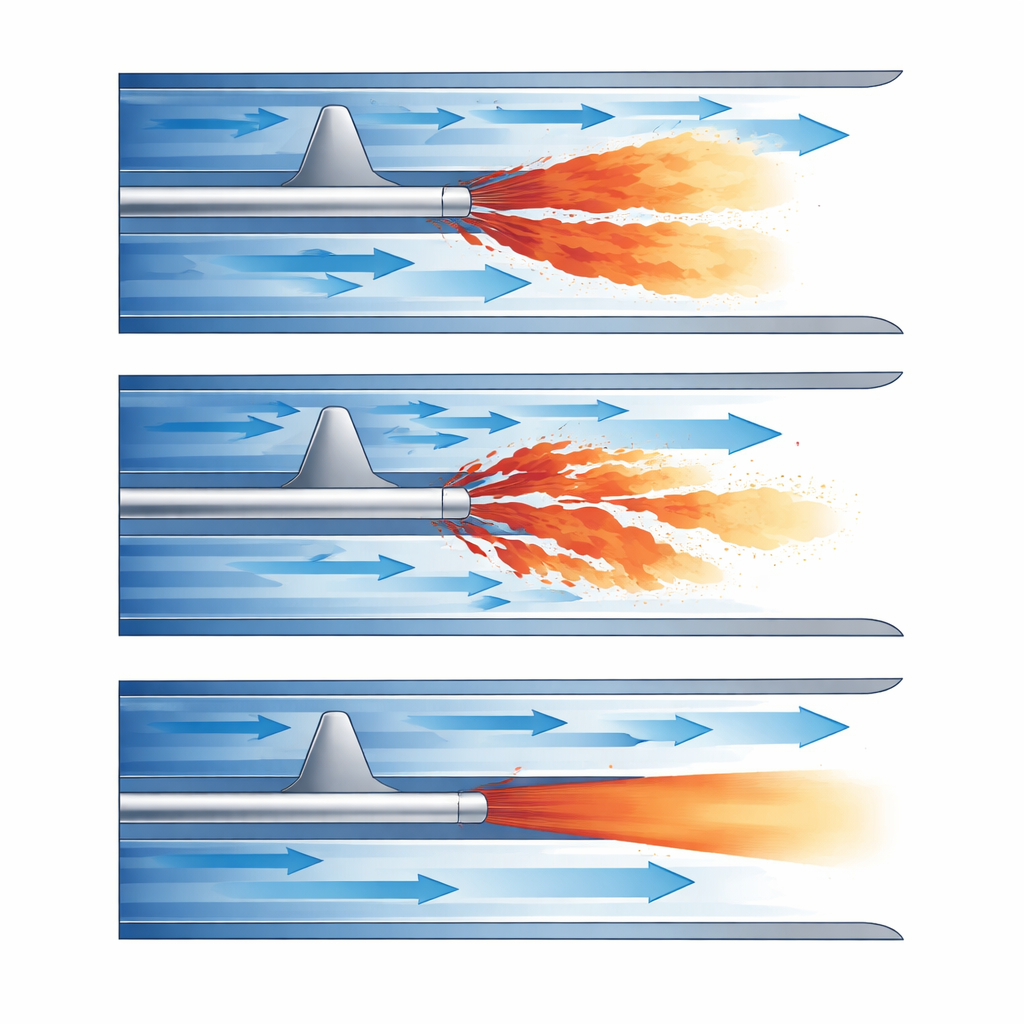
What this means for hypersonic engines
For a lay reader, the central result is that carefully shaping how fuel enters a very fast airstream can make a big difference to how quickly and evenly it spreads. The continuous lateral slot on a rod behind a strut yields smoother, more uniform hydrogen–air mixtures than a handful of separate jets, while keeping aerodynamic penalties moderate. In practical terms, this design helps scramjet engines burn hydrogen more completely within the tiny window of time available, improving thrust and reliability. The work offers engineers a clear design direction for future hypersonic combustors: use the structure that already disturbs the flow—the strut—and pair it with a distributed slot injector to get better mixing where it matters most.
Citation: Lajimi, R.H., Alrasheedi, N.H., Ghodratallah, P. et al. A novel strut injector with lateral extruded nozzle for efficient hydrogen mixing in supersonic combustors. Sci Rep 16, 12629 (2026). https://doi.org/10.1038/s41598-026-41674-1
Keywords: scramjet, hydrogen fuel, supersonic combustion, fuel–air mixing, aerospace propulsion