Clear Sky Science · en
Childhood emotional maltreatment is linked to healthy dietary behavior through depression, anxiety, and subjective well-being
Why Early Feelings Still Matter at the Dinner Table
Most of us think of childhood emotional hurt as something that mainly affects mood and relationships. This study suggests it can also quietly shape what ends up on our plates years later. By following thousands of Chinese university students, the researchers asked a simple but powerful question: do painful emotional experiences in childhood help explain why some young adults struggle to eat well, and is this link carried through everyday feelings of depression, anxiety, and overall life satisfaction?
Hurting Words, Lasting Echoes
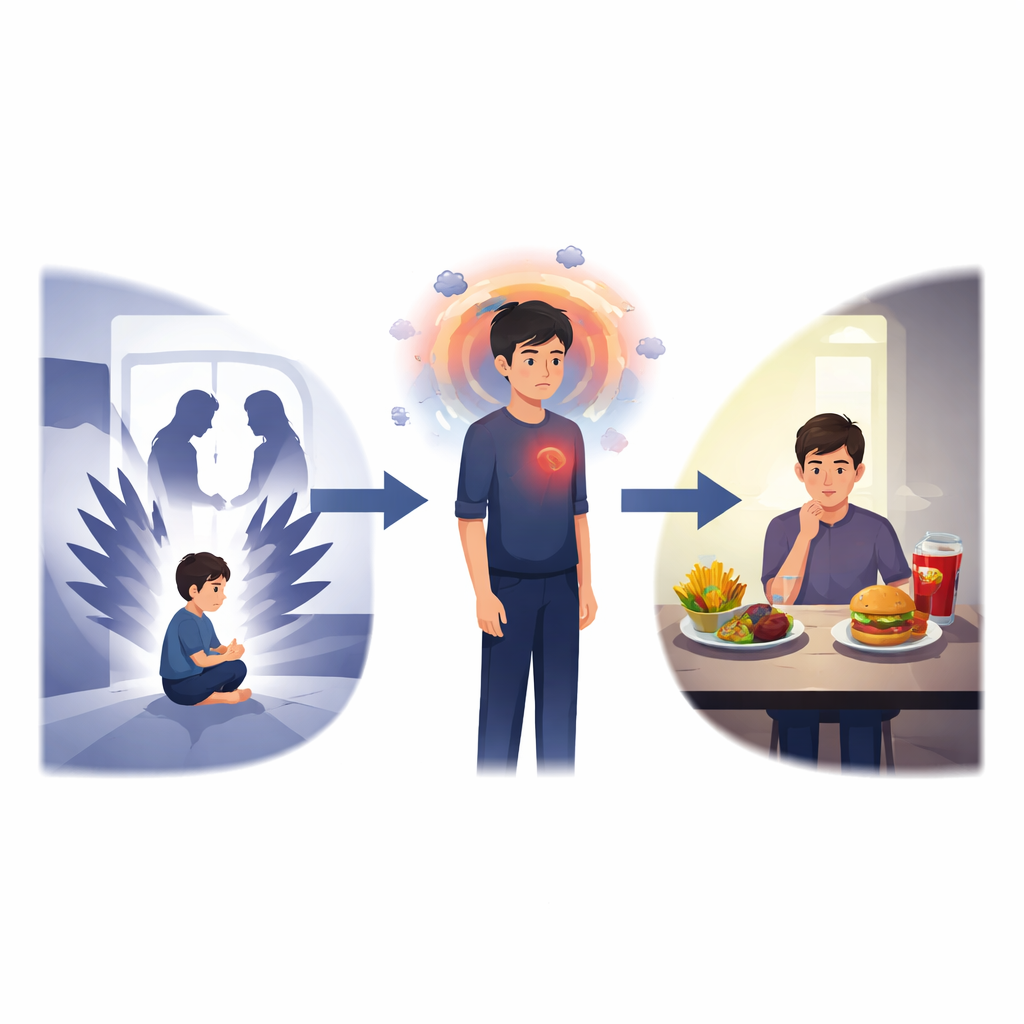
Childhood emotional maltreatment in this study meant frequent verbal attacks, coldness, humiliation, or constant put‑downs from parents or caregivers. Unlike bruises, these wounds are invisible, but past work shows they can leave deep marks on self‑esteem and mental health. The authors confirmed that pattern in their large sample of over 3,000 students: those who remembered more emotional mistreatment as children tended to report more symptoms of depression and anxiety, and felt less satisfied and happy with their lives. These findings echo global research showing that such experiences are common and can cast a long psychological shadow into adulthood.
From Feelings to Food Choices
The team also looked at a very down‑to‑earth outcome: how often students drank sugary soft drinks and how often they ate fruits and vegetables. From these three questions they built a simple “healthy diet” score. Students with more emotional maltreatment in their past generally had poorer diet scores. At the same time, higher depression and anxiety were linked to worse dietary habits, while better overall well‑being went hand in hand with healthier patterns of eating. Even though the effects were modest in size, the relationships were consistent: more emotional pain and less life satisfaction tended to accompany more soda and fewer fruits and vegetables.
The Chain Linking Past Hurt and Present Habits
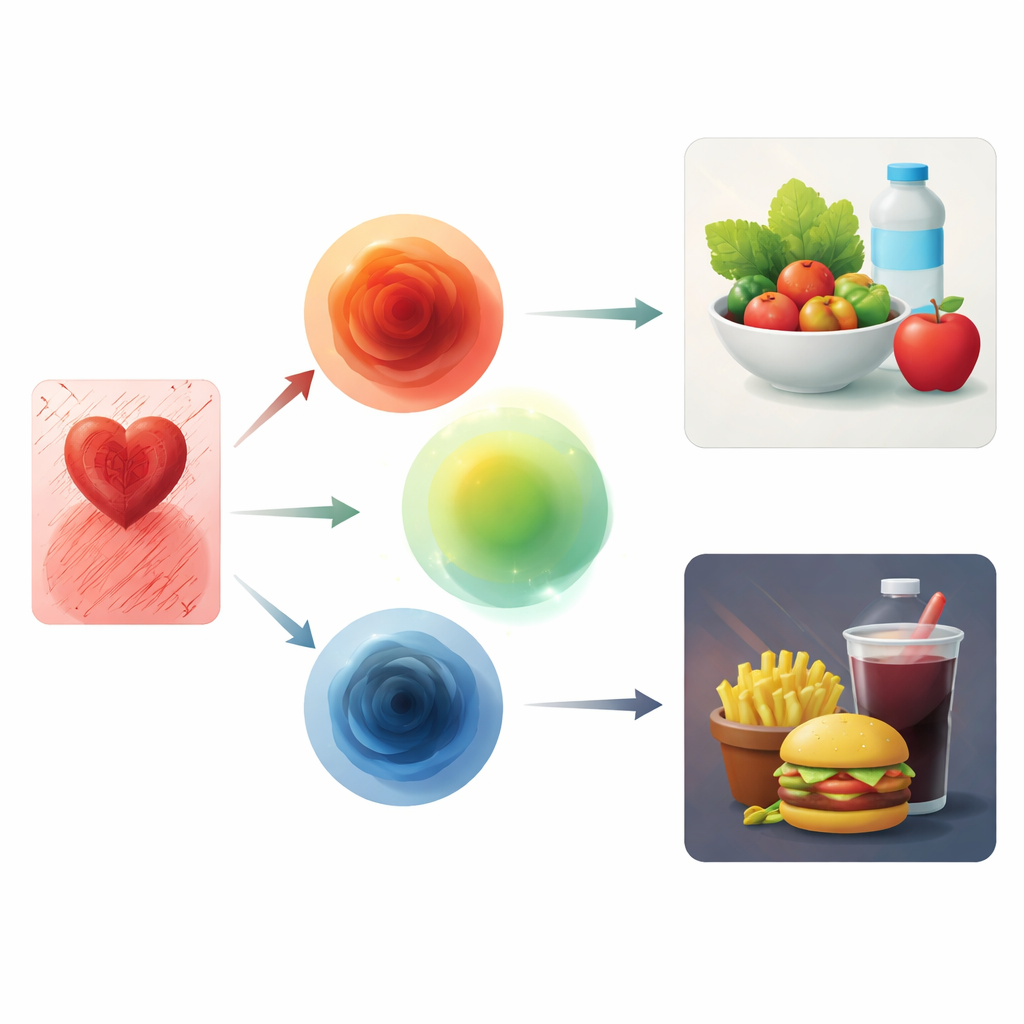
To understand how these pieces fit together, the researchers used statistical models that treat depression, anxiety, and life satisfaction as stepping stones in a chain. In their main model, childhood emotional maltreatment was tied to greater emotional distress; that distress was related to lower subjective well‑being; and all three were, in turn, associated with less healthy eating. Part of the connection between early hurt and current diet ran through depression alone, part through anxiety alone, part through low well‑being, and part through a sequence where distress and reduced life satisfaction worked together. Altogether, these indirect paths explained a bit more than one‑third of the overall link between maltreatment and diet, suggesting that emotions and outlook are important, but not the only, pieces of the puzzle.
What This Means for Students and Campuses
Because the study measured everything at one point in time, it cannot prove that childhood experiences caused later eating patterns. Still, the results fit well with what we know from everyday life: when people feel anxious or down, they may reach more often for quick comfort foods, and when they feel content and supported, it is easier to maintain balanced habits. The findings hint that campus nutrition programs may be more effective if they do not focus only on information about “good” and “bad” foods, but also on screening for emotional difficulties, offering counseling, and helping students build a stronger sense of well‑being. In that sense, caring for students’ feelings may be one route to improving what, and how, they eat.
Big Picture: Healing Minds, Helping Meals
In plain terms, this research suggests that the way young adults eat is partly tied to how they were made to feel as children, and to how they feel about their lives today. Emotional mistreatment in childhood was linked to more depression and anxiety, lower happiness, and, ultimately, less healthy diets. While the effects were not large, they were steady and clear. The takeaway is simple: efforts to improve students’ eating habits may work better when they also address emotional scars and support mental well‑being, helping turn painful early experiences into healthier choices at the dinner table.
Citation: Yan, C., Liu, Y., Zhang, T. et al. Childhood emotional maltreatment is linked to healthy dietary behavior through depression, anxiety, and subjective well-being. Sci Rep 16, 12791 (2026). https://doi.org/10.1038/s41598-026-41669-y
Keywords: childhood emotional maltreatment, university students, depression and anxiety, subjective well-being, healthy eating habits