Clear Sky Science · en
Bond strength and interfacial stability of a universal adhesive to alendronate-treated dentin
Why stronger tooth repairs matter
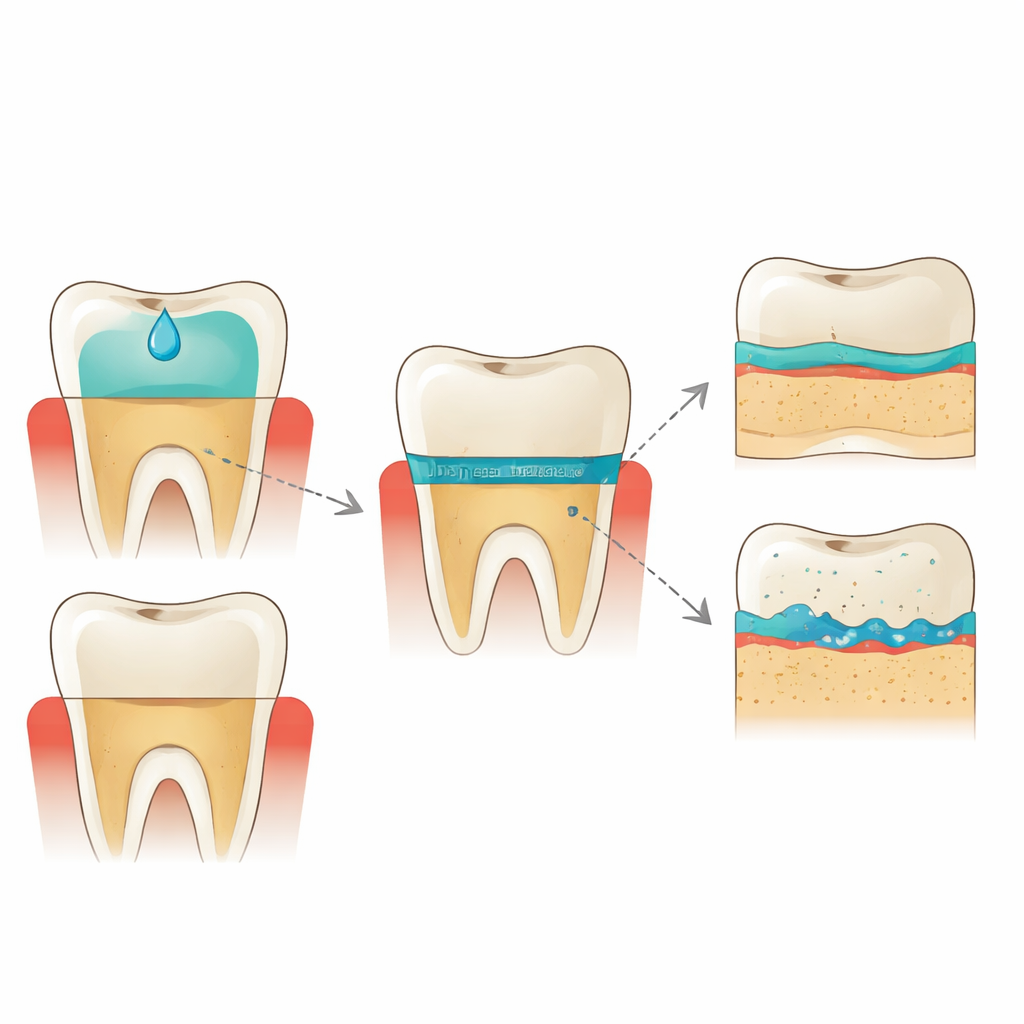
When a cavity is filled, the long-term success of the repair depends on how firmly the filling material bonds to the inner tooth tissue called dentin. Over time, this bond can weaken, leading to gaps, sensitivity, and the need for replacement work. This study explores whether a drug already used to treat osteoporosis, alendronate, can be repurposed to make the bond between tooth and filling stronger and longer lasting.
The weak link inside tooth fillings
Modern white fillings rely on a thin, glue-like layer that connects the composite resin to dentin. This zone, known as the hybrid layer, is partly made of tooth proteins and partly of plastic. Inside dentin, natural enzymes slowly break down exposed collagen fibers in this layer, undermining the glue over time. Earlier work showed that these enzymes, called matrix metalloproteinases, can be triggered by the acids used to prepare teeth for bonding, helping explain why some fillings fail years after they are placed.
Borrowing a bone drug for teeth
Chlorhexidine, a common disinfectant, has been used to slow down these enzymes, but it tends to leach out and may interfere with some advanced adhesives. Alendronate, a drug widely used to protect bone, strongly attaches to mineral-rich tissues and can block the same types of enzymes. The researchers reasoned that if alendronate were rubbed into dentin before applying a so‑called universal adhesive, it might stay in place, shield the collagen, and improve how well the glue grips the tooth, especially under conditions that mimic years of temperature changes in the mouth.
Testing treated teeth in the lab
Ninety-six extracted human molars were prepared to expose flat dentin surfaces and then divided into four treatment groups: no pretreatment, chlorhexidine, low‑dose alendronate, and higher‑dose alendronate. Each group was further split according to how the universal adhesive was used: a traditional “etch‑and‑rinse” approach, which removes more mineral, or a milder “self‑etch” approach. After building up composite on the treated dentin, the team cut each tooth into tiny beams and pulled them apart to measure bond strength, examined how they fractured, and visualized fluid pathways at the interface using electron microscopes. Tests were done both after 24 hours and after 5,000 temperature cycles, roughly representing several months of use.
What the bond tests revealed
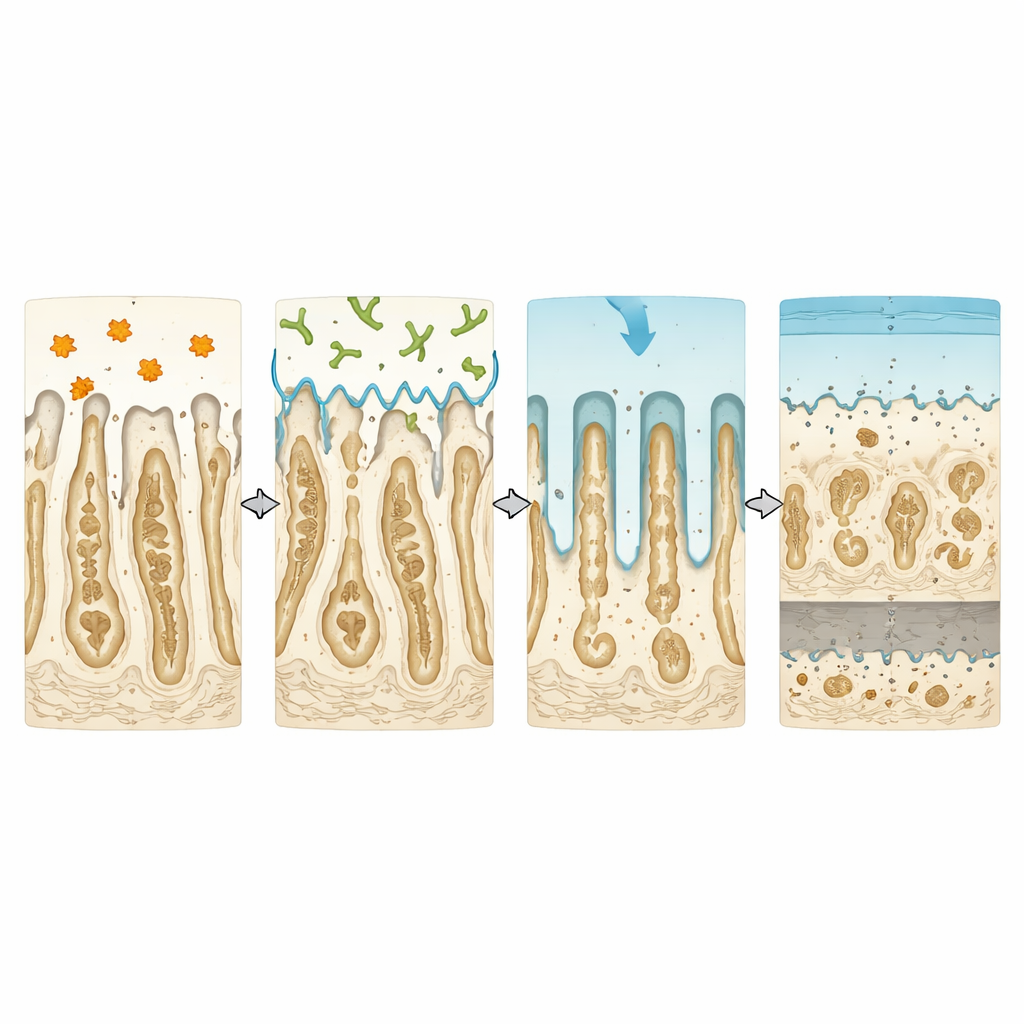
The higher‑dose alendronate treatment, especially when paired with the etch‑and‑rinse technique, produced the strongest bonds both before and after aging. In these samples, breaks tended to occur within the tooth or filling material rather than at the junction, a sign of a robust interface. Microscopy showed long, thick resin extensions penetrating deeply into the dentin and few visible gaps. In contrast, chlorhexidine‑treated and untreated samples showed weaker bonds, more mixed or interfacial failures, and more silver deposits along the junction, indicating greater microscopic leakage pathways where fluids could move and degradation could progress. The self‑etch approach generally yielded lower strengths and thinner bonding zones, although alendronate still offered some improvement.
Implications for future dental care
Overall, the study suggests that briefly treating dentin with a 0.3% alendronate solution before applying a universal adhesive can strengthen and better seal the connection between tooth and filling, particularly when the more aggressive etch‑and‑rinse method is used. By binding tightly to the mineral and protecting the collagen framework from enzymatic attack, alendronate appears to help the adhesive form a thicker, more stable anchor within the dentin. While these results come from laboratory tests and longer, more realistic simulations are still needed, they point to a simple chairside pretreatment that could make fillings last longer and reduce the need for repeat dental work.
Citation: Salem, H.S., Enan, E.T., Hamama, H. et al. Bond strength and interfacial stability of a universal adhesive to alendronate-treated dentin. Sci Rep 16, 9818 (2026). https://doi.org/10.1038/s41598-026-41664-3
Keywords: dentin bonding, alendronate, dental adhesive, hybrid layer, nanoleakage