Clear Sky Science · en
Network toxicology study and key target validation of chlorpyrifos-induced nonalcoholic fatty liver disease
Why a common pesticide and fatty liver disease are connected
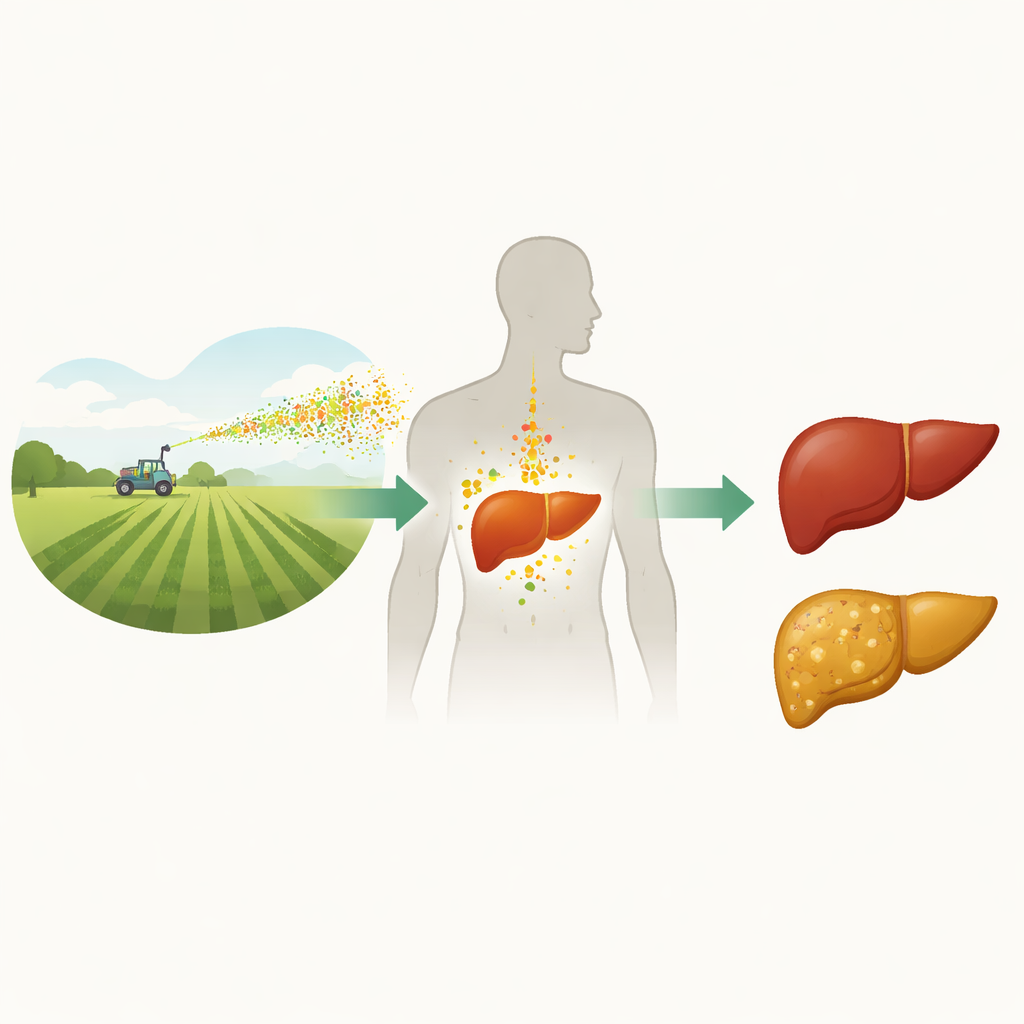
Nonalcoholic fatty liver disease (NAFLD) is usually blamed on too much food and too little exercise. But this study asks a different question: could a widely used farm pesticide, chlorpyrifos, quietly push the liver toward disease even in people simply living near treated fields or eating contaminated food? Using large gene databases, computer simulations, and animal and cell experiments, the researchers trace how chlorpyrifos may interact with key liver proteins to worsen fat buildup and damage.
A pesticide that lingers in bodies and landscapes
Chlorpyrifos is an organophosphate insecticide valued for its effectiveness and low cost, and it persists in soil and water, making exposure hard to avoid. Earlier work already tied chlorpyrifos to liver toxicity, disturbed gut microbes, obesity, and nerve damage. At the same time, NAFLD has become one of the world’s most common chronic liver conditions, affecting roughly a third of adults and projected to drive a surge in liver cancer and transplants. While poor diet and insulin resistance are well-known culprits, evidence has been mounting that environmental chemicals also nudge metabolism toward obesity and fatty liver. This study focuses on how chlorpyrifos might be one of those hidden drivers.
Finding the molecular “hot spots” in the liver
The team first turned to public databases to find genes linked both to chlorpyrifos exposure and to NAFLD, identifying 582 overlapping candidates. Using network analysis tools, they mapped how the proteins encoded by these genes interact with each other, then applied several graph algorithms to pick out the most influential “hub” nodes. Four proteins stood out as core players: TP53, HSP90AA1, AKT1, and JUN. These are not obscure molecules; they sit at crossroads of cell stress responses, metabolism, and inflammation. The researchers then used human liver gene-expression datasets to build a risk prediction model based on these four genes. Their nomogram distinguished NAFLD from healthy livers with good accuracy in both a discovery group and an independent validation group, hinting that these targets capture meaningful biology, not statistical noise.
How chlorpyrifos may reshape metabolism and immunity
Next, the scientists explored which cellular pathways are most tightly linked to these four genes in NAFLD. Gene-set enrichment analysis highlighted the tricarboxylic acid (TCA) cycle—the cell’s main energy-generating hub—and histidine metabolism, both previously implicated in fat production in the liver. The results suggest a vicious loop: altered fuel use feeds fat buildup, which in turn further distorts energy pathways. They also profiled immune cells in liver samples and observed shifts in specific B cells, macrophages, mast cells, and T cells, many of which correlated with the core genes. This points to chlorpyrifos-linked NAFLD as not just a fat-storage problem, but also a disease of altered immune balance inside the liver.
Direct binding to liver proteins and worsening fat buildup
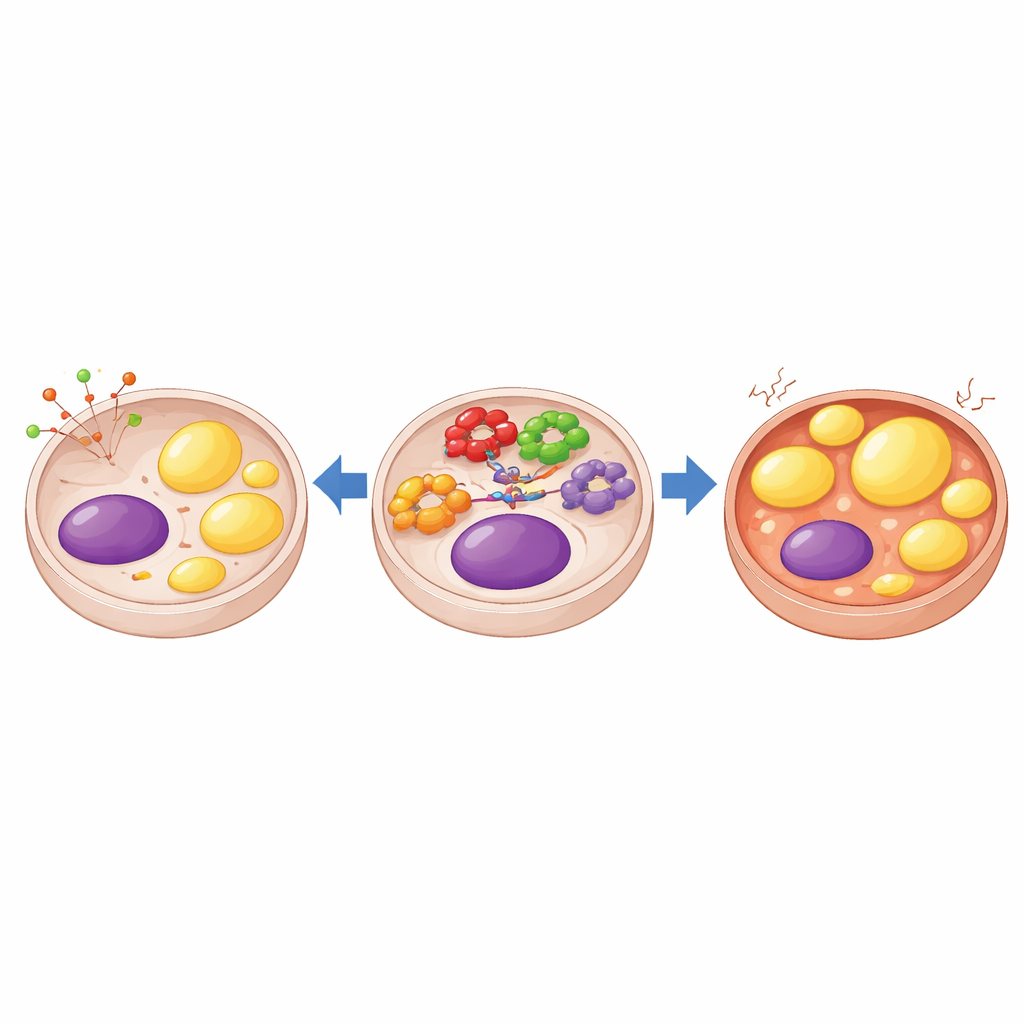
To see whether chlorpyrifos might physically latch onto these key proteins, the team used molecular docking and long molecular dynamics simulations. The pesticide formed stable complexes with all four targets, with particularly strong binding to HSP90AA1 and JUN. Simulations showed compact, low-energy structures, indicating tight and persistent interactions. In liver cell cultures and in mouse models fed a high-fat diet, chlorpyrifos reduced cell viability, raised markers of liver injury, and increased triglyceride levels and visible fat droplets. Surprisingly, it did not significantly change the messenger RNA levels of the four core genes, but it did make HSP90AA1 protein more stable and boosted the phosphorylated (activated) forms of TP53 and JUN—chemical switches that turn their activity up without altering the underlying genes.
What this means for everyday health
Put simply, the study suggests that chlorpyrifos can worsen or accelerate fatty liver disease by locking onto a few crucial liver proteins and turning up stress and fat-storage signals, rather than by rewriting the genes themselves. The work ties together environmental exposure, energy metabolism, immune changes, and protein-level control into a coherent story of how a common pesticide might quietly deepen liver damage in vulnerable people. While more large-scale human studies are needed to define safe exposure thresholds and to test targeted treatments against these pathways, the findings strengthen the case that managing environmental toxicants is a key part of protecting liver health—not just counting calories and steps.
Citation: Li, Y., Zhang, Z., Li, H. et al. Network toxicology study and key target validation of chlorpyrifos-induced nonalcoholic fatty liver disease. Sci Rep 16, 12610 (2026). https://doi.org/10.1038/s41598-026-41592-2
Keywords: chlorpyrifos, fatty liver disease, environmental toxicants, liver metabolism, pesticide exposure