Clear Sky Science · en
Driving sustainable innovation outcomes through employee AI collaboration with the mediating role of sustainable career capacities
Why Our Jobs and Futures Depend on Working With AI
As artificial intelligence tools move from science fiction into everyday office life, many workers are asking a simple question: will AI threaten my job or help my career? This study looks beyond short-term productivity to explore how teaming up with AI can reshape people’s long‑term career strength and the kinds of innovation their organizations can achieve. By surveying hundreds of employees who already use AI at work, the researchers trace how collaboration with smart systems can free up time and energy, build new skills, and ultimately support more sustainable, longer‑lasting innovation rather than one‑off flashes of creativity.
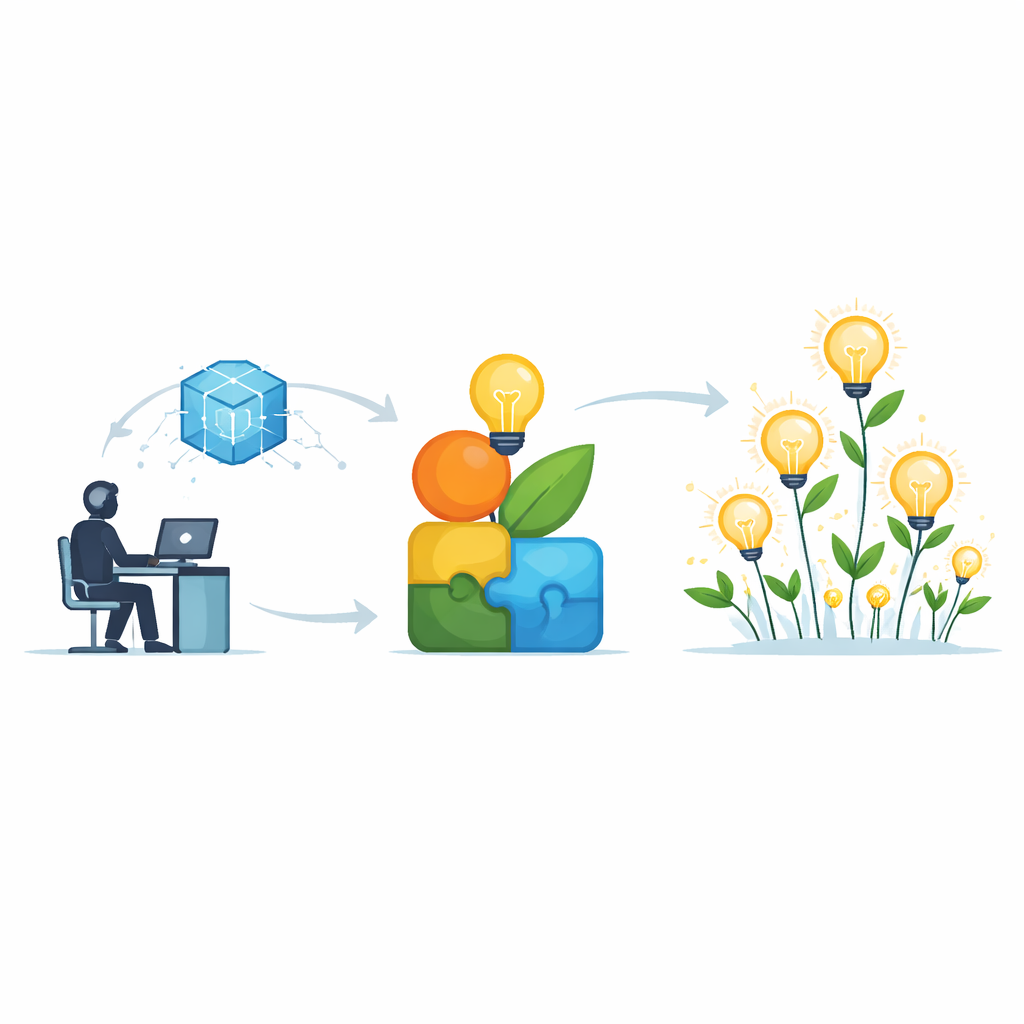
Teaming Up With Smart Machines
The authors focus on “employee–AI collaboration,” which goes beyond simply using a tool. It covers situations where employees and AI systems jointly analyze data, forecast outcomes, spot risks, and suggest solutions. In many workplaces, AI now handles repetitive or number‑crunching tasks while people focus on judgment, relationship‑building, and creative thinking. The study asks how this partnership changes the resources people have for their careers—such as time, energy, skills, and confidence—and whether those changes show up in the kinds of innovations that actually take root in organizations rather than fading after a pilot project.
Four Building Blocks of a Lasting Career
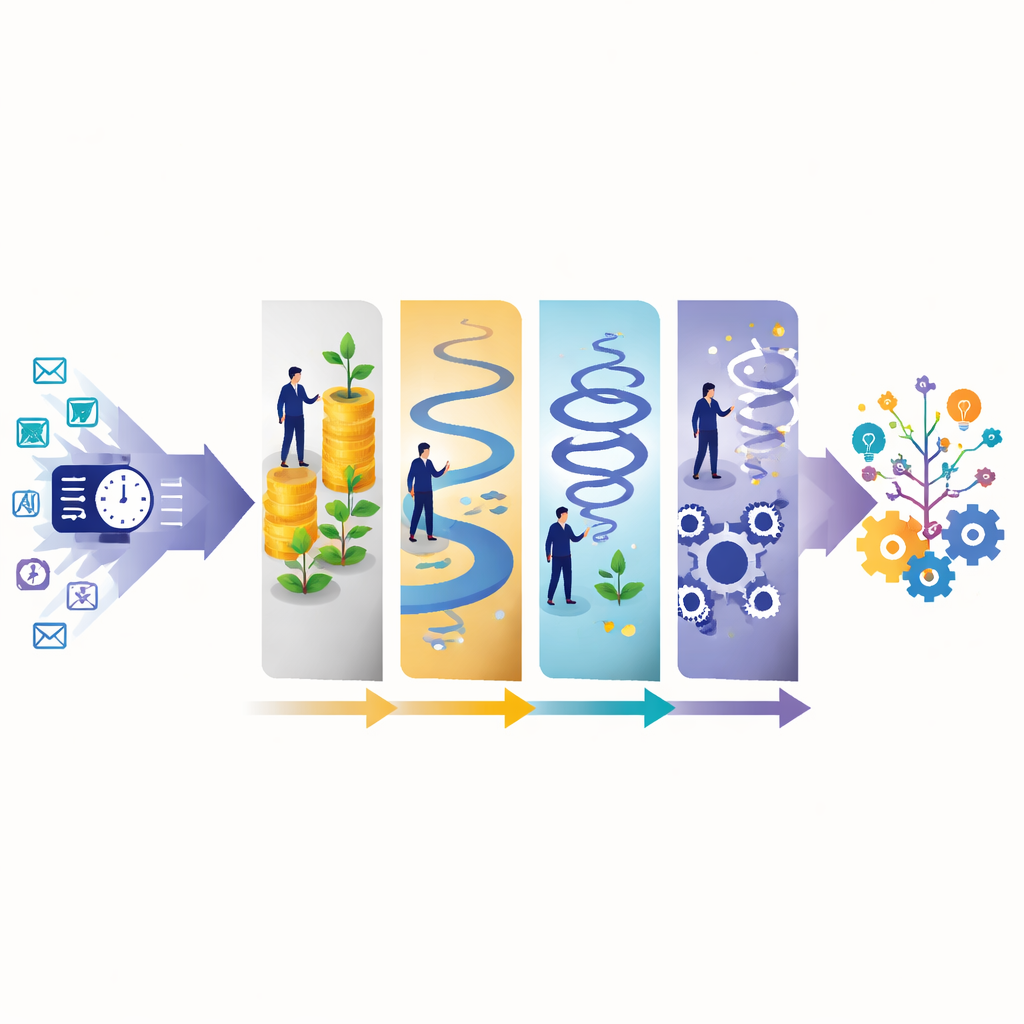
To capture career health in this new landscape, the researchers use the idea of a “sustainable career,” broken into four practical capacities. Being resourceful means having enough material and psychological reserves to take smart risks. Being flexible means having room in one’s schedule and role to explore new opportunities and learn. Renewal reflects chances to update skills and reinvent oneself as technology changes. Integration captures the ability to pull together information from many sources and make sense of it. The study proposes that close collaboration with AI can boost all four capacities by cutting down on drudgery, opening time for learning, and giving employees richer feedback and data to work with.
From Stronger Careers to Sustainable Innovation
Innovation is often measured by ideas or experiments, but the authors emphasize “sustainable innovation outcomes”: new products, services, or processes that are not only launched but also embedded and maintained over time. Using data from 294 employees in a range of Chinese industries with frequent AI use, the researchers apply statistical modeling to test how the pieces fit together. They find that employee–AI collaboration directly supports these durable innovation outcomes, largely by improving decision quality and reducing the risks of failure. Just as importantly, collaboration with AI also strengthens all four career capacities, and these capacities in turn are each linked to better sustainable innovation. In other words, AI helps both immediately—by making work smarter—and indirectly, by quietly building workers’ ability to carry innovation through to lasting impact.
When Confidence in AI Has a Surprising Downside
The study also looks at “self‑efficacy in using AI,” essentially how confident employees feel about working with these tools. One might expect that higher confidence always amplifies the benefits of AI. Instead, the authors find a twist: for the integrative capacity—the ability to combine and interpret information—very high confidence in AI actually weakens the positive effect of collaboration. A likely explanation is psychological. When people strongly trust their AI tools, they may credit the system rather than themselves for success in complex mental tasks. That can discourage them from seeing, and investing in, their own growth in making sense of information, even as they rely more heavily on AI’s recommendations.
What This Means for Workers and Organizations
For everyday employees, the findings suggest that AI is not just about doing the same job faster; it can be a lever for building a more resilient career if the freed‑up time is reinvested in learning, experimentation, and cross‑functional projects. For organizations, the message is that AI strategies should be tied to career and training policies, not only efficiency targets. Designing work so that AI handles routine tasks while people stretch their skills makes it more likely that innovation efforts will stick and continue to pay off. At the same time, managers need to help staff recognize their own contributions rather than attributing all achievements to the machine. By balancing smart tool use with intentional human development, companies can harness AI to create workplaces where both careers and innovations are built to last.
Citation: Wu, Z., Gan, H., Zhang, L. et al. Driving sustainable innovation outcomes through employee AI collaboration with the mediating role of sustainable career capacities. Sci Rep 16, 12832 (2026). https://doi.org/10.1038/s41598-026-41586-0
Keywords: employee-AI collaboration, sustainable careers, workplace innovation, AI at work, career development