Clear Sky Science · en
Estimated glucose disposal rate and cardiovascular risk in metabolically healthy adults: a nationwide prospective cohort study
Why this study matters for everyday health
Many people are told they are “metabolically healthy” because their blood pressure, cholesterol, and blood sugar look normal. Yet heart attacks and strokes still happen in this group. This study asks a simple but important question: can we spot hidden risk in seemingly healthy middle-aged and older adults by using a more sensitive measure of how their bodies handle sugar?
A closer look at hidden sugar handling
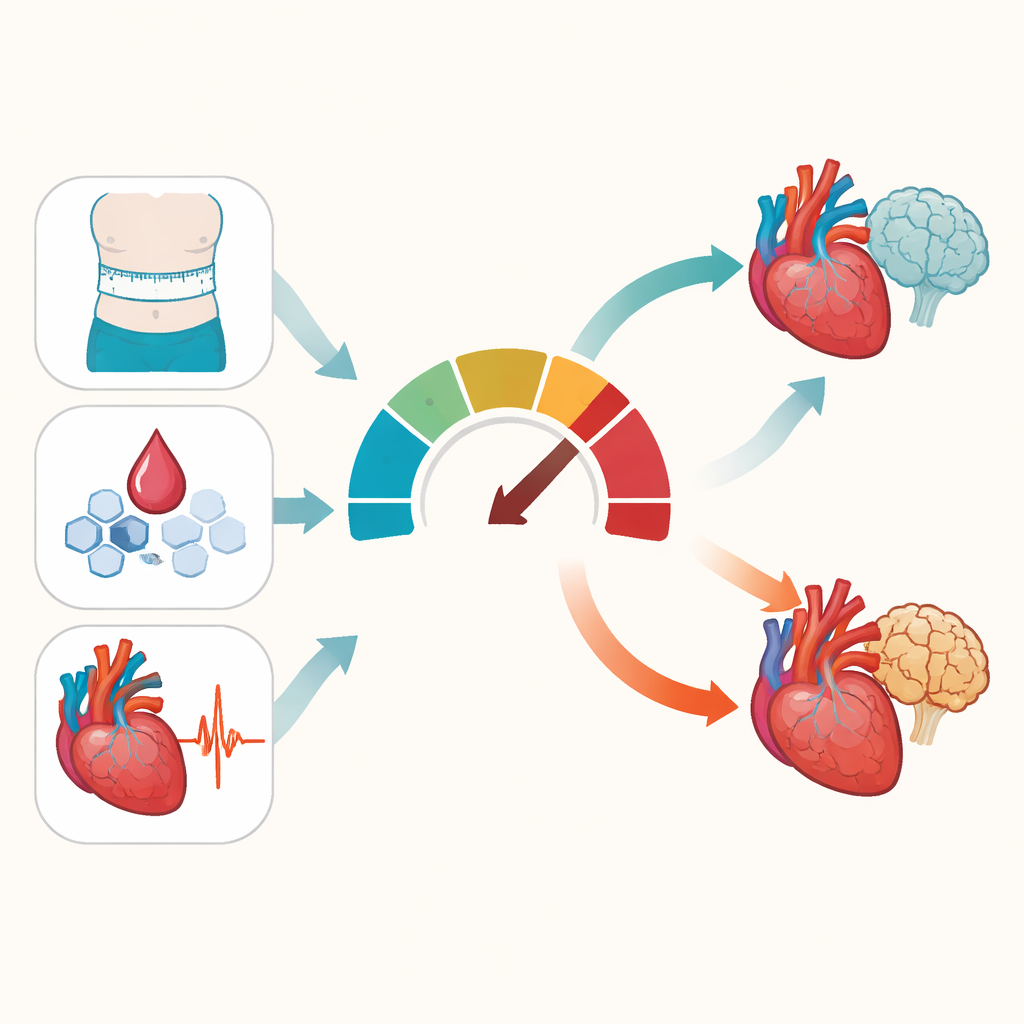
The researchers focused on something called insulin resistance, which describes how hard the body has to work to move sugar from the blood into tissues. Directly measuring insulin resistance is expensive and complicated, so the team used a practical shortcut known as the estimated glucose disposal rate, or eGDR. This score can be calculated from three everyday clinic measures: waist size, long-term blood sugar, and whether a person has high blood pressure. A higher eGDR means the body handles sugar more easily; a lower eGDR suggests that cells are more resistant to insulin, even if standard tests still look “okay.”

Following thousands of adults over five years
The study drew on data from nearly 5,000 men and women aged 45 and older who took part in a large nationwide survey in China. None of them had metabolic syndrome at the start, meaning they lacked the usual cluster of high blood pressure, abnormal fats, and high blood sugar that doctors use to flag metabolic trouble. After detailed interviews, physical exams, and blood tests, each person’s eGDR was calculated and the group was divided into four bands from lowest to highest eGDR. The researchers then tracked who went on to develop heart disease or stroke over about five years.
Who developed heart and brain problems
During the follow-up, almost one in five participants experienced a new cardiovascular problem, including about 13% with heart disease and 6% with stroke. When the team compared people across the eGDR bands, a clear pattern emerged: those with the lowest eGDR, indicating poorer sugar handling, had the highest rates of heart disease and stroke. Those with the highest eGDR had the lowest rates of these events. After taking into account age, sex, smoking, drinking, body size, cholesterol, kidney function, and many other factors, a higher eGDR still predicted a substantially lower risk of cardiovascular disease, heart disease, and stroke.
A steady link across different groups
The relationship between eGDR and cardiovascular problems was roughly straight-line: as eGDR increased, risk steadily fell, with no sign of a threshold where the benefit suddenly appeared or disappeared. This link remained robust in many subgroups, including men and women, town and rural residents, and people with different body weights and glucose levels. In those who were “strictly” metabolically healthy, with none of the usual risk factors, higher eGDR still signaled lower chances of developing cardiovascular disease and stroke, suggesting that this simple score captures risk that routine clinic labels can miss.
What this means for people who feel well
For lay readers, the main message is that having “normal” checkup results does not always mean your heart and brain are out of danger. How efficiently your body uses sugar appears to matter even before typical warning signs show up. This study suggests that a composite measure like eGDR, built from waist size, blood pressure, and long-term blood sugar, could help doctors identify hidden cardiovascular risk in otherwise healthy adults. While more research is needed in younger and more diverse populations, the findings hint that paying attention to waistline, blood sugar control, and blood pressure together—and improving them through diet, activity, and medical care—may protect the heart and brain long before disease is obvious.
Citation: Li, W., Yuan, F., Gao, C. et al. Estimated glucose disposal rate and cardiovascular risk in metabolically healthy adults: a nationwide prospective cohort study. Sci Rep 16, 12420 (2026). https://doi.org/10.1038/s41598-026-41550-y
Keywords: insulin resistance, cardiovascular disease, stroke risk, metabolic health, glucose disposal