Clear Sky Science · en
Applications of Opuntia ficus-indica (L.) mill seed oil from eastern morocco including chemical profiling, antibacterial activity, and docking
From Desert Fruit to Useful Oil
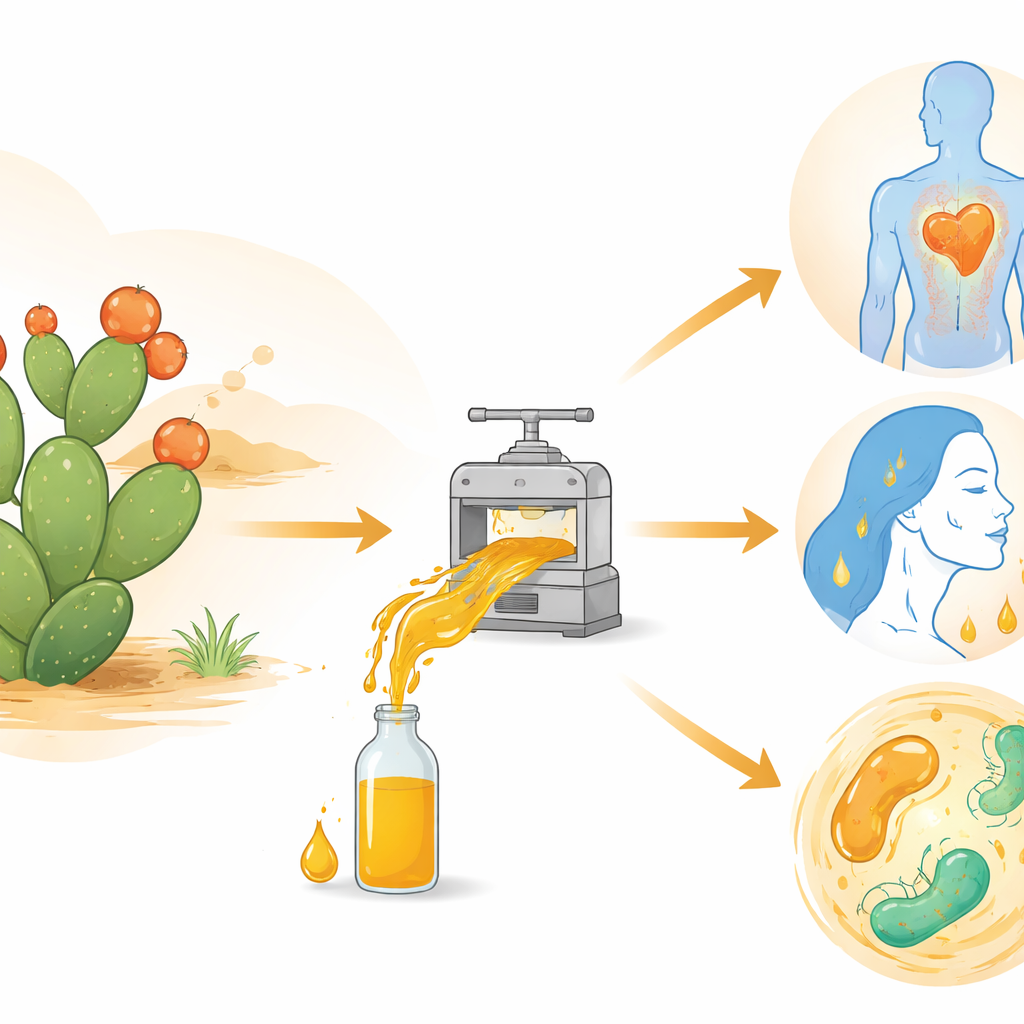
Prickly pear cactus may look like a rugged survivor of dry landscapes, but its seeds hide an unexpectedly rich store of compounds that could benefit food, cosmetics, and even medicine. This study explores seed oil from Opuntia ficus-indica grown in Eastern Morocco, asking a simple question with broad appeal: can a largely discarded by-product become a safe, natural source of protective fats and plant chemicals that help fight oxidation and certain bacteria?
Why Cactus Seeds Matter
Prickly pear fruits are widely eaten, yet their hard seeds are usually thrown away, even though they contain about 5–15% oil. The researchers collected fruits from a region in Eastern Morocco and cold-pressed the seeds using a mechanical screw press, a gentle method that avoids chemical solvents. By turning this local agricultural residue into oil, they aimed to support a circular economy: creating value from waste while supplying ingredients that could replace synthetic additives in foods, skincare products, and health-oriented formulations.
What Is Inside the Seed Oil
The team used a suite of analytical techniques to map the oil’s chemistry in detail. Gas chromatography showed that the oil is dominated by linoleic acid, a polyunsaturated “good fat,” which made up almost three-quarters of all fatty acids. Palmitic and stearic acids were the main saturated fats, while oleic acid was not detected. This pattern resembles premium cosmetic oils such as safflower or evening primrose, which are prized for supporting skin barrier function and healthy blood lipids. The oil also contained notable volatile molecules that contribute to aroma, including several aldehydes and menthone, indicating both quality and potential sensory appeal.
Natural Antioxidant and Protective Compounds
Beyond fats, the oil proved to be exceptionally rich in vitamin E–type molecules called tocopherols. One form, gamma-tocopherol, reached about 658 milligrams per kilogram, a level higher than many common seed oils and a strong sign of antioxidant power. Using high-performance liquid chromatography and mass spectrometry, the researchers identified 45 different phenolic compounds, a broad family of plant molecules known for neutralizing harmful reactive species. Among the most abundant were arbutin and kaempferol, along with quercetin, hesperidin, and several phenolic acids. Together, these substances can help protect the oil from going rancid and may also offer health-related benefits when formulated appropriately.
How the Oil Acts on Microbes
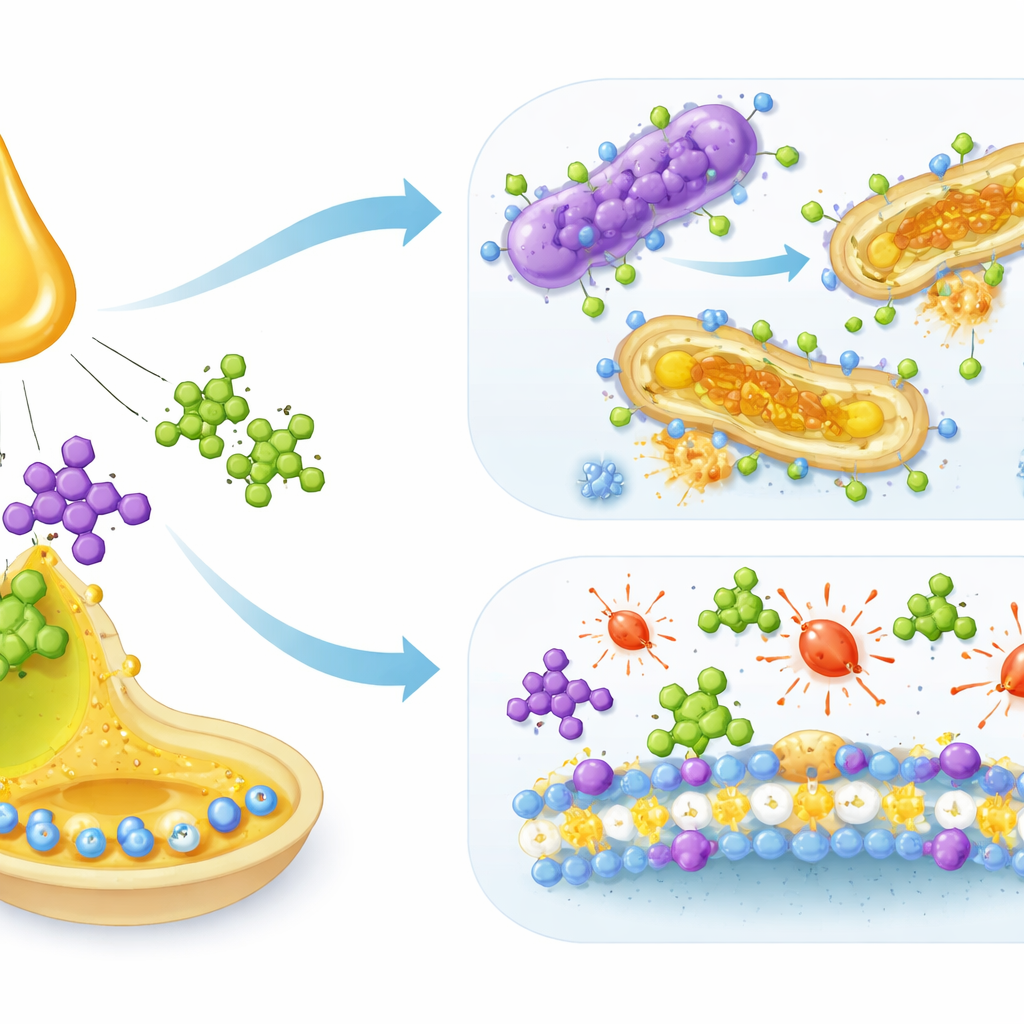
To test antimicrobial effects, the scientists exposed several bacteria to the oil and measured clear “halos” where growth was inhibited. The oil did not stop two common Gram-positive bacteria, Staphylococcus aureus and Streptococcus species, but it did moderately inhibit two Gram-negative species, Escherichia coli and Klebsiella, with the strongest effect on Klebsiella. The solid residue left after pressing (the “cake”) showed even stronger action against some bacteria, likely because many phenolic compounds remain in that fraction. The team then used computer modeling to see how arbutin and kaempferol might fit into the pockets of key bacterial enzymes involved in DNA handling. Kaempferol, in particular, showed favorable binding patterns, supporting its role as a contributor to the observed antibacterial activity while also appearing safe and drug-like in predictive toxicity tests.
What This Means for Everyday Life
For non-specialists, the takeaway is that prickly pear seed oil from Eastern Morocco is more than an exotic novelty. It combines a heart- and skin-friendly fat profile with unusually high levels of natural vitamin E and a diverse set of antioxidant plant compounds. While it is not a broad-spectrum antibiotic, it does show promising activity against some problem bacteria and contains molecules that computers predict to be both effective and relatively safe. This makes the oil and its by-products appealing candidates for future use as natural preservatives, cosmetic ingredients, or components of gentle antimicrobial blends, turning a once-overlooked seed into a versatile resource for health-oriented products.
Citation: Kadda, S., Khibech, O., Loukili, E.H. et al. Applications of Opuntia ficus-indica (L.) mill seed oil from eastern morocco including chemical profiling, antibacterial activity, and docking. Sci Rep 16, 8910 (2026). https://doi.org/10.1038/s41598-026-41503-5
Keywords: prickly pear seed oil, natural antioxidants, linoleic acid, kaempferol, antibacterial activity