Clear Sky Science · en
Spared cognitive and social function following perinatal ablation of ATRX despite transient microglia dysregulation
Why this matters for brain health
Many families facing intellectual disability or autism naturally wonder how early-life changes in the brain might shape thinking and social behavior. This study looks at a gene called ATRX, known to cause severe learning problems and autistic traits when mutated in people, and asks a simple but profound question: what happens if a key support cell in the brain, the microglia, loses ATRX right after birth? The answer offers a surprisingly hopeful message about how resilient the developing brain can be, even when its cellular caretakers temporarily go off track. 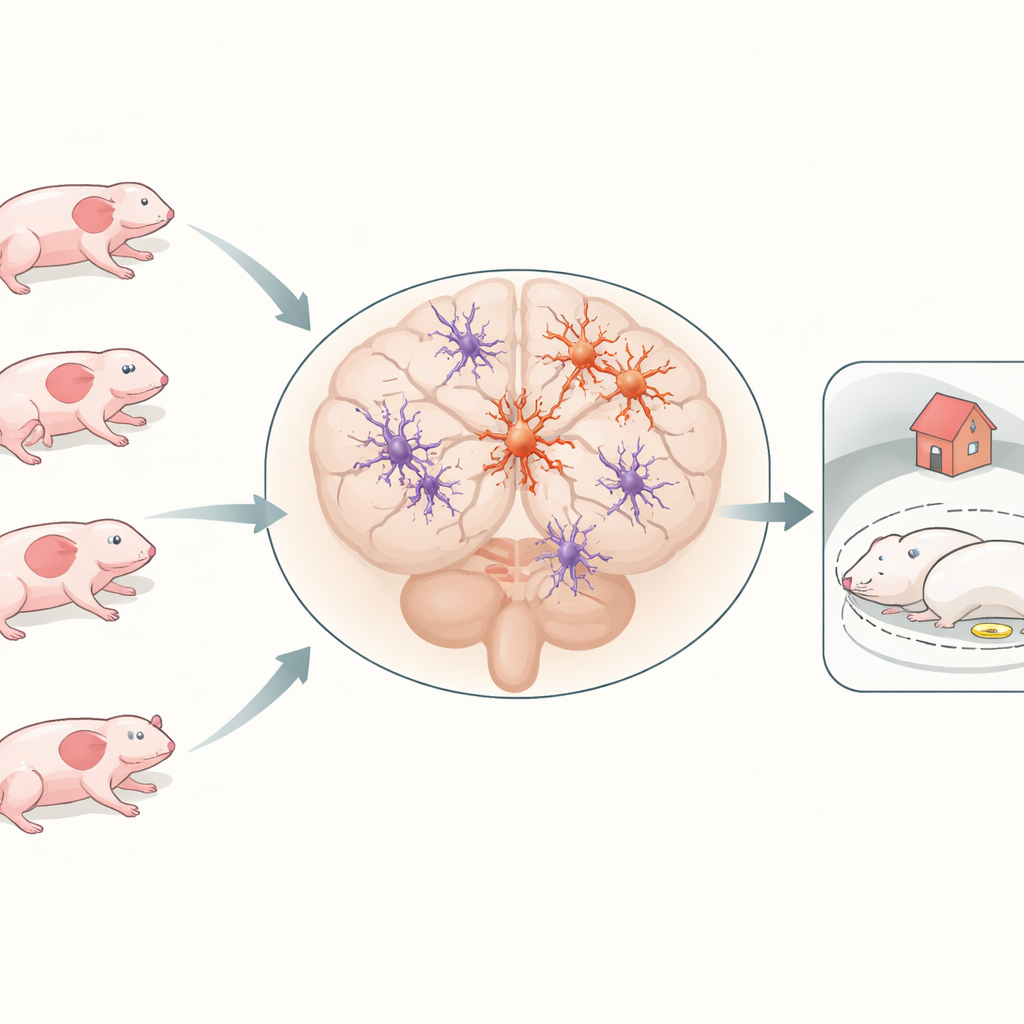
The gene at the center of a childhood syndrome
ATRX sits on the X chromosome and helps organize DNA inside cells, influencing which genes turn on or off. In boys, faulty ATRX can cause a condition known as ATR-X syndrome, marked by intellectual disability, sometimes autism, seizures, and other medical issues. Earlier work in mice showed that removing ATRX from nerve cells or other brain support cells, such as astrocytes, can disturb memory and behavior. Microglia, the brain’s resident immune-like cells, are especially active early in life: they trim excess connections between neurons and help sculpt the wiring of brain circuits. Because of this, scientists suspected that disrupting ATRX in microglia during this early window might have long-lasting consequences for learning, emotion, and social interaction.
Turning off ATRX in brain caretakers
The researchers engineered mice so that ATRX could be switched off only in microglia, and only around the first week after birth, by exposing nursing mothers to a drug that passes into their milk. This approach left other brain cell types untouched. When the team examined the young mice at one month of age, they found that most microglia in memory-related brain regions no longer made ATRX, confirming that the genetic switch had worked. Under the microscope, these ATRX-lacking microglia looked and behaved differently: they were larger, more highly branched, and carried more internal “bubbles” associated with chewing up cellular debris, all hallmarks of a more reactive, less resting state.
Busy but balanced microglia
Digging deeper, the scientists found that these altered microglia were dividing more often, as marked by a standard cell-division signal. Yet this burst of growth did not translate into more microglia overall. In one hippocampal region, microglial numbers actually dipped, accompanied by signs of increased cell death. Over time, another shift occurred: by three months of age, the proportion of microglia lacking ATRX dropped sharply, suggesting that new, genetically intact microglia had gradually repopulated the brain. By this later stage, markers of microglial reactivity had largely returned to normal levels. Importantly, the number of young cells destined to form myelin—the insulation around nerve fibers—and basic motor skills such as staying on a rotating rod were unchanged, hinting that early support for nerve wiring remained intact. 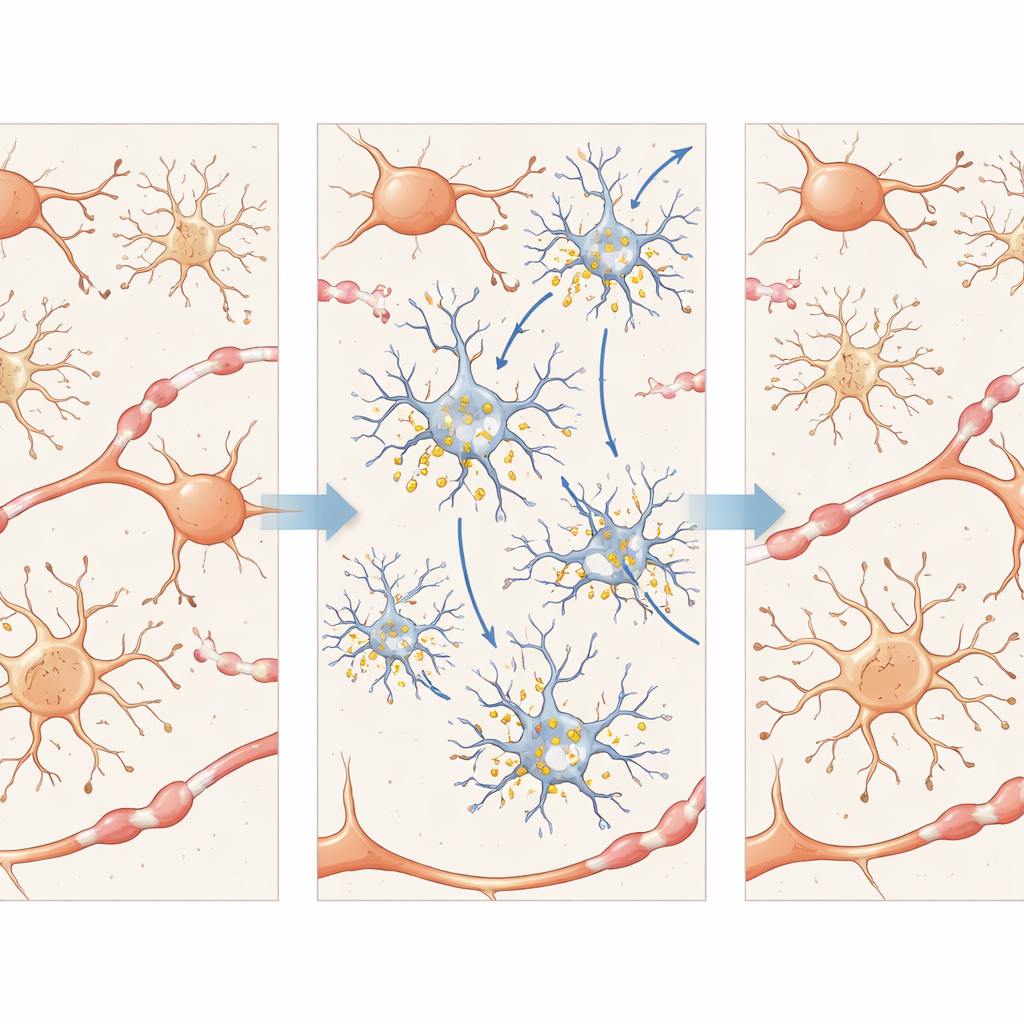
Unexpectedly normal behavior
Given ATRX’s link to intellectual disability and autism in humans, the team ran a broad panel of behavioral tests in both juvenile and adult mice. They assessed anxiety-like responses in tasks that measure willingness to explore bright, open, or elevated spaces; working and spatial memory in maze and water navigation tests; and fear-based memory of a mild shock. They also examined behaviors relevant to autism, including repetitive digging and grooming, overall activity levels, social preference for another mouse versus an object, and how well mice filter out sudden loud sounds after softer warning tones. Across all of these measures, mice that had lost ATRX in microglia early in life were nearly indistinguishable from their control littermates. Their learning, memory, social behavior, and sensory filtering remained intact.
A resilient and adaptable developing brain
Taken together, the findings reveal a striking disconnect: even though early microglia briefly enter a reactive, hyperactive state when ATRX is removed, the mice grow up to behave normally in a wide range of tasks. The authors suggest that the young brain may compensate in several ways—through gradual replacement of faulty microglia by healthy ones, or by other support cells, such as astrocytes, stepping in to help maintain neural circuits. For families and clinicians, the work underscores that not every early immune-like disturbance in the brain is destiny; the developing nervous system has built-in flexibility that can buffer transient cellular missteps. At the same time, it refines scientists’ understanding of ATRX, pointing to a more complex interplay among different brain cell types in shaping the cognitive and social features seen in human ATR-X syndrome.
Citation: Mansour, K.Y., Pena-Ortiz, M.A., Wu, J. et al. Spared cognitive and social function following perinatal ablation of ATRX despite transient microglia dysregulation. Sci Rep 16, 12760 (2026). https://doi.org/10.1038/s41598-026-41476-5
Keywords: microglia, ATRX, neurodevelopment, autism, brain resilience