Clear Sky Science · en
Association between ultraviolet-related TP53 mutations and immune microenvironment in equine ocular squamous cell carcinoma
Why sunlight and horse eyes matter
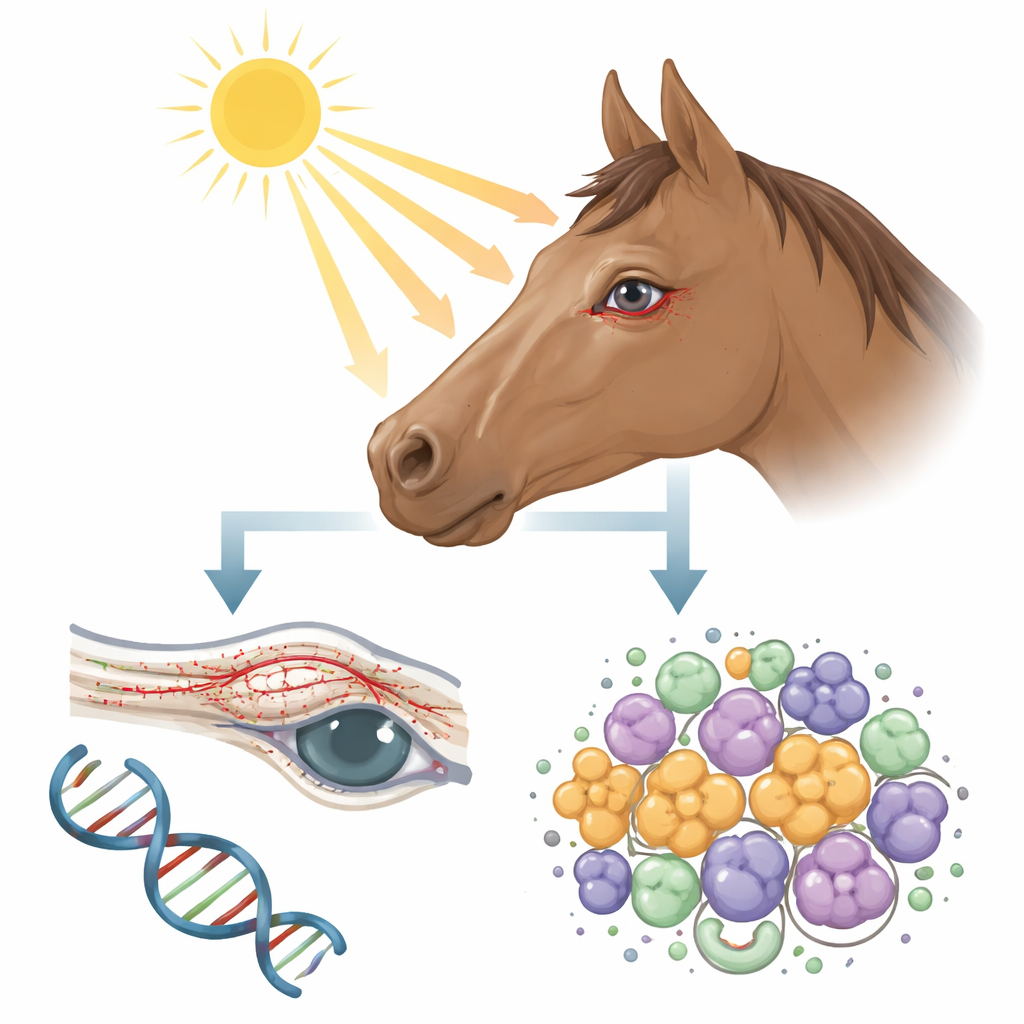
Horses are long-lived outdoor animals, and their eyes and eyelids are constantly exposed to sunlight. One of the most common eye cancers in horses, called squamous cell carcinoma, can be painful, disfiguring, and sometimes life-threatening. This study asks two big questions with practical consequences for vets and horse owners: does sun-driven damage to a key “guardian” gene help spark these tumors, and how does that damage shape the immune cells that gather around the cancer? The answers could influence how we prevent, diagnose, and eventually treat eye tumors in horses, and may even offer clues for similar cancers in people.
A closer look at a common eye tumor
The researchers examined 29 eye tumors from horses, including both early, surface-only lesions and deeply invasive cancers. These tumors arose on structures such as the eyelids, third eyelid, conjunctiva, and cornea. Previous work had already suggested several risk factors: chronic ultraviolet (UV) light exposure, pale skin around the eye, and certain genetic backgrounds that make it harder for cells to repair UV damage. The team wanted to go beyond these broad associations to see what was happening at the level of a single gene—TP53, a central controller of cell division and DNA repair—and in the community of immune cells within the tumor, often called the tumor microenvironment.
Sunlight’s fingerprint in a key guardian gene
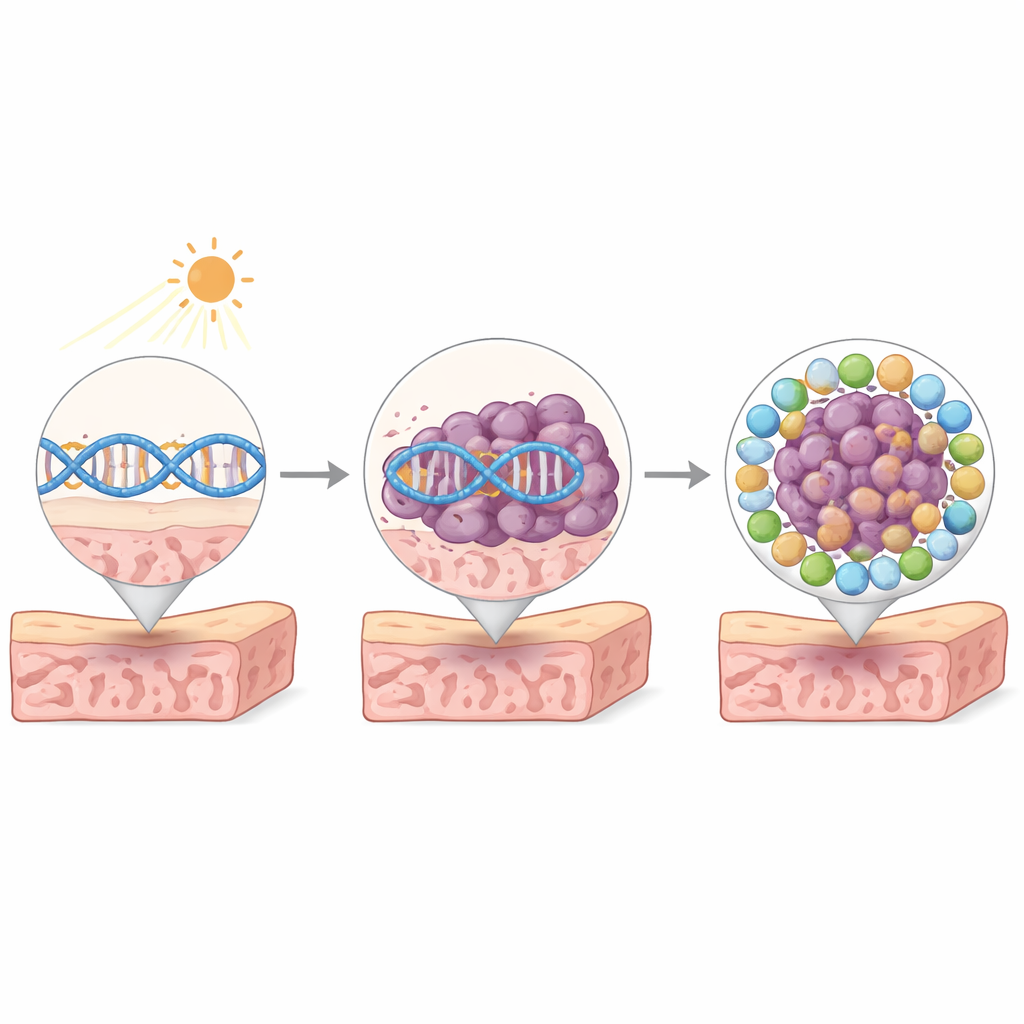
Using next-generation DNA sequencing, the scientists searched the TP53 gene in each tumor for harmful changes. They found that almost half of the tumors carried damaging TP53 mutations. Strikingly, more than four out of five of these were a specific type of DNA change—C to T substitutions—that is widely recognized as a hallmark of UV-induced damage. This “sunlight signature” suggests that chronic UV exposure is not just a vague risk factor but is directly reshaping the TP53 gene in many of these cancers. In contrast, a virus known as Equus caballus papillomavirus type 2, a major driver of genital tumors in horses, was present in only about one in five eye tumors and did not track with TP53 mutations. This pattern points to UV light, rather than this virus, as the main force behind most ocular cases.
How the tumor talks to the immune system
The study then turned to the immune landscape around the tumors. With advanced staining and digital image analysis, the team counted several types of immune cells: T lymphocytes, B lymphocytes, regulatory T cells, and macrophages. Two populations dominated the scene—T cells and macrophages—and both were significantly more abundant in tumors that carried TP53 mutations than in those with a normal version of the gene. In other words, when the guardian gene was damaged in a UV-like way, the tumor tended to be surrounded by a denser and more active-looking immune presence. Meanwhile, B cells and regulatory T cells did not show clear differences between mutated and non-mutated tumors, and overall cell growth rates, measured by the marker Ki67, were only slightly higher in the mutated group.
Virus, location, and the character of the tumor
The role of the papillomavirus turned out to be more modest than in genital tumors. Although some eye cancers were virus-positive, the presence of viral DNA did not strongly alter TP53 status or the density of immune cells around the tumor. This contrasts with human head and neck cancers and equine penile cancers, where virus-positive tumors often have distinctive immune patterns and can respond differently to treatment. The findings support the idea that eye and genital tumors in horses, though they may look similar under the microscope, arise through different routes: UV-driven damage and TP53 mutation in the eye, versus virus-driven disruption of cell controls in the genital region. The local tissue environment—eye versus genital skin—may further shape how immune cells are recruited and behave.
What this means for horses and beyond
Overall, the study shows that many equine eye tumors carry UV-style injuries in the TP53 gene and that these injuries are linked with a richer infiltration of T cells and macrophages. For horse owners and veterinarians, this reinforces the importance of UV protection—such as fly masks or shade—for at-risk animals, especially light-skinned breeds. For scientists, the work highlights equine ocular squamous cell carcinoma as a natural model of sun-related cancer with an unexpectedly “hot” immune microenvironment, potentially relevant to future immunotherapies. In plain terms, years of sunlight appear to scar a key guardian gene in horse eye cells, helping cancer to arise, and that scar may also help summon an army of immune cells to the tumor’s doorstep.
Citation: Martinoli, G., De Biase, D., Ressel, L. et al. Association between ultraviolet-related TP53 mutations and immune microenvironment in equine ocular squamous cell carcinoma. Sci Rep 16, 11151 (2026). https://doi.org/10.1038/s41598-026-41467-6
Keywords: equine eye cancer, UV light and tumors, TP53 mutations, tumor immune microenvironment, papillomavirus in horses