Clear Sky Science · en
Eco-friendly plasticisation of bacterial cellulose using natural additives for sustainable material applications
Why New Fake Leather Matters
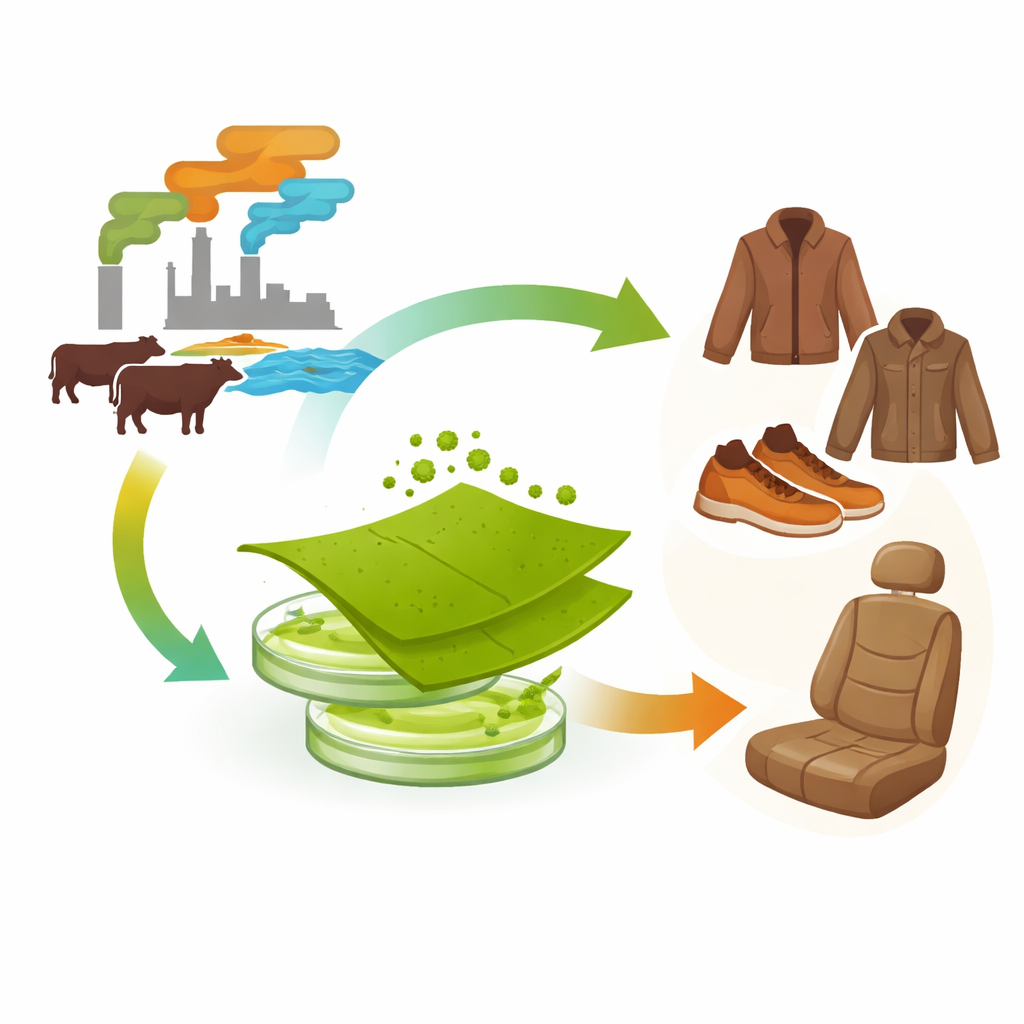
From shoes and handbags to car seats and sofas, our daily lives are wrapped in leather and plastic. Behind that glossy surface lie animal suffering, toxic chemicals, and mountains of long‑lived waste. This study explores a different path: turning a natural material grown by bacteria into a soft, flexible, biodegradable sheet that could one day stand in for animal hides and some synthetic plastics. By using plant‑based oils and other simple additives, the researchers aim to create a new kind of “bio‑leather” that is kinder to animals and the environment.
The Problem with Skins and Plastics
The authors begin by outlining why alternatives are urgently needed. Global production of animal skins continues to rise, driven mainly by fashion but also by car and furniture makers. Turning raw hides into leather involves tanning and dyeing steps that use chromium salts, phthalates, chlorides, and sulphates. These substances can wash into rivers, build up in sediments, and harm both aquatic life and human health, contributing to respiratory and hormone‑related illnesses. At the same time, synthetic polymers that replace leather—many based on petroleum—linger in landfills and oceans for decades. This double burden of animal use and plastic pollution motivates the search for new, biodegradable materials.
What Bacterial Sheets Can Do
The material at the heart of this work is bacterial cellulose, a fine network of sugar‑based fibers spun by certain bacteria. Chemically similar to plant cellulose, it differs in structure: instead of being locked inside woody tissue, it forms a pure, three‑dimensional web with very high water content and few impurities. That purity makes it attractive for uses ranging from medical dressings to cosmetics. However, once dried, bacterial cellulose becomes stiff and brittle—more like a cracker than a strip of leather. To work as a fabric, it must be “plasticised,” meaning its internal fibers need help sliding past each other so the sheet can bend without breaking.
How the Green Makeover Works
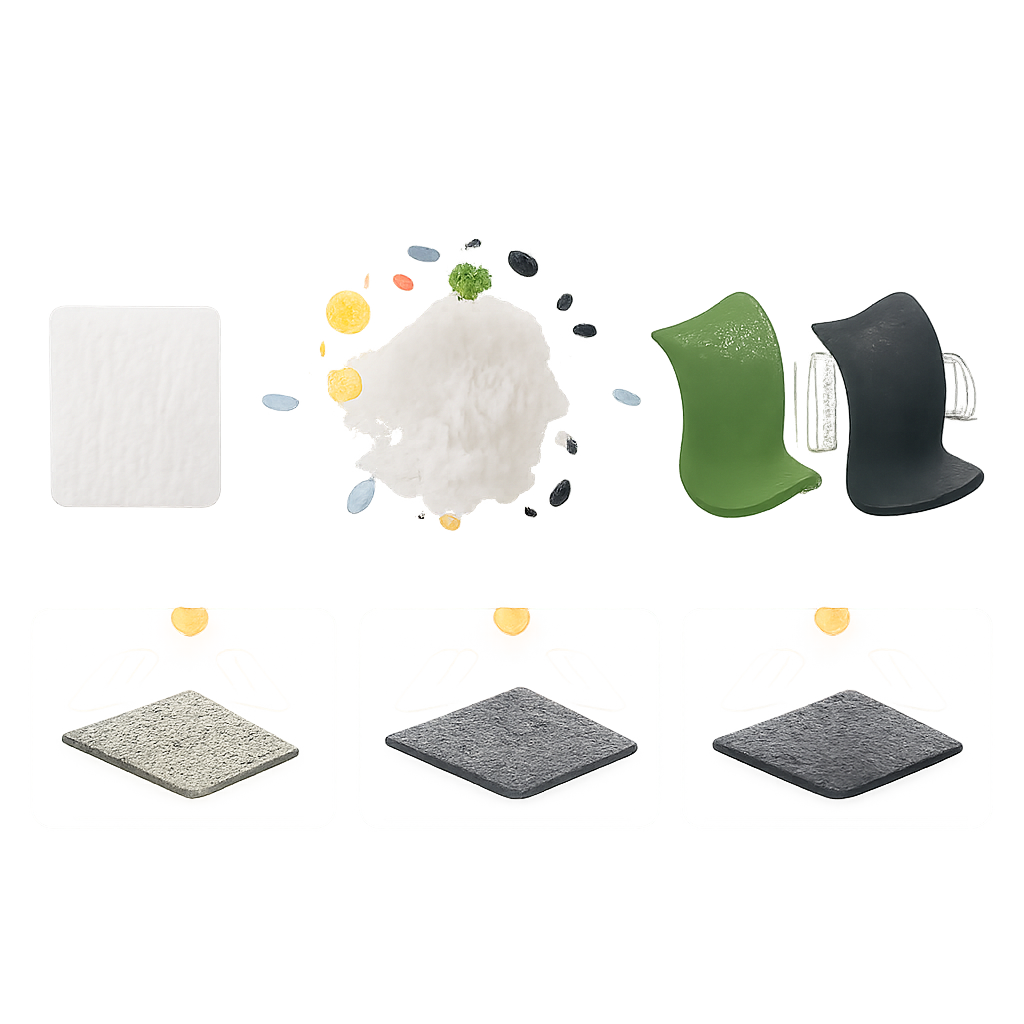
To soften the material, the team treated bacterial cellulose sheets with a blend of natural additives. First, they gently removed excess water, then immersed the sheets in a mixture of glycerine (a plant‑derived, water‑loving liquid) and ethanol, together with tiny particles of silica or carbon black. Next, they soaked the sheets in rapeseed (canola) oil, sometimes with a green food‑grade chlorophyll dye. Glycerine and oil seep between the cellulose chains, loosening the tight network of hydrogen bonds that normally hold the fibers rigid. Silica and carbon black act as fillers and, in the case of chlorophyll, the material takes on a deep green color similar to dyed leather. After washing and controlled drying at moderate temperature, the result is a flexible composite sheet.
What the Tests Revealed
The researchers then asked three key questions: Did the additives really enter the material? Did they change its surface behavior? And did they make it softer yet strong enough to use? Infrared analysis confirmed that the oil and other ingredients became part of the cellulose structure, increasing signals from chemical groups associated with the plasticisers. Mechanical tests showed a clear trade‑off: compared with dried, unmodified cellulose, the new material stretched much more before breaking but with somewhat lower initial strength—behavior much closer to that of common plastics and leather‑like materials. When exposed to intense ultraviolet light to mimic sunlight, the sheets tended to become stronger but less stretchy again, suggesting that new bonds form between cellulose chains as they age. Dyes based on chlorophyll faded and broke down under this UV exposure, and surface measurements indicated that certain formulations (especially those with one type of silica) were more vulnerable to sun‑driven changes than others. Finally, when the material was incubated with common molds, fungi grew readily, showing that the composite remains biodegradable and does not resist natural breakdown.
What This Could Mean for Everyday Products
Overall, the study demonstrates that bacterial cellulose can be successfully softened using mostly natural, plant‑based additives to yield a sheet that is both flexible and mechanically robust. Its strength rivals that of several widely used biodegradable plastics, and its ability to decompose under micro‑organism attack remains intact. Although the material still needs better resistance to sunlight and further refinement for real‑world products, it points toward a future in which jackets, bags, and upholstery could be made from living cultures instead of animal hides or long‑lived petrochemical plastics, easing pressure on ecosystems while offering familiar look and feel.
Citation: Lisowski, D., Bielecki, S. & Masek, A. Eco-friendly plasticisation of bacterial cellulose using natural additives for sustainable material applications. Sci Rep 16, 10416 (2026). https://doi.org/10.1038/s41598-026-41433-2
Keywords: bacterial cellulose, bio-based leather, biodegradable materials, plasticisers, sustainable fashion