Clear Sky Science · en
Modelling the impact of interactive interface features on user experience in artificial intelligence driven digital learning systems
Smarter Screens for Online Learners
As more classes move online, the look and feel of learning platforms can make the difference between a student who is absorbed and one who quietly drops off. This paper asks a simple but in-demand question: which specific on-screen features in AI-powered learning systems actually make studying easier, more engaging, and more effective—and which ones are mostly digital decoration?

The Features Behind a Friendly Learning Platform
The researchers focused on five common elements that appear in modern online courses. Adaptive feedback panels are pop-up areas that give tailored hints and guidance. Gamification elements add game-like rewards, such as points or badges. Live conversational agents act as chat-style virtual tutors. Progress visualizations show how far a learner has come. Micro-assessment widgets are tiny, in-line quizzes that check understanding on the spot. Rather than treat these tools as vague “nice to haves,” the team treated each one as a controllable building block that could be switched on or off and studied in detail.
A Carefully Controlled Classroom on a Screen
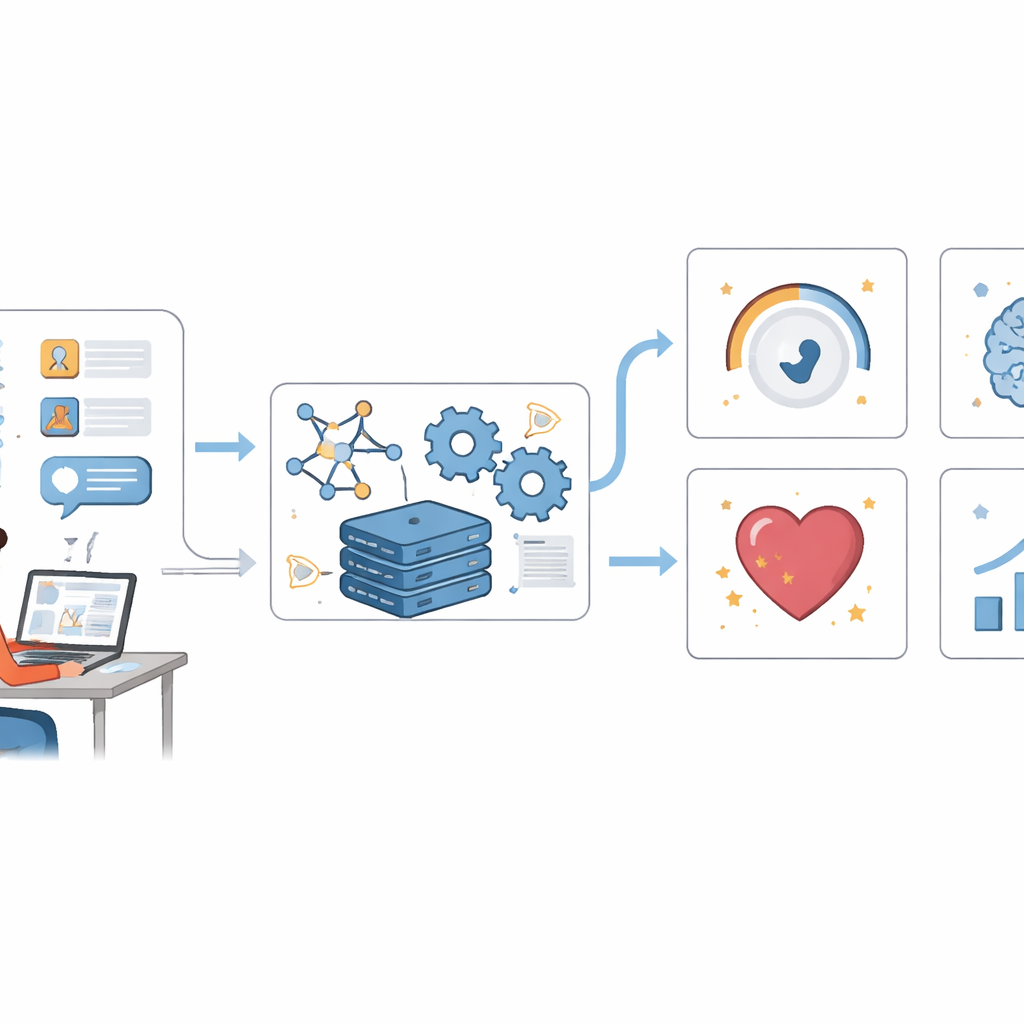
To test these ideas, the authors built a full AI-driven digital learning system from the ground up. Under the hood, it uses advanced models to estimate what each learner knows, how overloaded they might be, and when they need help. On the surface, the interface can turn individual features on or off for different groups of students without changing the lesson content itself. In a controlled lab study, 240 university students were randomly assigned to six versions of the platform, ranging from a bare-bones control screen to a full-featured interface with all five elements active. Everyone studied the same material for 30 minutes and then completed tests and detailed questionnaires about their experience.
What Helped Students Most
The results show that not all interactive extras are created equal. The live conversational agent and adaptive feedback panels had the strongest impact on how usable students found the system and on how well they learned. Students with these supports finished tasks faster, asked for fewer extra hints, and reported lower mental strain. Gamification elements stood out for boosting motivation and emotional engagement, making the experience feel more rewarding and visually appealing. Progress bars and similar displays helped steer navigation and reduced aimless clicking, even if their effects were more modest. Tiny embedded quizzes contributed, but much less than the social and feedback-focused tools.
When Features Work Better Together
Because the system logged every click, pause, and completion time, the researchers could go beyond simple averages. They used both traditional statistics and modern machine-learning models to see how features interact. These models showed that combinations matter: the pair of conversational agent plus adaptive feedback produced a stronger overall lift in user experience than either feature alone. In other words, a friendly on-screen tutor that can also deliver precise, just-in-time guidance creates a smoother and more confident learning flow than either social presence or feedback by itself. Other pairings, such as game rewards layered on top of clear progress displays, also showed smaller but noticeable synergies.
What This Means for Future Online Learning
For non-specialists designing or choosing digital learning tools, the message is practical and clear. If resources are limited, investing in a responsive chat-style tutor and genuinely adaptive feedback will yield the biggest payoff in ease of use, engagement, and test-score gains. Game-like rewards and progress trackers should be used to support, not replace, these core supports. Overall, the study shows that thoughtfully combined features in AI-driven interfaces can turn an online course from a static page-turner into a guided, less stressful, and more effective learning journey.
Citation: Chen, R., Zhang, J. Modelling the impact of interactive interface features on user experience in artificial intelligence driven digital learning systems. Sci Rep 16, 14619 (2026). https://doi.org/10.1038/s41598-026-41429-y
Keywords: AI in education, digital learning interfaces, user experience, conversational agents, adaptive feedback