Clear Sky Science · en
Predicting wire electrical discharge machined surface roughness of C355/silicon nitride/graphene hybrid nanocomposites using simulation, statistical and machine learning techniques
Why Smoother Metal Surfaces Matter
From aircraft engines to medical implants, many critical parts are cut from tough metal alloys that must withstand heat, wear, and stress. If the final cut surface is too rough, those parts can fail sooner, waste energy, or simply not fit together properly. This study explores a modern cutting method that uses tiny sparks instead of blades, applied to a new kind of aluminum reinforced with nanoparticles, and shows how advanced computer models can predict and improve the smoothness of the finished surface.
Building a Stronger Lightweight Metal
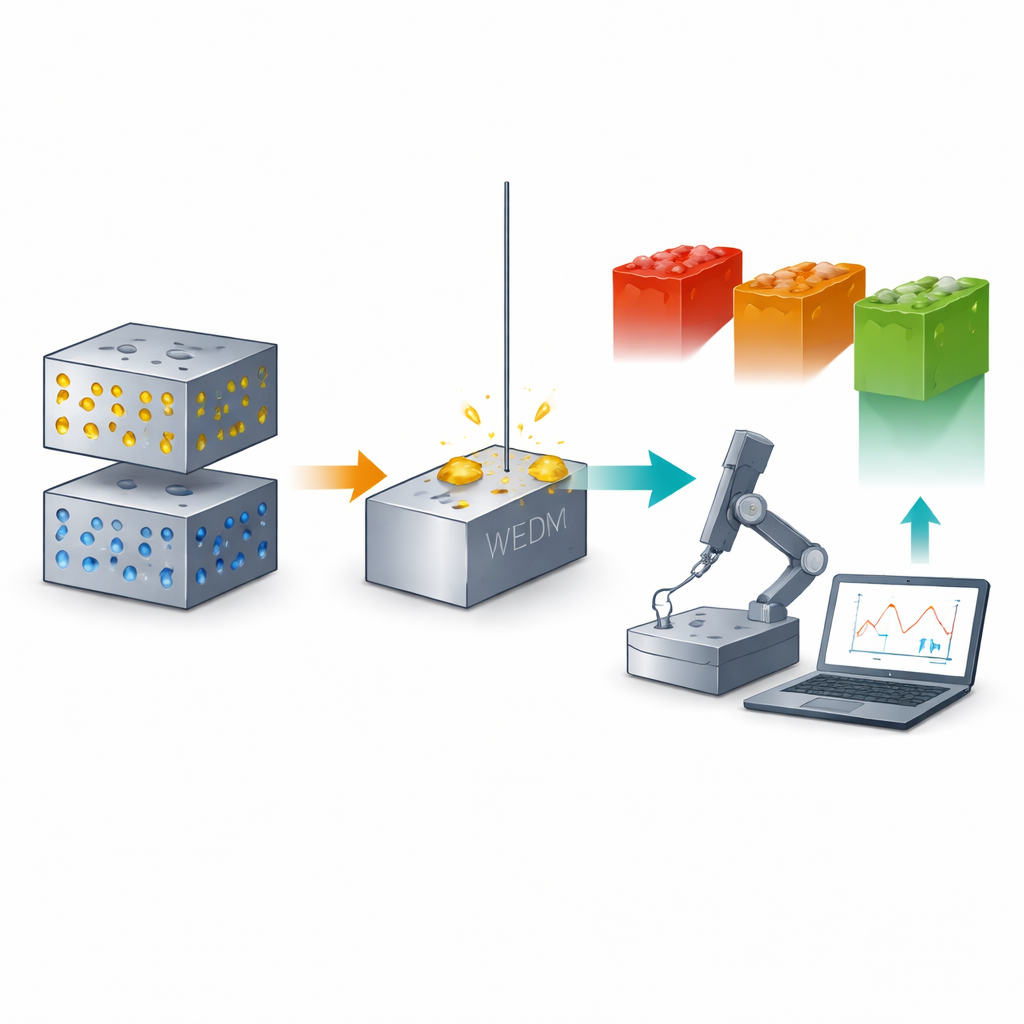
The researchers started with an aluminum alloy known as C355, valued in aerospace and automotive parts for its strength and ability to keep that strength at high temperatures. To push performance even further, they turned it into a "hybrid nanocomposite" by mixing in two different kinds of microscopic reinforcements: silicon nitride particles and graphene nanoplatelets. Silicon nitride is a hard ceramic that improves wear resistance and thermal stability, while graphene brings exceptional strength, stiffness, and thermal conductivity at very low weight. Using a carefully controlled stir-casting process, they melted the alloy, created a vortex with a mechanical stirrer, and gradually introduced preheated nanoparticles so they would spread evenly before the metal solidified into casting molds.
Cutting Metal with Controlled Sparks
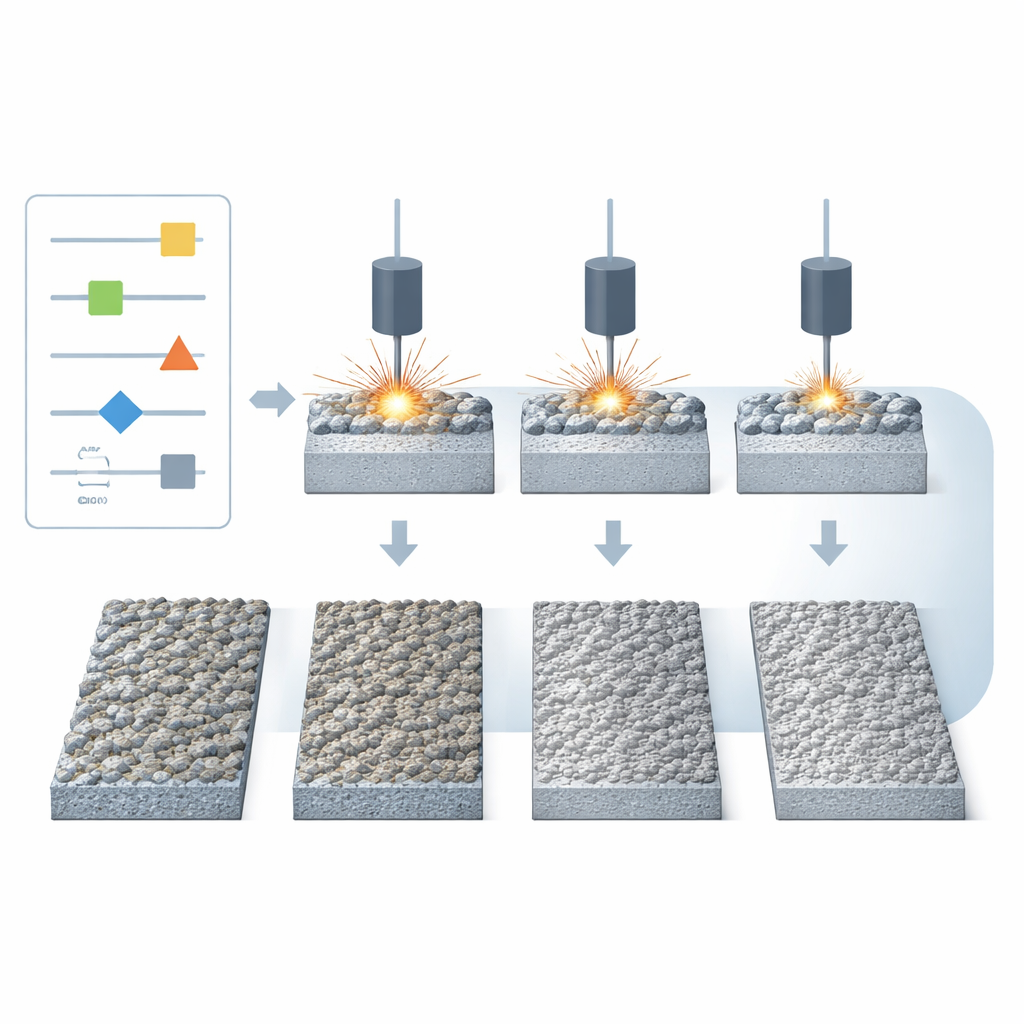
Instead of using conventional milling or turning tools that physically scrape the metal, the team used wire electrical discharge machining (WEDM). In this process, a very thin metal wire passes close to the workpiece without touching it. Repeated electrical pulses create sparks in the narrow gap, producing intense local heat that melts and vaporizes tiny portions of the metal. Deionized water flushes away the debris and cools the surface. Because no cutting force is applied, WEDM is ideal for hard, brittle, or very precise components. In this study, the scientists varied key settings such as how long each pulse is on and off, the peak current, the voltage that controls the spark gap, and the wire feed rate. For each combination of settings, they measured the resulting surface roughness of the hybrid nanocomposites.
Looking Closely at the Machined Surfaces
Beyond simple roughness numbers, the team examined the cut surfaces using high-resolution electron microscopy. They observed features such as craters, microcracks, globules of re-melted metal, and dark patches linked to trapped gas and incomplete flushing. When a standard copper wire was used, the surface showed pits and uneven re-solidified layers. When a tool made from the nanocomposite itself was used, a globular re-cast layer formed across the surface, with many small re-melted regions. These microscopic details help explain why some WEDM settings produce rougher or smoother results, and how the presence of silicon nitride and graphene changes how the surface responds to the intense heat of sparking.
Teaching Computers to Predict Surface Quality
Running many machining trials is expensive and time-consuming, so the researchers built computer models that can predict surface roughness from the WEDM settings. They compared three approaches: a traditional statistical method called response surface methodology; an artificial neural network, which mimics how biological neurons learn patterns; and support vector regression, a machine learning method that finds the best-fitting boundary through complex data. Using a designed set of 27 experiments, they trained and tested each model. All three could capture the general trends, but support vector regression delivered the most accurate and stable predictions, with an extremely high correlation to real measurements and very small error. Statistical analysis also showed that peak current and pulse-on time are the most influential levers for controlling surface roughness, while feed rate and voltage play smaller roles.
What This Means for Real-World Manufacturing
In practical terms, this work shows that manufacturers using advanced aluminum nanocomposites can rely on intelligent models to choose WEDM settings that yield smoother, more reliable surfaces without endless trial and error. By combining a carefully engineered material with data-driven prediction tools, engineers can shorten development time, lower machining costs, and reduce the risk of part failure. The study’s key message for non-specialists is that smarter use of sparks and algorithms can make tomorrow’s aircraft, cars, medical devices, and energy systems both lighter and more dependable.
Citation: Vellingiri, S., Tata, R.K., Manne, S. et al. Predicting wire electrical discharge machined surface roughness of C355/silicon nitride/graphene hybrid nanocomposites using simulation, statistical and machine learning techniques. Sci Rep 16, 11314 (2026). https://doi.org/10.1038/s41598-026-41376-8
Keywords: wire electrical discharge machining, aluminum nanocomposites, surface roughness, machine learning in manufacturing, graphene and silicon nitride reinforcement