Clear Sky Science · en
Evaluating the adequacy of current dietary guidelines for seafood as a source of long-chain omega-3 fatty acids
Why the Fish on Your Plate Matters
Many of us have heard that eating fish is good for the heart and brain, largely because of special fats called omega 3s. Health agencies often sum this up as a simple rule: eat two portions of seafood a week, with at least one being oily fish. This study asks a practical question with big public health stakes: does following that rule actually give most people enough of the key omega 3 fats found in seafood, or do the guidelines fall short of what science now suggests we need?
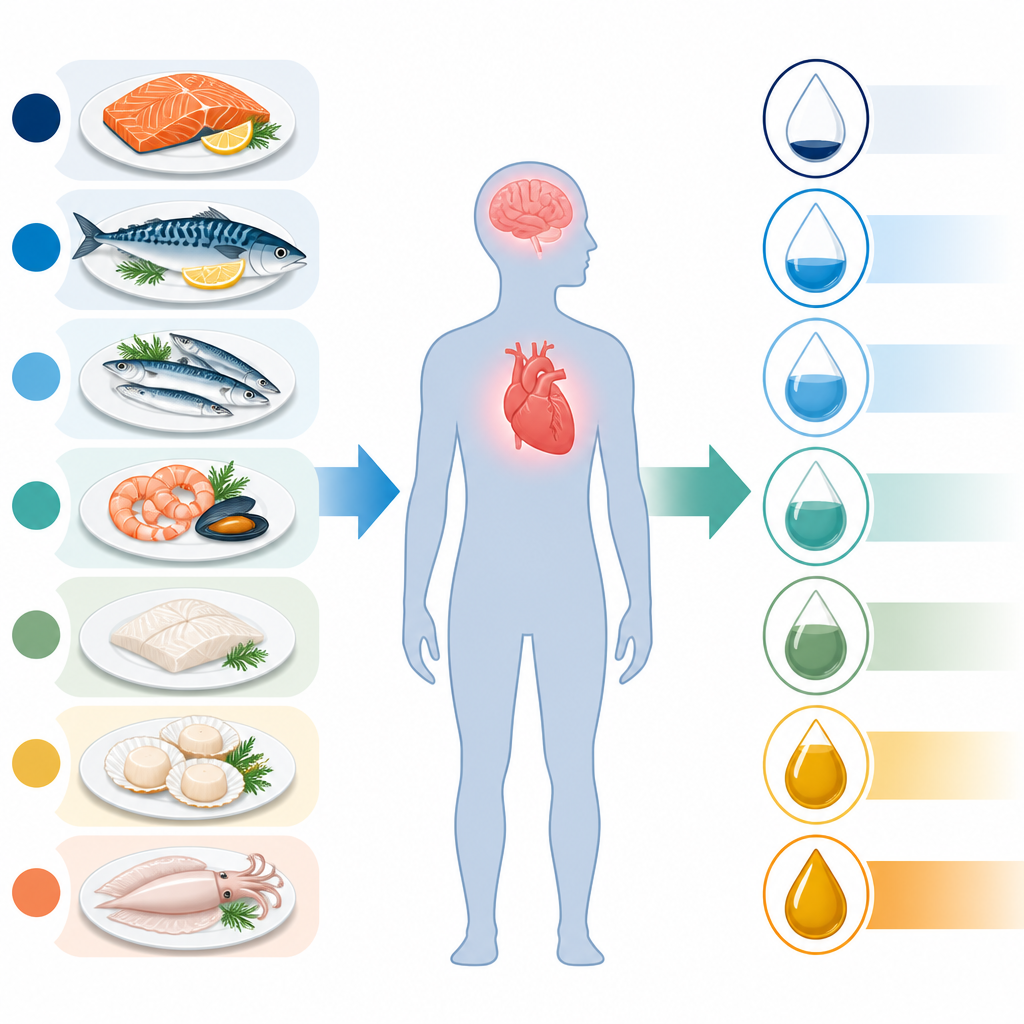
Good Fats Hidden in Different Kinds of Seafood
The researchers examined 97 types of fish and shellfish commonly sold in UK shops, covering both wild-caught and farmed species. They measured how much total fat each one contained and, more importantly, how much of that fat consisted of the long chain omega 3s EPA and DHA, which are strongly linked to heart, blood vessel and brain health. Some species such as Atlantic mackerel and salmon turned out to be genuinely oily, carrying a lot of fat and therefore a lot of EPA and DHA per serving. Others, including popular white fish like cod and haddock, were relatively lean. Shellfish generally had low fat but still carried meaningful amounts of these beneficial fats in their cell membranes.
Farmed Fish Versus Wild Fish on Your Fork
With fish farming now providing more than half of seafood for the table, the team compared the nutritional punch of farmed and wild versions of several key species. Modern aquaculture often relies on plant based oils in feeds, which increases the balance of omega 6 relative to omega 3 in farmed fish. Despite this shift, farmed salmon, seabass, seabream, halibut and turbot usually delivered similar or even higher amounts of EPA and DHA per 100 grams of flesh than their wild cousins, largely because farmed fish tend to be fatter overall. In other words, while the type of fat has changed somewhat, farmed fish remain an important source of the specific omega 3s that humans struggle to make for themselves.
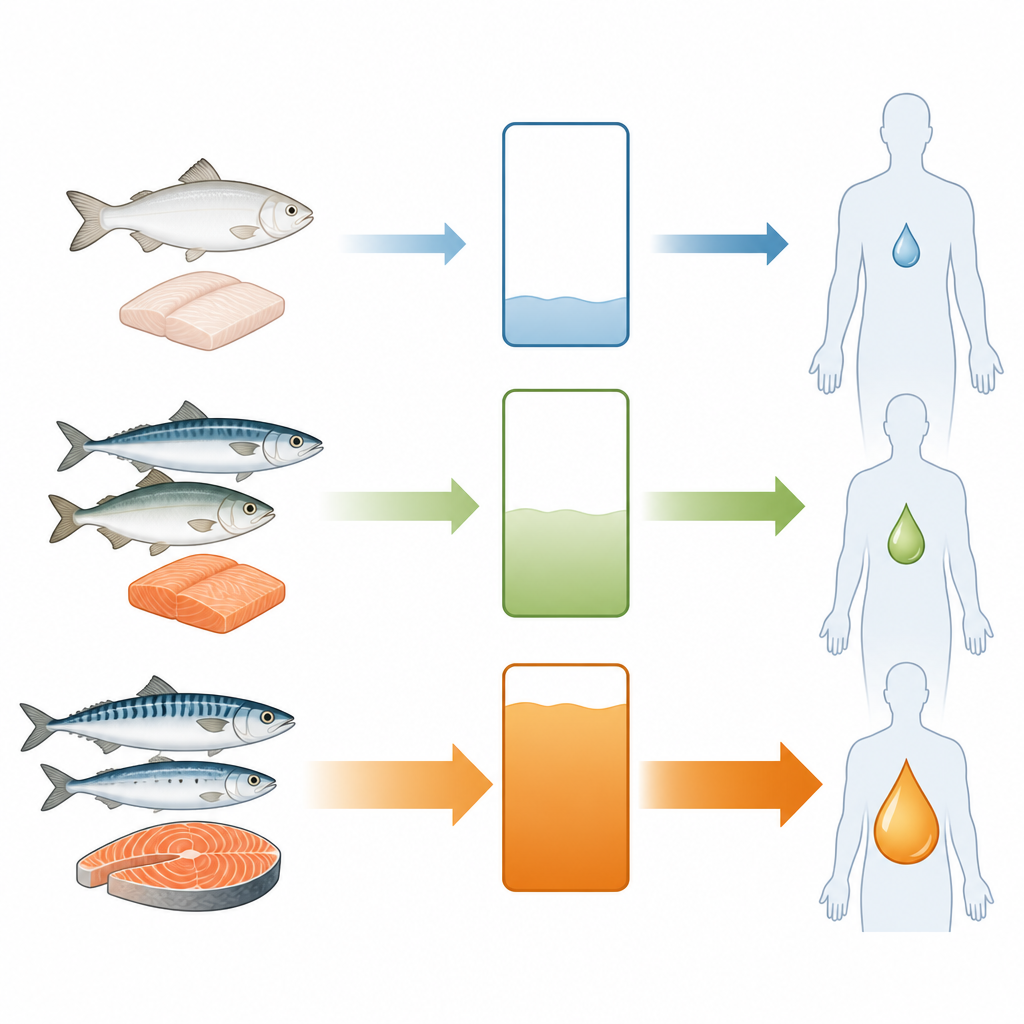
How Much Fish It Takes to Hit Weekly Omega 3 Targets
The study then translated lab numbers into real world servings. Health bodies suggest a wide range of daily EPA and DHA intakes, from about 0.25 grams per day in Europe to 1 gram per day for people with heart disease. Using a standard 140 gram portion, only a single serving of Atlantic mackerel was enough to meet the UK’s weekly target of 3.15 grams EPA plus DHA. In contrast, it would take more than ten portions of cod or haddock, or over sixty portions of some lean farmed freshwater fish, to reach the same weekly amount. When the team considered every possible pairing of two weekly seafood portions, three quarters of combinations failed to deliver even the lower European target of 1.75 grams per week, unless at least one portion was from a distinctly oily species.
Rethinking Simple Rules About Eating Fish
Current advice for many countries, including the UK, encourages two servings of seafood a week, with one serving of oily fish. The authors found that while this pattern improves matters, it still leaves most two portion combinations below higher national targets and a large share below even the lowest widely used recommendation. Their analysis shows that moving to three portions per week, with two of them oily, would dramatically increase the chance that an ordinary person’s weekly seafood choices meet or exceed both European and UK guidance. Even then, those aiming for very high blood levels of omega 3 for heart protection might still need added sources such as fortified foods or supplements.
What This Means for Everyday Eating
To a lay reader, the message is straightforward: seafood is indeed the main practical source of the long chain omega 3s EPA and DHA, and some species are far richer than others. Farmed fish, often viewed with suspicion, generally hold their own in providing these fats. However, simply “eating fish twice a week” is often not enough to reach recommended intakes, especially if those meals are mostly white fish or lean farmed species. The study suggests that public guidelines should shift toward encouraging three seafood meals each week, with at least two based on oily fish such as mackerel, herring or salmon. Doing so would help many more people quietly move into a healthier omega 3 intake range, with likely benefits for heart health and overall wellbeing.
Citation: Sprague, M., Betancor, M.B., Rolland, A. et al. Evaluating the adequacy of current dietary guidelines for seafood as a source of long-chain omega-3 fatty acids. Sci Rep 16, 15190 (2026). https://doi.org/10.1038/s41598-026-41320-w
Keywords: seafood nutrition, omega 3 fatty acids, fish consumption, dietary guidelines, aquaculture