Clear Sky Science · en
Vitamin C protects oligodendrocyte lineage cells and modulates microglial inflammation during OGD/R in vitro
How a Common Vitamin May Help Protect Brain Wiring
When we think about vitamin C, we often picture its role in fighting colds. But inside the brain, this familiar nutrient may be doing something far more subtle and important: helping protect the cells that insulate nerve fibers and keep signals moving quickly and smoothly. This study explores how vitamin C behaves in a lab model of reduced blood and oxygen supply, a condition that mimics what happens during a stroke or chronic poor circulation, and asks whether the vitamin can shield vulnerable brain cells from damage.
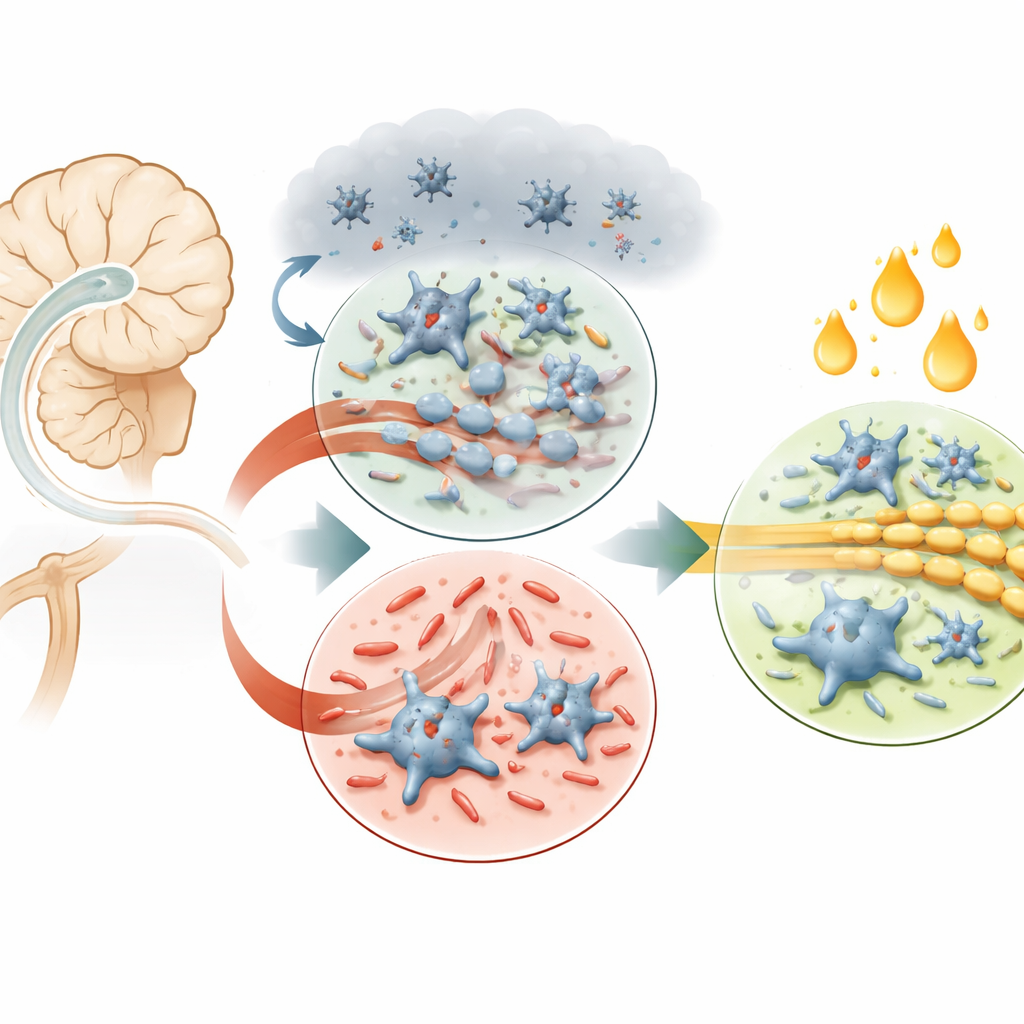
The Brain’s Hidden Support Team
Our ability to think, move, and remember depends not only on nerve cells but also on a network of support cells. Among the most important are oligodendrocytes, which wrap nerve fibers in a fatty coating known as myelin, allowing electrical signals to travel rapidly. Their younger form, called precursor cells, must grow and mature before they can build this insulation. Another key player is the microglia, the brain’s resident immune cells, which can help with repair but also drive inflammation. Because oligodendrocytes have very high energy demands, they are especially sensitive to a lack of oxygen and fuel, as occurs when blood flow is interrupted.
Recreating a Mini Stroke in the Lab
To study these interactions in a controlled way, the researchers used rat brain cells grown in dishes. They exposed oligodendrocyte precursors, mature oligodendrocytes, and microglia to a period without oxygen and sugar, followed by a return to normal conditions. This procedure imitates the sudden deprivation and restoration of blood flow seen in stroke or brief episodes of poor circulation. The team measured how many cells died, how well precursors matured, and how strongly microglia released molecules associated with harmful inflammation. They then repeated the same experiments while adding a modest dose of vitamin C, at a level similar to what can be reached in human brain fluid after standard supplementation.
Vitamin C Calms Damage and Inflammation
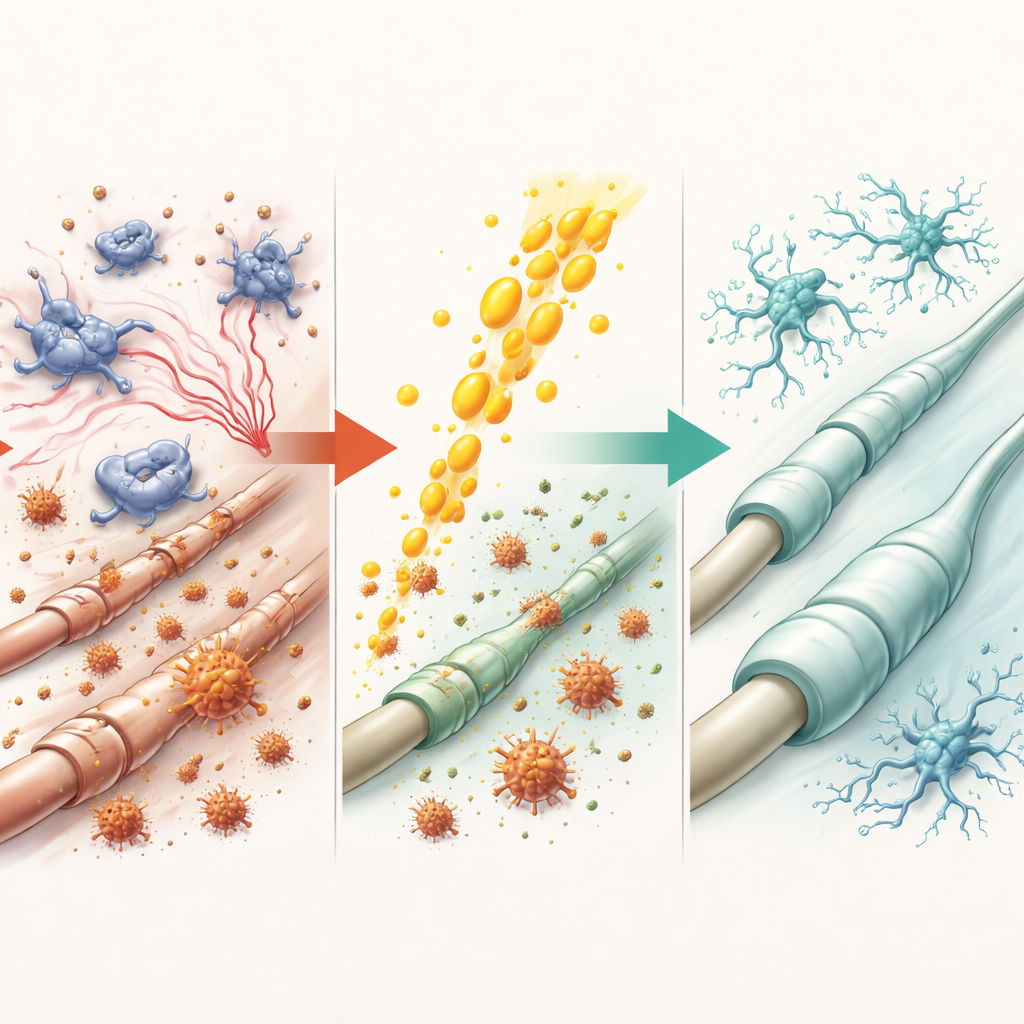
Without vitamin C, the simulated blood-flow loss triggered a wave of injury. More oligodendrocyte precursors and mature cells underwent programmed cell death, and far fewer precursors successfully matured into myelin-forming cells. Inside these cells, chemical markers of oxidative stress rose sharply, indicating that reactive molecules were attacking fats and other components. Microglia responded by switching into an inflammatory mode, pumping out factors that can further harm nearby cells. When vitamin C was present, this picture changed: death of oligodendrocyte lineage cells dropped by roughly half, their maturation rebounded, and the buildup of damaging reactive molecules and lipid breakdown products was significantly reduced.
Cross-Talk Between Support and Immune Cells
Because brain cells do not operate in isolation, the researchers also grew oligodendrocytes and microglia together in a two-layer system that allowed them to exchange soluble signals without touching. Under simulated blood-flow loss, microglia became activated and drove more precursor cell death and poorer maturation. Adding vitamin C again proved beneficial: it dampened the microglia’s production of aggressive inflammatory factors while boosting markers linked to a more soothing, repair-oriented state. Interestingly, mature oligodendrocytes were less vulnerable to damage in these mixed cultures than in isolation, suggesting that under some conditions nearby microglia may offer protection as well as risk.
What These Findings Could Mean for Brain Health
At a big-picture level, this work shows that vitamin C can act on two fronts at once in this lab model: it directly shields myelin-forming cells from oxidative injury and nudges brain immune cells away from a destructive response and toward a calmer, more supportive role. Although these experiments were done in dishes rather than in living animals or people, they help explain why adequate vitamin C might be especially important in conditions that threaten the brain’s white matter, such as stroke, chronic poor blood flow, or certain neurodegenerative diseases. The results do not yet justify changing medical practice, but they highlight a safe, widely available nutrient as a promising partner in future therapies aimed at preserving the brain’s wiring.
Citation: Guo, J., Cheng, Y. & Yi, M. Vitamin C protects oligodendrocyte lineage cells and modulates microglial inflammation during OGD/R in vitro. Sci Rep 16, 11048 (2026). https://doi.org/10.1038/s41598-026-41308-6
Keywords: vitamin C, white matter, oligodendrocytes, microglia, oxidative stress