Clear Sky Science · en
Pathophysiology and histological anomalies in testicular tissues of Calosoma olivieri exposed to heavy metals generated by pesticide industries
Why beetles and factory waste matter to us
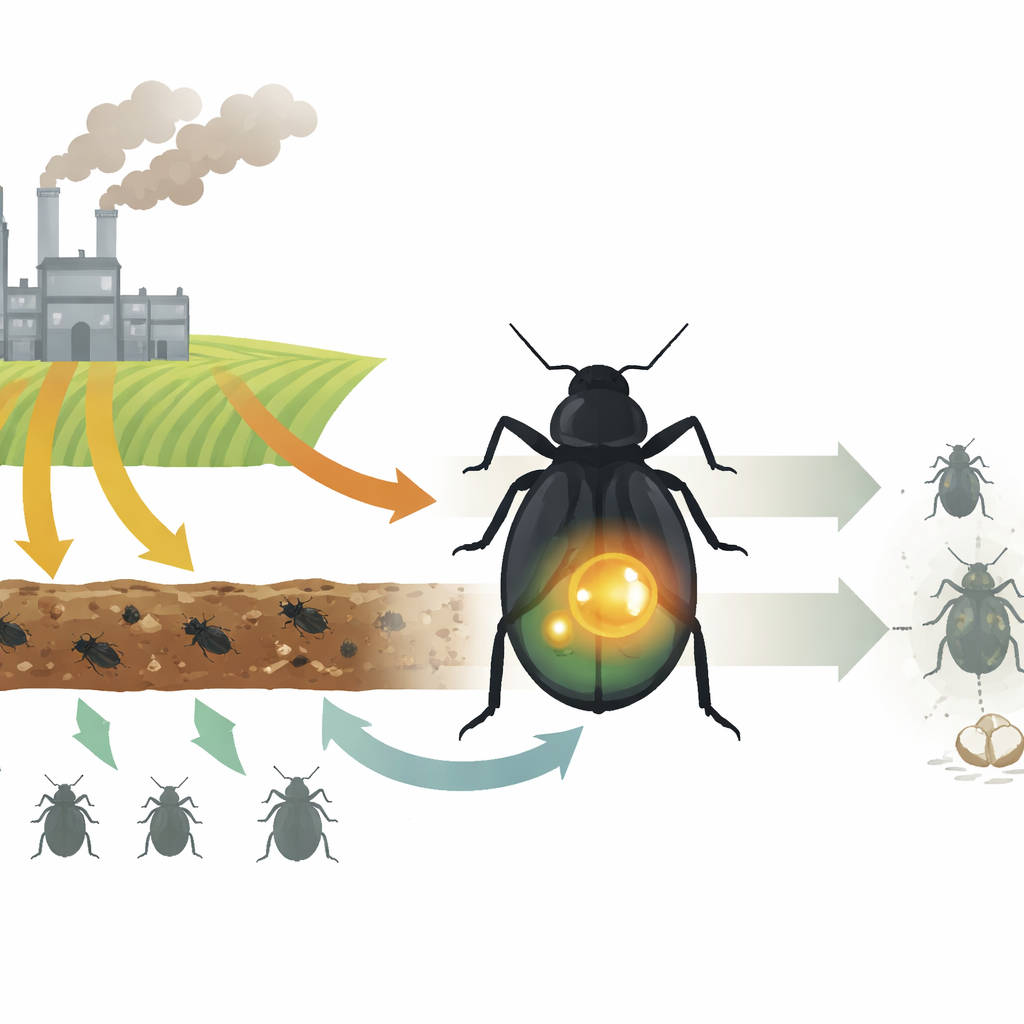
Heavy metals released from factories do not simply disappear once they leave a smokestack or drainage pipe. They seep into soil, build up in living creatures, and can quietly damage reproduction long before any obvious die‑offs occur. This study follows a common ground beetle living near pesticide factories in Egypt and shows how metal pollution can injure its male reproductive organs. Because the beetle acts as a living sensor of its surroundings, the findings offer a window into hidden risks for other animals, crops, and people who share the same environment.
A busy industrial town and its hidden burden
The research took place in Kafr El‑Zayat, a heavily industrial and agricultural city in Egypt’s Nile Delta that hosts major pesticide and chemical plants. To see how far pollution might reach into the local food web, the authors chose the ground beetle Calosoma olivieri as a bioindicator species. These beetles are abundant, easy to collect, and closely interact with the soil where contaminants accumulate. Scientists sampled males from two locations: a clean reference garden in Alexandria and a polluted area next to pesticide factories in Kafr El‑Zayat. They focused on the testes, one of the most sensitive organs to toxins, to ask a simple question with wide implications: are factory‑derived metals reaching the beetles’ reproductive tissues, and what damage do they cause?
Metals traveling from soil into living tissue
Using a technique called energy‑dispersive X‑ray spectroscopy, the team measured which elements were present inside the beetles’ testes. In insects from the clean site, only normal building‑block elements such as carbon, oxygen, sodium, magnesium, and phosphorus appeared. In beetles from the industrial zone, however, three hazardous metals—nickel, cadmium, and chromium—were clearly detected in the testes. At the same time, helpful elements like nitrogen and magnesium vanished from these tissues, and oxygen levels fell while phosphorus rose. Together, these shifts suggest that toxic metals not only accumulate inside the organ but also disrupt the normal balance of essential ingredients needed for sperm formation and energy production.
Oxidative strain inside the beetle’s cells
To understand how these metals harm cells, the researchers examined the beetles’ internal chemistry. Healthy cells maintain a balance between reactive oxygen by‑products and protective molecules known as antioxidants. In testes from the polluted site, the main antioxidant enzymes and compounds—including superoxide dismutase, catalase, several glutathione‑based enzymes, and glutathione itself—were all markedly reduced. At the same time, markers of damage such as lipid peroxidation and protein carbonyls climbed sharply. This pattern indicates strong oxidative stress: metals such as nickel, cadmium, and chromium spur the overproduction of reactive molecules that attack fats, proteins, and DNA faster than the weakened defenses can neutralize them.
Visible damage to reproductive structures
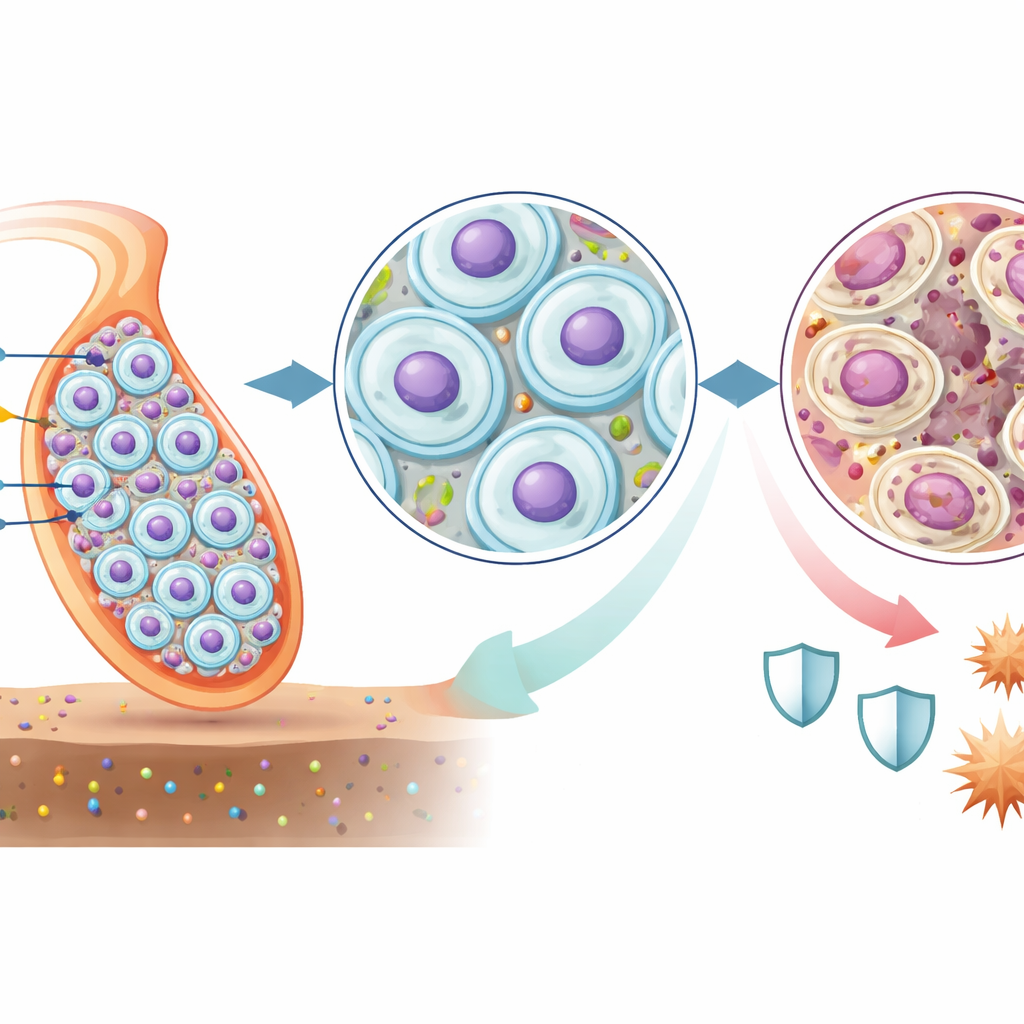
Chemical changes were mirrored by striking physical injuries seen under the microscope. In beetles from the clean area, the testes showed neatly packed follicles and cysts filled with orderly stages of developing sperm. In contrast, testes from the polluted site had ruptured follicle walls, widened gaps between structures, and many regions of vacuolation and necrosis—signs of dying tissue. At higher magnification, early sperm cells displayed blurred nuclear envelopes, empty spaces in their cytoplasm, and breakdown of specialized mitochondrial bundles that normally power sperm tails. Mature sperm showed misshapen heads and acrosomes, suggesting that even surviving cells might struggle to fertilize eggs. These structural injuries are consistent with the oxidative damage measured biochemically.
What this means for ecosystems and people
Taken together, the study shows that heavy metals released by pesticide industries can travel from soil into insects and severely impair male reproductive tissue, likely lowering fertility in exposed beetle populations. Because beetles share their habitat with many other animals—and because similar metals are known to harm mammalian testes—the work flags serious ecological and potential human health risks in industrial regions like Kafr El‑Zayat. It also demonstrates that common insects can serve as cost‑effective early‑warning sentinels of metal pollution, helping regulators spot trouble long before it becomes obvious in larger animals or in people.
Citation: El-Samad, L.M., Arafat, E.A., Hussein, H.K. et al. Pathophysiology and histological anomalies in testicular tissues of Calosoma olivieri exposed to heavy metals generated by pesticide industries. Sci Rep 16, 9811 (2026). https://doi.org/10.1038/s41598-026-41290-z
Keywords: heavy metal pollution, pesticide industry, bioindicator beetles, reproductive toxicity, oxidative stress