Clear Sky Science · en
The 129S1/SvlmJ mouse strain recapitulates severe hypertensive target organ damage under moderate angiotensin II–induced hypertension
Why some bodies break under high blood pressure
High blood pressure is often called the “silent killer” because it quietly injures the brain, heart, kidneys, and eyes over many years. Yet not everyone with the same blood pressure level develops the same damage. This study uses mice to ask a simple but important question: when two individuals face the same rise in pressure, why does one suffer strokes, memory loss, and kidney failure while the other remains relatively spared?
Two types of mice, one shared stress
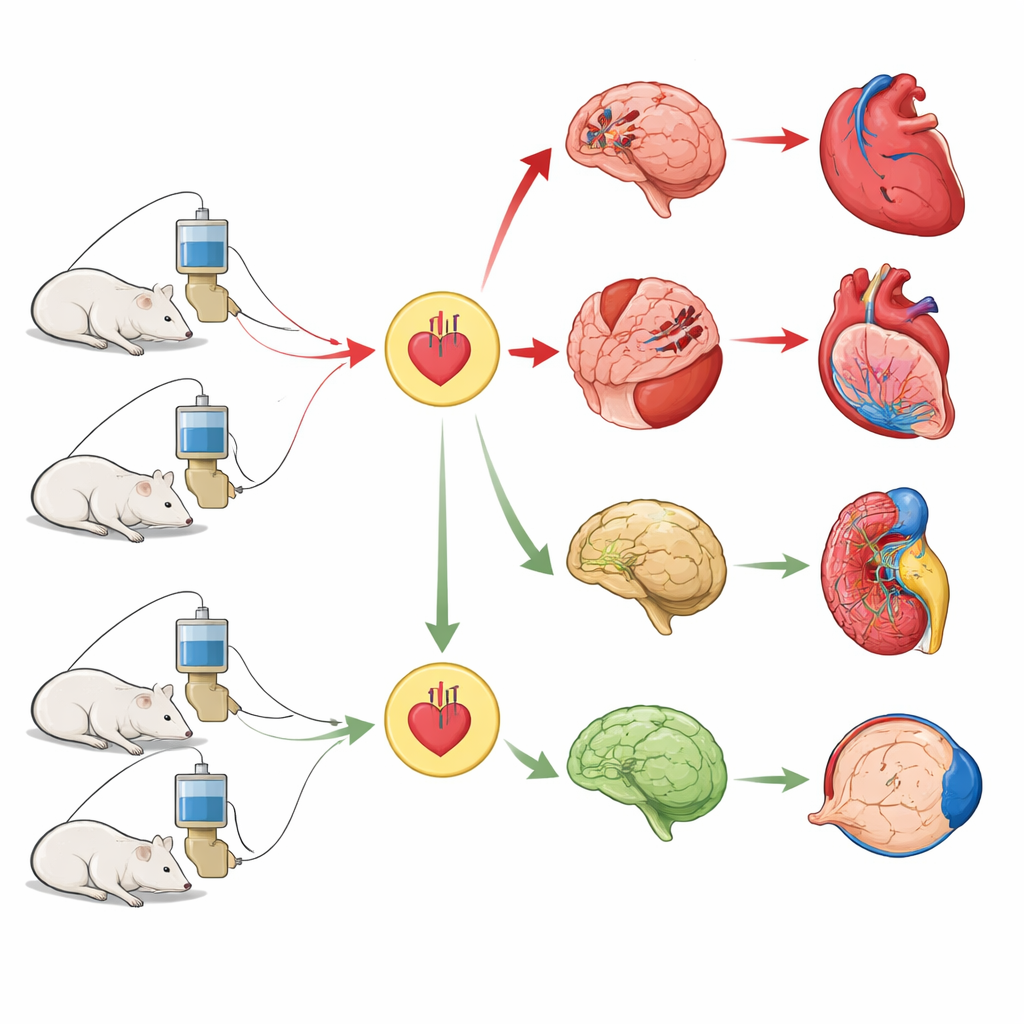
The researchers compared two common laboratory mouse strains that differ in their genetic makeup. Both groups received a steady, moderate dose of angiotensin II, a hormone that reliably raises blood pressure, delivered through tiny pumps under the skin. Careful telemetry showed that the two strains reached very similar blood pressure levels and heart rates over four weeks. Body weight and overall survival were also alike, ensuring that any differences in injury could not simply be blamed on one group being more hypertensive than the other.
One strain shows brain and eye injury
Despite this shared rise in pressure, only the 129S1/SvImJ mice developed clear signs of brain trouble. In memory tests using the Morris water maze, these mice struggled to learn and remember the platform’s location, while the widely used C57BL/6J mice performed normally. When the team looked at the brain’s protective blood–brain barrier, they found that small dye molecules leaked more readily into the brain tissue of the 129 strain, indicating a “leaky” barrier. These mice also showed more tiny brain bleeds and stronger activation of star-shaped support cells called astrocytes, a pattern that closely resembles human small vessel disease, a major cause of vascular dementia.
Kidneys, hearts, and retinas under strain
The kidneys, heart, and eyes told a similar story. Only the 129 strain developed heavy loss of the protein albumin in the urine, a warning sign that the kidney’s filtration barrier is failing. Under the electron microscope, their podocytes—the specialized cells that wrap the kidney filters—showed flattened, damaged foot processes. Gene tests confirmed that key molecules needed for podocyte and vessel health were turned down. In the heart, the same strain showed thickened heart walls, enlarged heart muscle cells, and changes in electrical conduction, all consistent with hypertensive cardiomyopathy, whereas C57BL/6J hearts remained close to normal. In the retina, the 129 mice displayed leakage of fluorescent tracers and disruption of the blood–retina barrier, again mirroring complications seen in people with long-standing hypertension.
Immune signals help set the stage
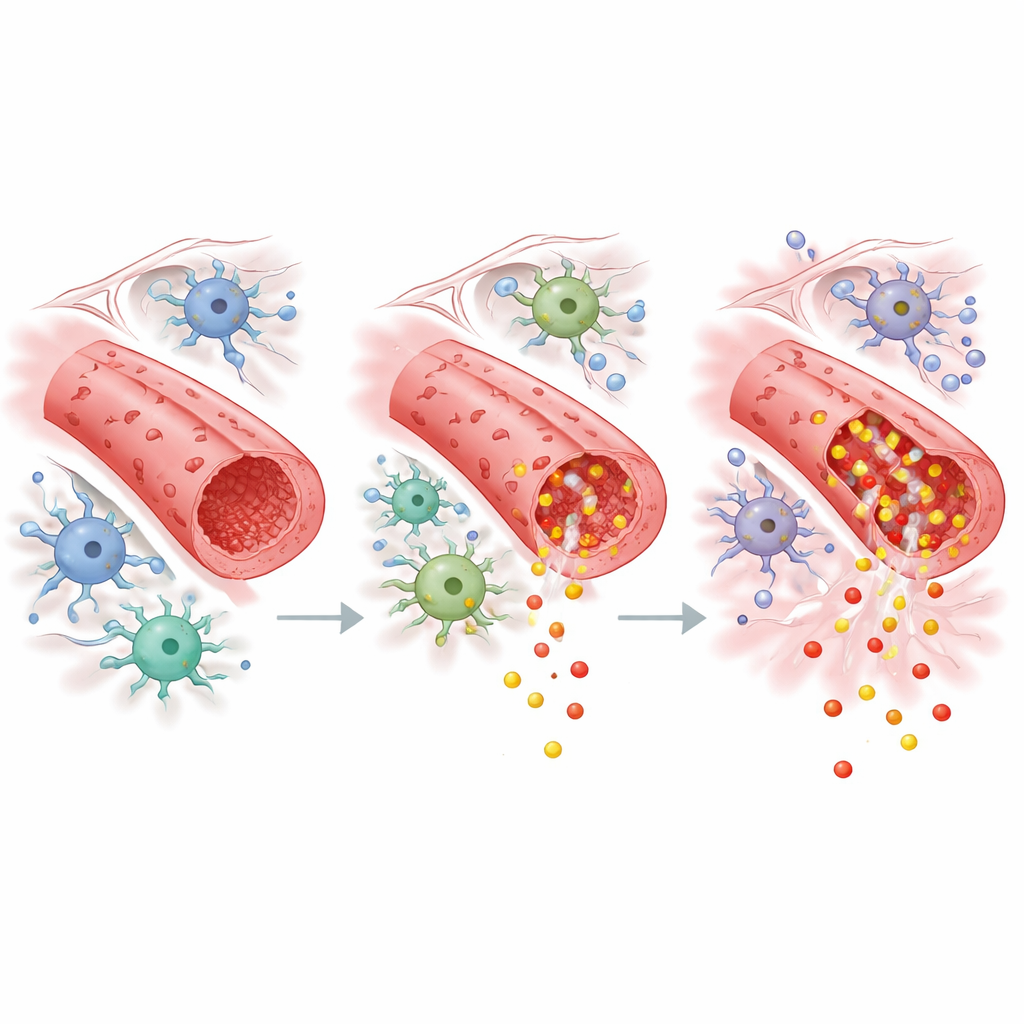
To probe why one strain succumbed while the other did not, the team analyzed gene activity in tiny brain blood vessels at early and late time points. Even after just a week of angiotensin II, vessels from 129 mice showed strong activation of immune and inflammatory programs, including many interferon-related genes. By four weeks, their gene profile shifted toward markers of structural remodeling and scarring, matching the visible damage. In contrast, C57BL/6J vessels mounted a more restrained response. Interestingly, these “protected” mice did show increased recruitment of microglia and perivascular immune cells, suggesting a controlled, perhaps protective, inflammatory reaction that preserved barrier function instead of breaking it.
What this means for understanding risk
Together, the findings show that genetic background powerfully shapes how organs respond to the same level of high blood pressure. The 129S1/SvImJ strain proves to be a sensitive model that reproduces many of the brain, kidney, heart, and eye complications seen in severe human hypertension, while C57BL/6J mice often stay surprisingly unharmed. For lay readers, the key message is that “how your body is built” matters as much as the blood pressure number itself. This mouse model now offers researchers a valuable tool to unravel which genes and immune pathways tip the balance from silent hypertension to devastating organ damage—and, eventually, to design treatments that protect those most at risk.
Citation: Orieux, A., Boulestreau, R., Bats, ML. et al. The 129S1/SvlmJ mouse strain recapitulates severe hypertensive target organ damage under moderate angiotensin II–induced hypertension. Sci Rep 16, 12155 (2026). https://doi.org/10.1038/s41598-026-41288-7
Keywords: hypertension, genetic susceptibility, target organ damage, mouse models, small vessel disease