Clear Sky Science · en
Punicalagin with anti-inflammatory activities affects Brd-4 mediated chromatin remodeling for attenuating inflammatory osteolysis
Why a fruit compound could matter for aching joints
Many people live with joint pain from arthritis or other inflammatory bone diseases, where the body slowly erodes its own bone. Current drugs often ease pain but bring side effects and do little to halt long-term damage. This study explores whether punicalagin, a natural molecule found in pomegranate, can calm harmful inflammation, protect bone from being eaten away, and even gently retune how our genes are switched on and off inside immune cells.
Bone loss when defense cells go too far
Inflammatory osteolysis is a form of bone loss that shows up in conditions such as osteoarthritis, rheumatoid arthritis, bone infections, and inflammation around dental implants or joint replacements. In these settings, immune cells called macrophages become chronically activated and release waves of inflammatory messengers. These signals drive precursor cells to become osteoclasts, the specialized cells that dissolve bone. When osteoclast activity outweighs bone-building cells, the result is thinning, fragile bone and painful structural damage around the joint or implant.
Why gene control and “cell rust” matter
As macrophages turn into bone-eating osteoclasts, their energy factories shift into high gear and generate a surge of reactive oxygen species, a form of chemical “rust” inside cells. These reactive molecules can damage DNA and also change how DNA is packaged, a layer of regulation known as epigenetics. One key epigenetic player, a protein called Brd4, reads chemical marks on DNA-packaging proteins and helps switch on many inflammatory genes. Because these epigenetic changes are reversible, scientists are interested in drugs that could nudge this gene-control system back toward a healthier, less inflammatory state.
A pomegranate molecule with a gentle touch
Punicalagin is a plant-derived polyphenol already known for its antioxidant and anti-inflammatory properties. The researchers first tested whether it would be safe for bone and immune cells grown in the lab. They found that macrophages and bone-forming precursor cells tolerated fairly high doses without major loss of viability, and that concentrations at or below about 80 micromolar were especially safe even over longer exposures. Within this safe zone, punicalagin powerfully blocked the formation and fusion of osteoclasts, disrupted the actin ring structures they need to chew through bone, and sharply lowered the activity of genes involved in osteoclast differentiation and bone resorption.
Rewiring inflammation from the inside
To understand how punicalagin works under the hood, the team examined global gene activity in inflammatory macrophages. When cells were challenged with bacterial components to mimic infection, thousands of genes involved in inflammation, cell division, chromatin organization, and DNA damage pathways were altered. Adding punicalagin reversed many of these changes: pro-inflammatory genes went down, while genes that support antioxidant defenses and cell protection went up. Analyses pointed strongly toward processes that reshape the three-dimensional structure of DNA in the nucleus, especially those tied to histone acetylation and chromatin remodeling. The study showed that punicalagin reduced the expression of the BET protein family, including Brd4, and computer docking suggested that punicalagin can bind directly to these proteins. At the same time, punicalagin boosted the cell’s own antioxidant systems and visibly lowered both general and mitochondrial reactive oxygen species in immune and bone precursor cells.
Protecting bone in living animals
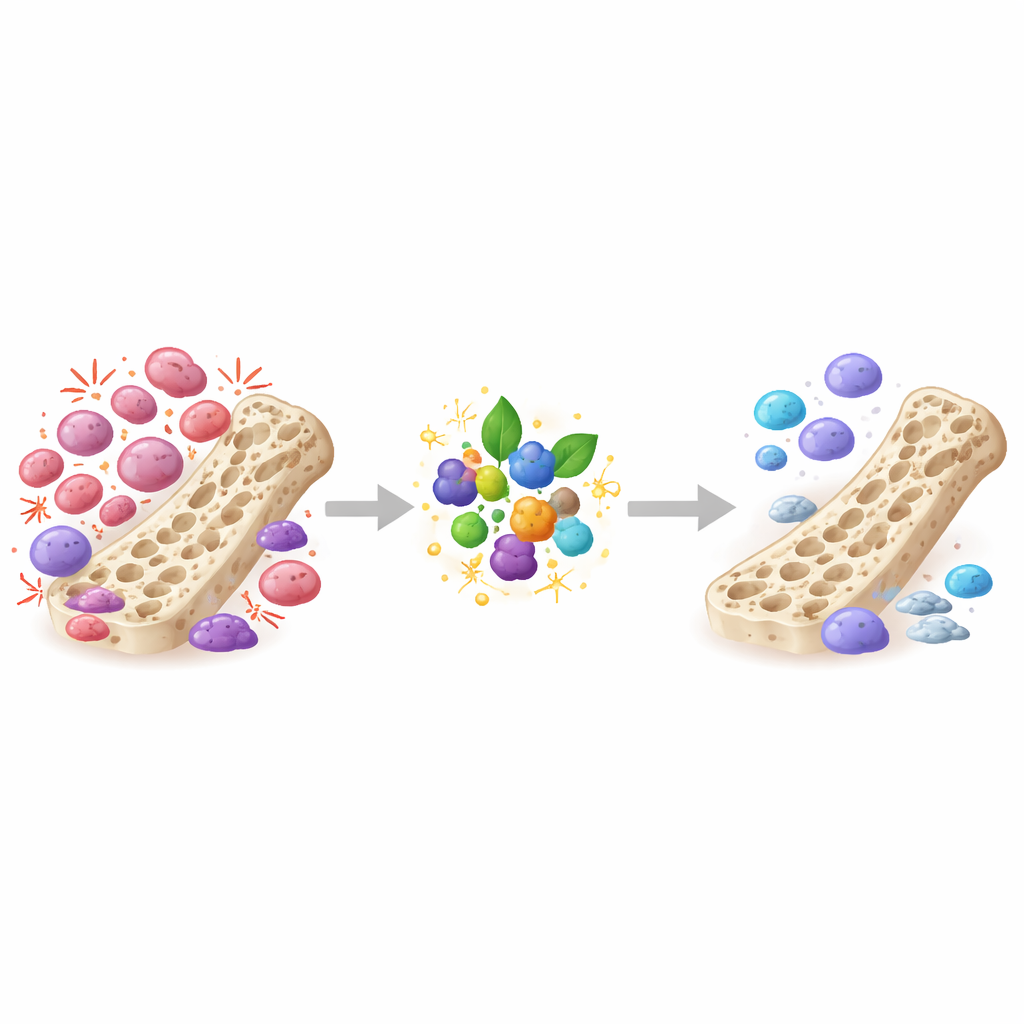
The researchers then moved to a mouse model in which a bacterial toxin triggers rapid bone loss in the skull. Animals receiving this trigger alone developed extensive pits and erosion in the bone, along with heavy inflammatory cell infiltration. Mice treated with punicalagin alongside the toxin showed markedly smoother bone surfaces on high-resolution micro-CT scans, with better measures of bone volume and structure. Tissue staining confirmed less osteoclast presence and reduced signs of inflammation. These in vivo findings mirrored the cell culture results, indicating that punicalagin’s combination of osteoclast inhibition, antioxidant support, and epigenetic modulation can translate into real structural protection for bone.
What this could mean for future treatments
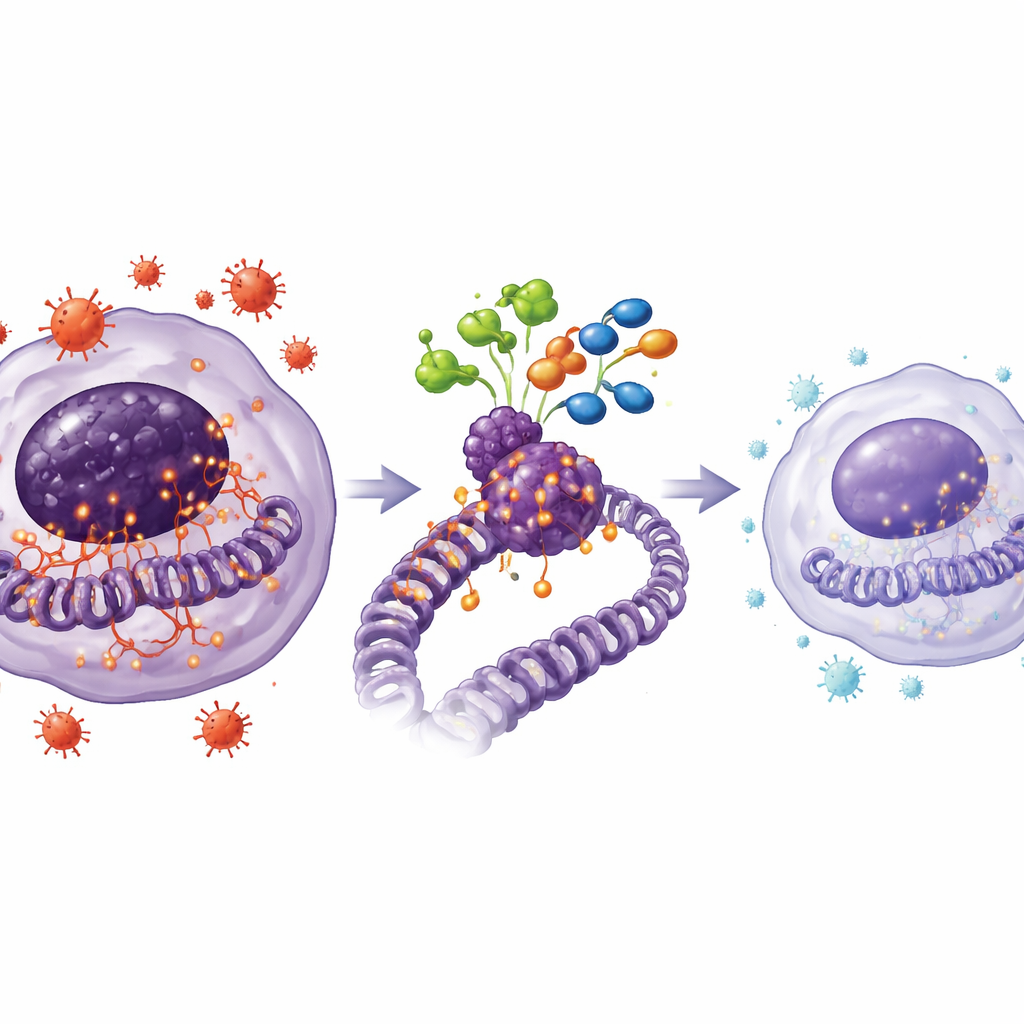
In everyday terms, this work suggests that a natural compound from pomegranate can help calm overactive immune cells, reduce damaging cellular “rust,” and subtly reset how inflammatory genes are read inside those cells. By doing so, punicalagin slows the formation and activity of bone-eating cells and protects bone from inflammatory destruction in mice. While challenges remain—such as improving how well the compound is absorbed when taken by mouth and testing it in larger animals or humans—the study points to a future in which therapies for arthritis and related bone diseases not only ease pain but also shield bone by targeting both inflammation and the epigenetic switches that drive it.
Citation: Li, H., Li, Q., Wan, T. et al. Punicalagin with anti-inflammatory activities affects Brd-4 mediated chromatin remodeling for attenuating inflammatory osteolysis. Sci Rep 16, 12948 (2026). https://doi.org/10.1038/s41598-026-41262-3
Keywords: punicalagin, inflammatory osteolysis, osteoclasts, epigenetic regulation, bone inflammation