Clear Sky Science · en
Efficient foam-based thermal interface material functionalized with MWCNTs for CPU cooling applications: thermal performance modeling and Experimental studies
Why keeping chips cool matters to everyone
From gaming PCs to smartphones and data centers, today’s electronics pack more computing power into smaller spaces than ever before. All that power turns into heat, and if it is not carried away quickly enough, performance drops and parts can fail early. This study explores a new way to move heat out of a computer processor using a lightweight foam material enhanced with tiny carbon tubes, aiming to keep future devices faster, cooler, and more reliable.
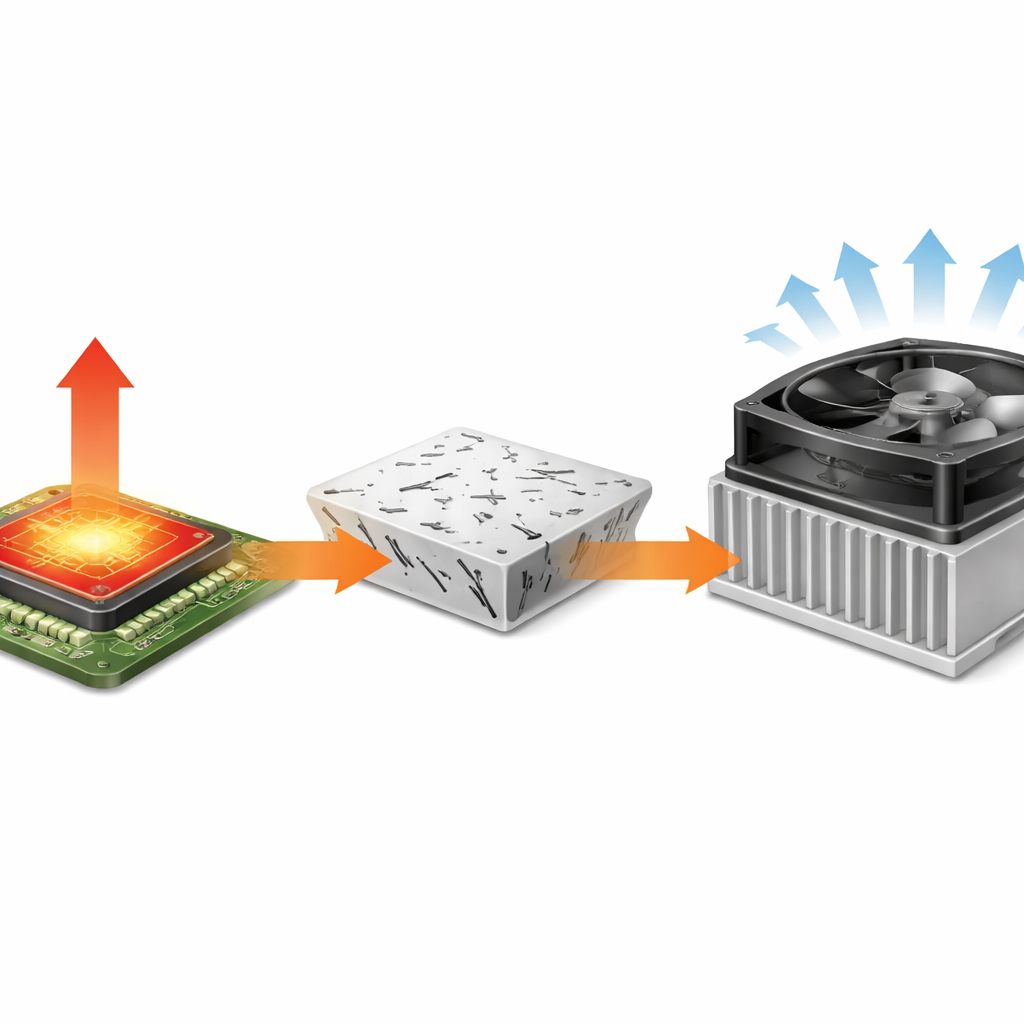
A new bridge for heat between chip and cooler
Between a processor and its metal cooling block sits a thin layer called a thermal interface material, or TIM. Its job is to fill microscopic gaps so heat can cross from the flat chip into the heat sink and then into the air. Standard pastes and pads are starting to struggle as chips grow hotter. Here, the researchers propose a TIM made from a sponge-like plastic foam called polyvinyl formal, into which they mix multi-walled carbon nanotubes—microscopic, highly conductive cylinders made of carbon. The foam provides softness, light weight, and easy manufacturing, while the nanotubes act as express lanes for heat flowing through the layer.
How the team tested the foam in a working computer
To see whether this new material could really cool a processor, the team built both computer models and a physical test system. They simulated airflow and heat transfer inside a PC case using specialized software that solves the basic equations of fluid motion and heat flow. The simulation included a real-style setup: a square CPU chip producing 80 watts of heat, a thin TIM layer, an aluminum heat sink with tall fins, and a fan blowing air across those fins. In the lab, they recreated this scenario with an actual computer chassis, heater blocks that mimic a working CPU, fans, and heat sinks, carefully measuring temperatures with thermocouples while changing the properties of the foam pad.
More nanotubes, better contact shape, and just-thin-enough pads
The key question was which design choices most strongly affect how cool the CPU runs. First, the team varied the amount of carbon nanotubes in the foam. With no nanotubes, the foam barely helped, and heat piled up at the chip. As they increased the nanotube content, the material conducted heat much better, and with 4 weight percent nanotubes the heat spread more evenly through the pad and into the heat sink, cutting the CPU temperature significantly. Next, they examined the shape of the pad. A circular piece left some of the square chip area uncovered, acting like a bottleneck. A square pad that closely matched the chip surface allowed more direct contact, reducing resistance to heat flow and lowering the chip temperature even further.
Finding the sweet spot in pad thickness
Thickness turned out to be just as important as composition and shape. The researchers tested foam layers ranging from 2 millimeters up to 15 millimeters. Thicker layers gave heat a longer path to travel and consistently produced hotter CPUs, even when packed with nanotubes. Thinner layers shortened the path and also pressed more snugly between the chip and the heat sink, squeezing out tiny air pockets that act as insulators. The best outcome came from a 2-millimeter-thick square pad with 4 percent nanotubes: under an 80-watt load, this setup kept the CPU at about 66.7 degrees Celsius, several degrees cooler than other combinations and clearly better than foam without nanotubes.
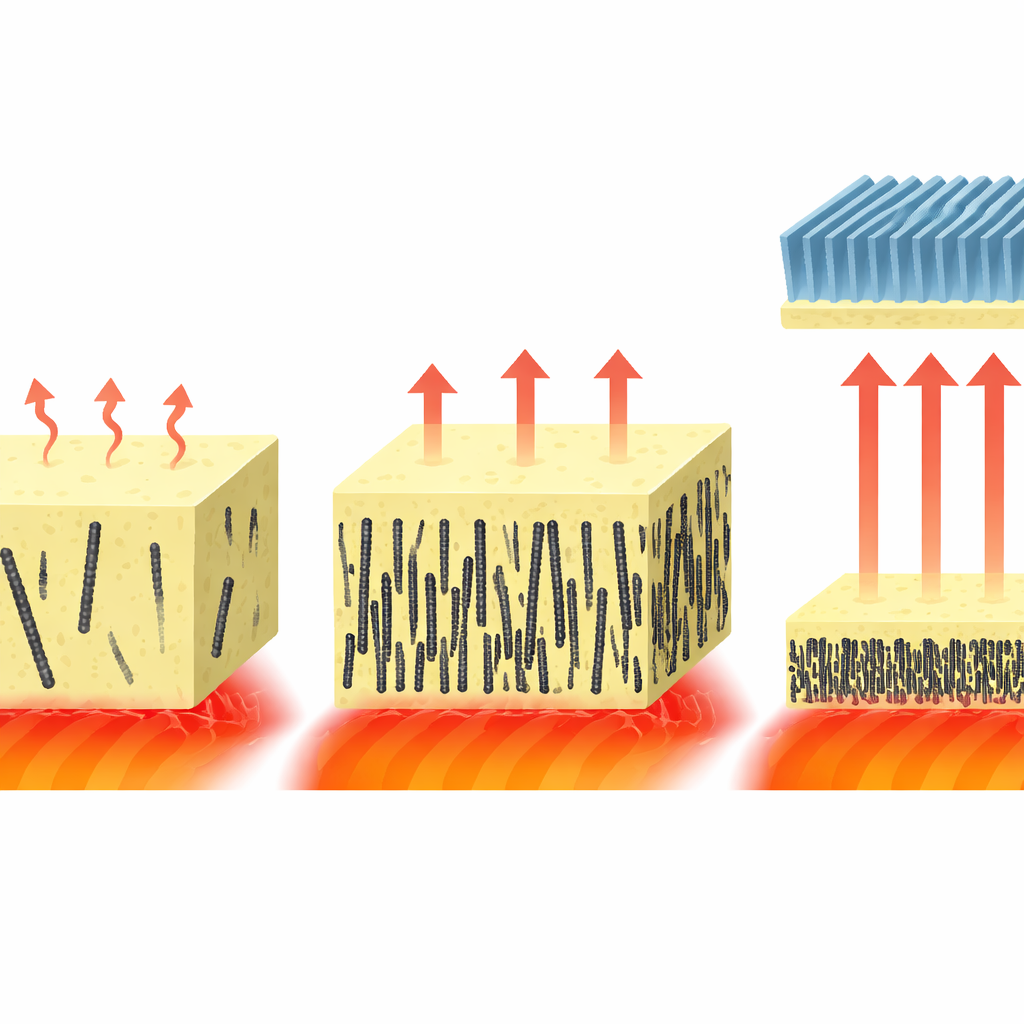
What this means for future devices
In everyday terms, this work shows that a simple, sponge-like pad infused with microscopic carbon tubes can form a highly effective thermal bridge between a hot chip and its cooler. When the amount of nanotubes, the pad’s shape, and its thickness are all tuned correctly, the foam TIM safely carries away more heat, allowing processors to run cooler under heavy use. Because the material is light, stable up to high temperatures, and can be made at low cost, it offers a promising path toward keeping next-generation computers, servers, and other electronics running smoothly without overheating.
Citation: Ali, N., Anis, B. & Elhadary, M. Efficient foam-based thermal interface material functionalized with MWCNTs for CPU cooling applications: thermal performance modeling and Experimental studies. Sci Rep 16, 10799 (2026). https://doi.org/10.1038/s41598-026-41260-5
Keywords: CPU cooling, thermal interface material, carbon nanotube foam, electronics heat management, heat sink design