Clear Sky Science · en
Impact of thermal-acoustic exposure on human performance of healthy adults: simulation of traffic noise and thermal conditions in the urban environment
Why City Heat and Noise Matter to Your Mind
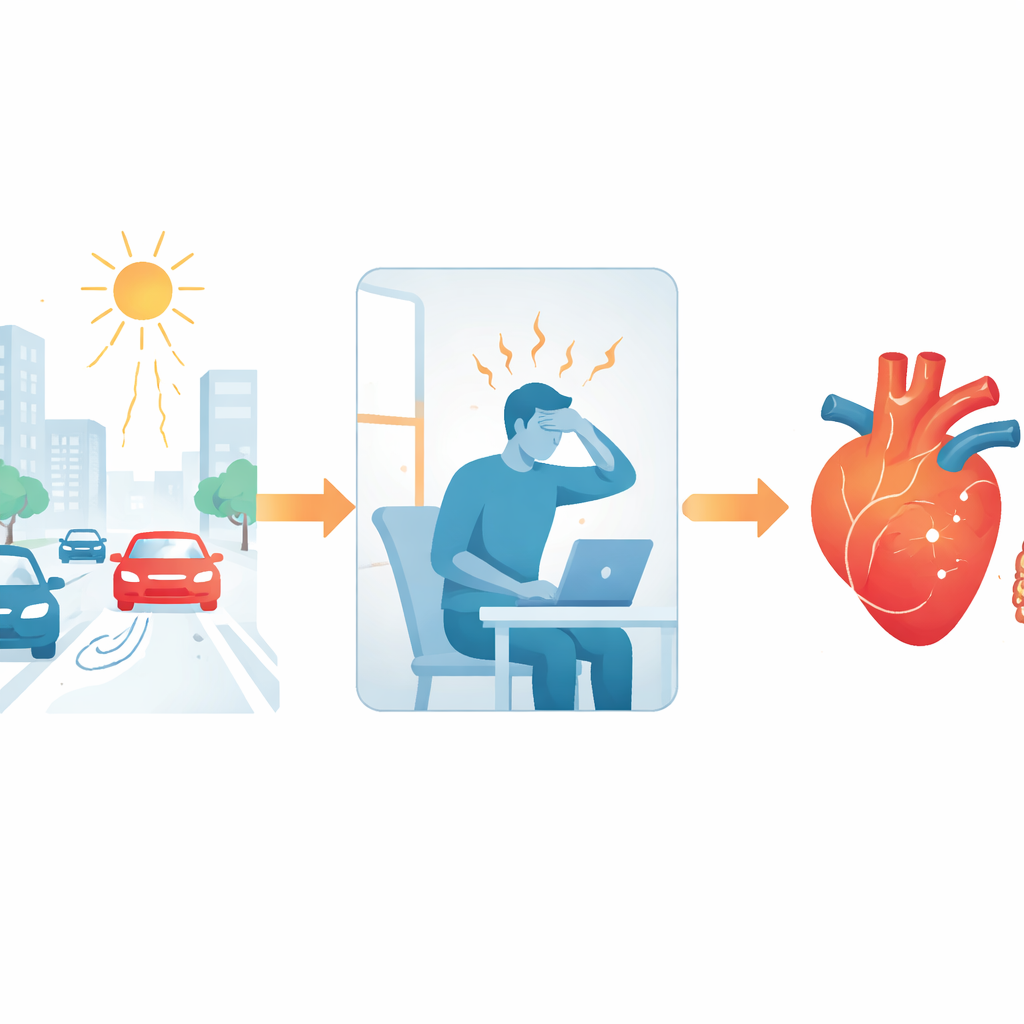
On a hot day in a noisy city, it can feel harder to think clearly, stay focused, or react quickly in traffic. This study asks a simple but important question: when heat and traffic noise hit us at the same time, do they together put extra strain on our bodies and minds beyond what each would do alone? To find out, researchers recreated real summer conditions from an Iranian city inside a controlled test room and measured how young adults’ hearts, body temperatures, and thinking skills changed under different combinations of heat and noise.
The Everyday Setting Brought Into the Lab
The team focused on a common real-world situation: people living, working, or driving in warm, noisy urban environments. They first recorded actual traffic noise from busy streets in Sari, Iran, then carefully edited the sound so it could be replayed at a steady, realistic level in the lab. They also reproduced the city’s typical summer heat by adjusting air temperature, humidity, and radiant warmth to reach a heat index similar to what outdoor workers experience. Eighty healthy university students, half men and half women, took part in all four conditions on different days: a comfortable, quiet setting; heat alone; traffic noise alone; and a combination of both heat and noise.
What the Body Revealed Under Stress
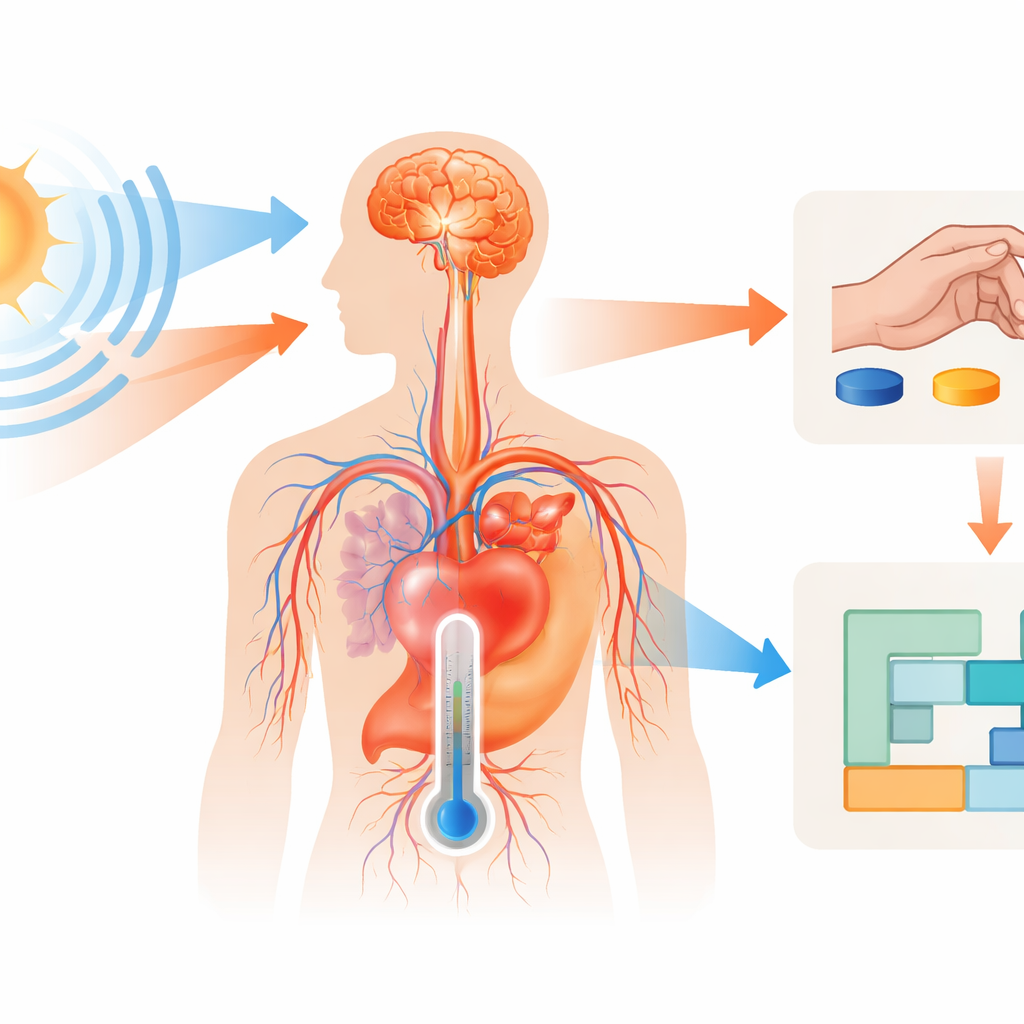
During each 30-minute session, participants sat in an office-like test booth while the researchers tracked heart rate, blood pressure, and core body temperature. Heat or noise alone caused only modest shifts, but the combined condition produced the clearest signs of stress. Diastolic blood pressure—the pressure in arteries between heartbeats—rose more under the joint heat-and-noise exposure than under heat or noise by themselves. Heart rate and core temperature also climbed significantly when both stressors were present together. The changes were not extreme, but they showed that the cardiovascular system had to work harder in the dual-exposure setting, suggesting added strain on blood vessels and the heart.
How Focus and Memory Were Put to the Test
To see how thinking was affected, the researchers used two standard computerized tasks. One measured sustained attention and vigilance: participants watched a rapid stream of symbols and had to respond as quickly and accurately as possible when certain targets appeared. The other, called an n-back task, challenged working memory by asking participants to remember and compare items that had appeared one, two, or three steps earlier in the stream. Across these tests, heat and the combined condition tended to slow reaction times and, in several cases, increase mistakes or reduce accuracy compared with the comfortable control. Noise alone sometimes had milder effects, but when added to heat it generally pushed performance further away from the quiet, comfortable baseline.
Heat and Noise Together: More Than the Sum of Their Parts
The data suggest that heat is a powerful driver of mental slowing, and noise adds an extra load on top of that. Under the combined condition, participants’ reaction times in attention tasks were clearly longer than in comfort, and their working memory performance showed consistent changes, especially at the more difficult levels of the task. At the same time, their hearts were beating faster, their blood vessels were under slightly higher pressure, and their body temperatures were elevated. This pattern points to a shared stress pathway in which physical discomfort from heat and the jarring impact of traffic noise reinforce each other, making it harder for the brain to stay sharp.
What This Means for Daily Life and Work
For commuters, drivers, and especially workers in hot, noisy environments, these findings carry a clear message. Even when each stressor on its own seems tolerable, their combination can quietly raise cardiovascular strain and chip away at attention and quick decision-making—abilities that are crucial for safety on the road and on the job. The authors argue that rules and protections should no longer treat heat and noise as separate issues. Instead, building codes, workplace standards, and urban planning should account for how these common stressors interact. Cooling strategies, quieter traffic, and better acoustic design could all help protect both heart health and mental performance in the growing number of people living and working in warm, congested cities.
Citation: Yousefinezhad, R., Jamchi, N., Amrolahi, M. et al. Impact of thermal-acoustic exposure on human performance of healthy adults: simulation of traffic noise and thermal conditions in the urban environment. Sci Rep 16, 10173 (2026). https://doi.org/10.1038/s41598-026-41251-6
Keywords: traffic noise, heat stress, cognitive performance, urban environment, occupational health