Clear Sky Science · en
Characterization and health index assessment of 34.5 kV cross-linked polyethylene (XLPE) power cables
Why cable aging matters to everyday life
Modern cities depend on high‑voltage power cables buried underground to quietly deliver electricity to homes, hospitals, and industry. Over years of operation in hot, demanding environments, the plastic insulation inside these cables slowly wears out, raising the risk of blackouts and costly failures. This study looks inside real 34.5 kV cross‑linked polyethylene (XLPE) cables that have been in service for 5 and 10 years, and proposes a practical "health score" that can help utilities decide when to maintain, repair, or replace their assets before trouble strikes.
Peeking inside aging power cables
Rather than relying on short, artificial aging tests in the lab, the researchers obtained sections of XLPE cables that had actually been running for years in a high‑temperature region of the Saudi power grid. They compared “healthy” and “defective” samples at 5 and 10 years of service. Using a suite of advanced tools—electron microscopes, X‑ray imaging, thermal analysis, infrared spectroscopy, and X‑ray diffraction—they examined how the internal structure and chemistry of the insulation change over time. They also measured how easily the material breaks down under high voltage and how strongly it resists being stretched, giving a full picture of both its microscopic condition and its real‑world performance. 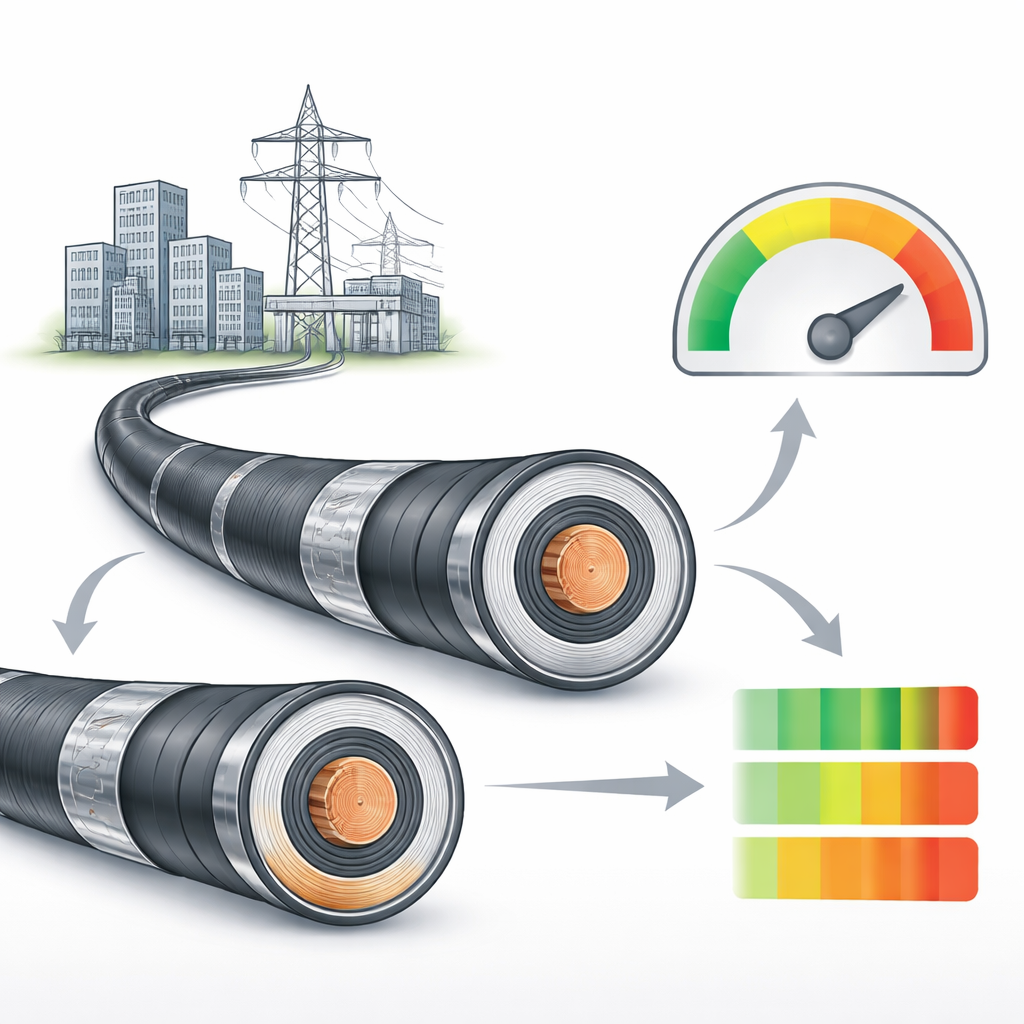
How the material slowly wears out
The detailed imaging revealed that healthy insulation keeps relatively smooth surfaces and orderly internal regions, while defective pieces develop grooves, microcracks, and tiny voids that can act as starting points for electrical failure. Thermal tests showed that as the cables age, the originally well‑organized crystalline regions in the plastic become less perfect and more mixed with softer, disordered zones. X‑ray diffraction confirmed that the basic crystal type of polyethylene does not change, but its level of order steadily declines, especially in defective 10‑year‑old samples. Together, these findings paint a picture of a material whose internal “scaffolding” is gradually weakened by long‑term heat and electrical stress, even when obvious chemical oxidation remains surprisingly low.
What aging does to electrical and mechanical strength
The consequences of this quiet structural damage show up clearly in performance tests. When subjected to rising high voltage, healthy insulation samples tend to fail at higher, more consistent levels, while defective ones give way earlier and with greater scatter. On average, breakdown strength drops by about 14% after 5 years and more than 20% after 10 years in the most degraded pieces. Surface flashover voltage—a measure of how well the cable can withstand discharges along its exterior—falls by roughly half between healthy 5‑year samples and defective 10‑year samples. At the same time, mechanical tests reveal that the material becomes less tough and less stretchable: tensile strength declines from about 25 MPa in younger, healthy insulation to around 18 MPa in defective 10‑year samples, and elongation before break shrinks from nearly 1000% to under 400%, signaling significant embrittlement.
Turning many measurements into one health score
To turn this complex set of tests into a tool that asset managers can actually use, the authors built a Cable Health Index (CHI). This index combines five key indicators—breakdown strength, dielectric constant, dielectric loss, tensile strength, and elongation at break—into a single percentage score ranging from “excellent” to “severe degradation.” Rather than relying on expert guesswork to decide how important each parameter should be, they applied two mathematical schemes, known as the entropy method and the CRITIC method, which automatically assign higher weight to measurements that vary strongly between samples and carry unique information. By blending these two approaches, they created an integrated weighting system that makes the CHI both sensitive and balanced across electrical and mechanical aging. 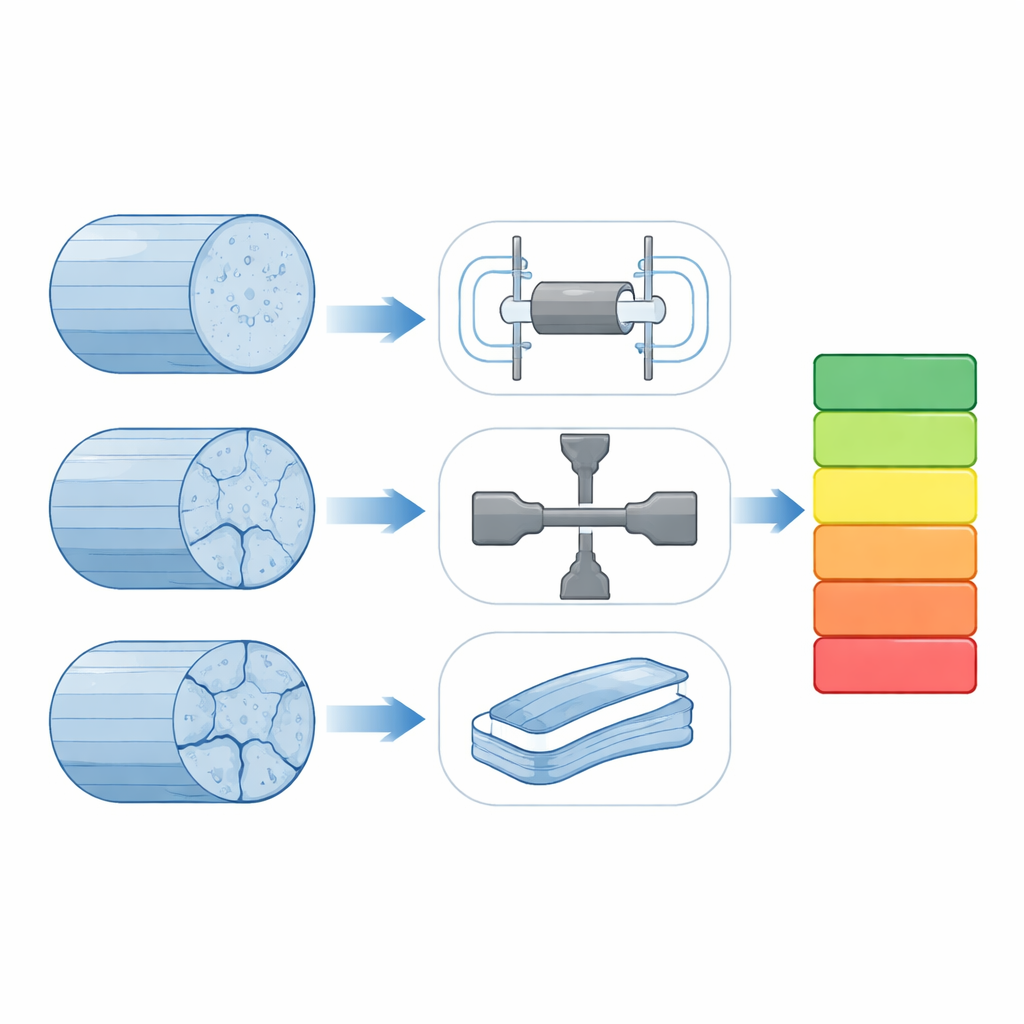
From lab insight to smarter grid maintenance
When tested on 20 different cable sections, the integrated CHI did the best job of matching the actual known condition of the cables, correctly separating healthy, moderately aged, warning, and severely degraded cases with high accuracy. In practice, such a health index could allow utilities to rank their underground cables by risk, prioritize inspections and replacements, and extend the life of still‑sound assets instead of replacing them too early. For non‑specialists, the key takeaway is that the study shows how careful examination of real‑world cables, combined with smart data analysis, can turn a jumble of technical measurements into a clear, actionable “health score” that helps keep the lights on more reliably and cost‑effectively.
Citation: Salem, A.A., Hamanah, W.M., Al-Ameri, S.M. et al. Characterization and health index assessment of 34.5 kV cross-linked polyethylene (XLPE) power cables. Sci Rep 16, 12599 (2026). https://doi.org/10.1038/s41598-026-41193-z
Keywords: XLPE power cables, cable aging, insulation health index, high voltage reliability, condition-based maintenance