Clear Sky Science · en
Novel lipid and obesity indices with new-onset stroke among adults aged 50 years and older in England
Why body shape and blood fats matter for stroke
As people grow older, stroke becomes a leading threat to independence, thinking ability, and quality of life. Doctors already watch blood pressure, smoking, and cholesterol, but these classic measures may miss more subtle signs that someone is heading toward trouble. This study looked at simple calculations based on routine blood tests and body measurements to see whether they can better flag which adults over 50 in England are more likely to have a first stroke in the coming years.
Taking a closer look at older adults in England
The researchers used data from the English Longitudinal Study of Ageing, an ongoing project that follows thousands of community-dwelling adults aged 50 and older. They focused on 4,033 people who had never had a stroke at the start of the study and who had complete information on blood fats and body size. Participants reported every two years whether a doctor had told them they had suffered a stroke, allowing the team to track new cases over a period of about six to seven years.
New ways to describe blood fats and body shape
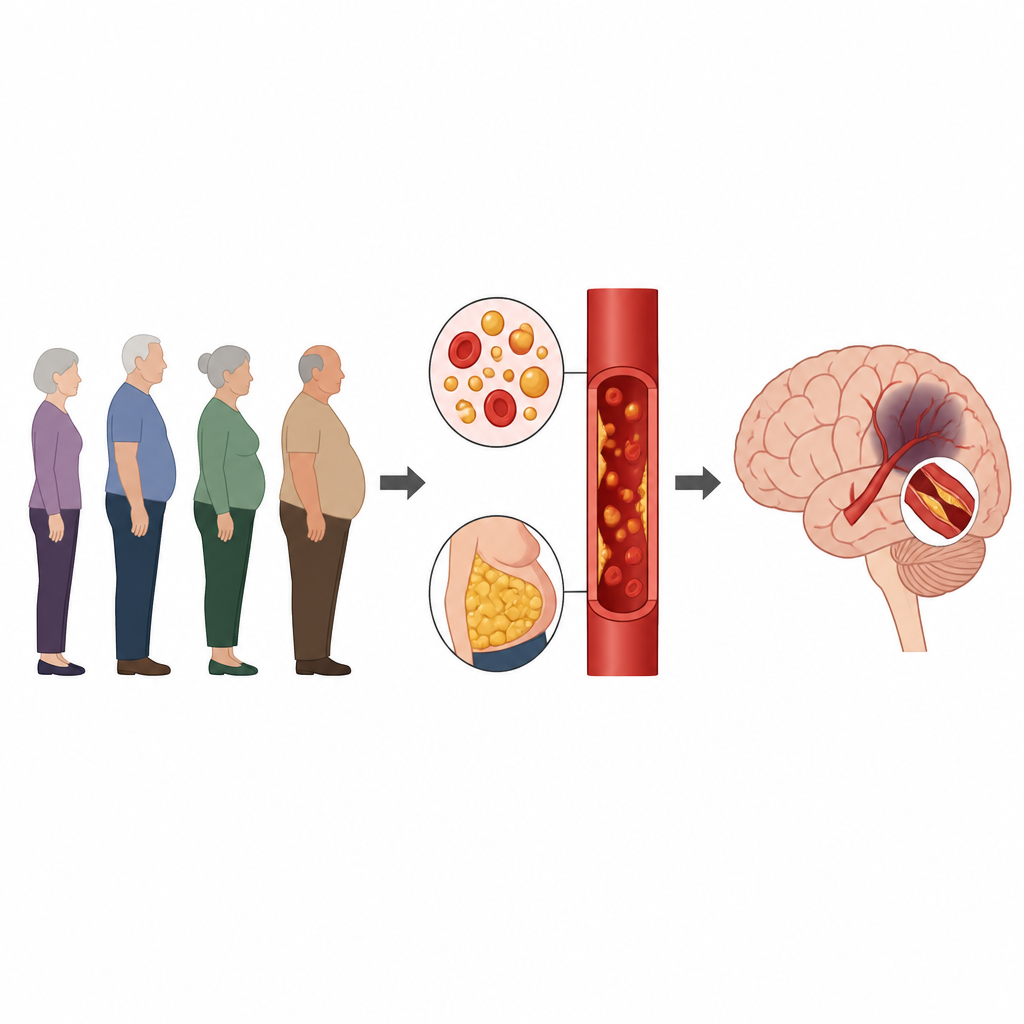
Instead of relying only on familiar measures like total cholesterol or body mass index, the team examined three more refined indices. One combined a routine blood fat test for triglycerides with “good” HDL cholesterol to produce an atherogenic index of plasma, which reflects how harmful someone’s overall blood fat mix may be. The other two focused on body shape rather than body weight alone: the body roundness index, which captures how thick the waist is relative to height and weight, and the waist-to-height ratio, a simple measure of belly size compared with stature. All three indices were converted into standardized scores to make them easier to compare.
What the numbers revealed about stroke risk
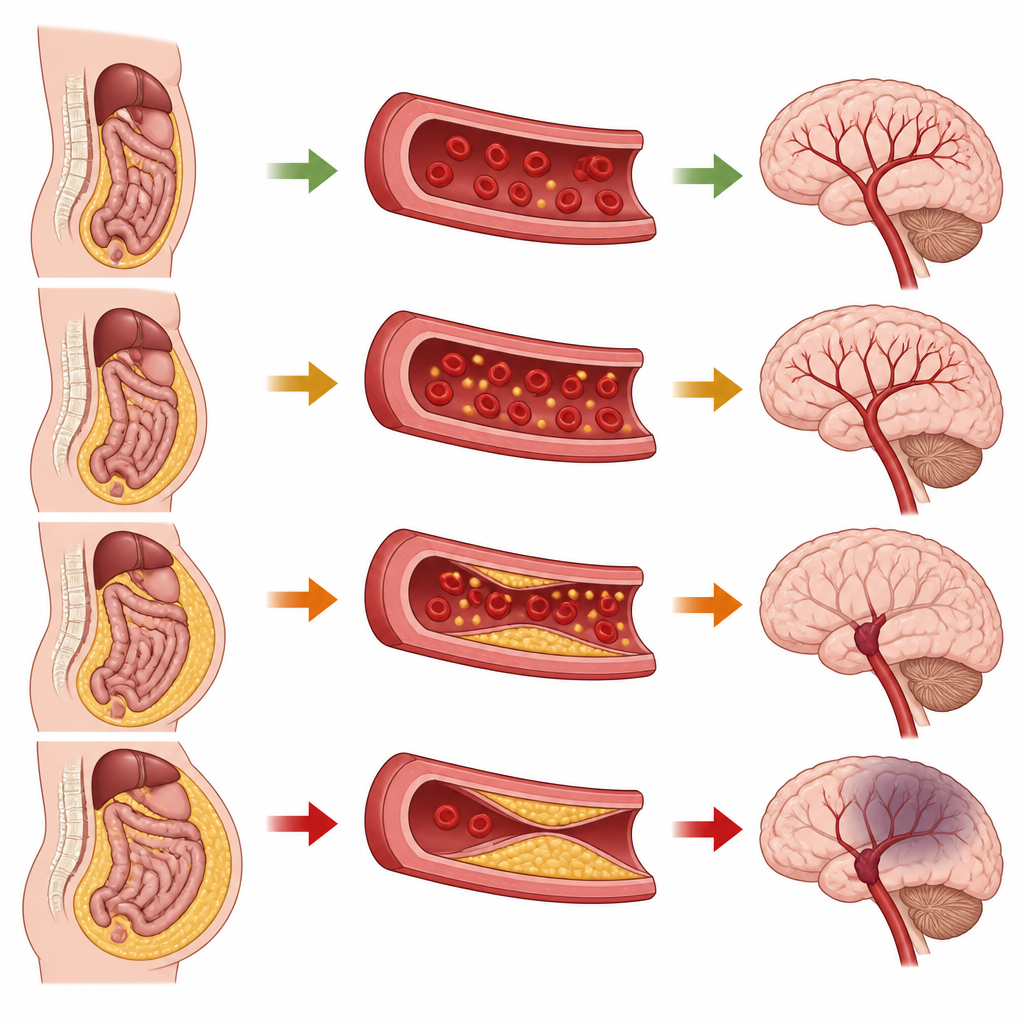
Over the follow-up period, 107 participants, or about 2.7 percent, reported a first stroke. On average, these stroke patients had higher blood-fat and body-shape scores at the start of the study than those who remained stroke free. Using statistical models that accounted for age, sex, education, marital status, smoking, drinking, diabetes, and high blood pressure, the researchers found a clear pattern: as each index rose, so did the odds of later stroke. People in the highest quarter for any of the three indices had roughly double the risk of stroke compared with those in the lowest quarter. Advanced curve-fitting methods suggested that the relationship was steadily increasing rather than having a safe threshold.
Who seemed most affected
When the team examined different subgroups, some patterns stood out. The link between these indices and stroke risk tended to be stronger in adults under 65 than in those 65 and older, and stronger in women than in men. Smokers and people who drank alcohol also showed clearer connections between higher scores and stroke. Interestingly, the relationships were more apparent in participants who did not yet have diabetes or high blood pressure, hinting that these indices might highlight hidden risk in people who otherwise appear relatively healthy. However, the authors stress that these subgroup findings should be viewed as preliminary because the number of strokes in each subgroup was small.
What this means for everyday health
This work does not claim that these indices cause stroke or that they are ready to replace current clinical tools. It does suggest, however, that simple combinations of waist measurements and routine blood tests capture important information about the build-up of fat in the body and blood vessels that can lead to stroke. For older adults, especially younger seniors and women, paying attention to central body fat and blood fat patterns may offer an extra window onto future stroke risk. The study points the way toward larger and more diverse research efforts to see whether these indices could one day help doctors refine long-term risk assessments and encourage earlier, more tailored prevention.
Citation: Yu, X., Xiao, Z. & Yang, H. Novel lipid and obesity indices with new-onset stroke among adults aged 50 years and older in England. Sci Rep 16, 16170 (2026). https://doi.org/10.1038/s41598-026-41151-9
Keywords: stroke risk, blood fats, belly fat, older adults, body shape index