Clear Sky Science · en
Variation in resistance force during intraocular lenses injection by modern injectors and assessment of damage to the injector: a laboratory analysis
Sharper Vision Through Smaller Openings
Cataract surgery is one of the most common operations in the world, and its success often seems routine. Yet behind each clear post‑operative eye lies a chain of tiny technical details. One of these is how the artificial lens is injected into the eye. This study looks closely at the tools that push these lenses into place and asks a deceptively simple question: how hard do surgeons have to push, and what does that do to the injector tip itself?
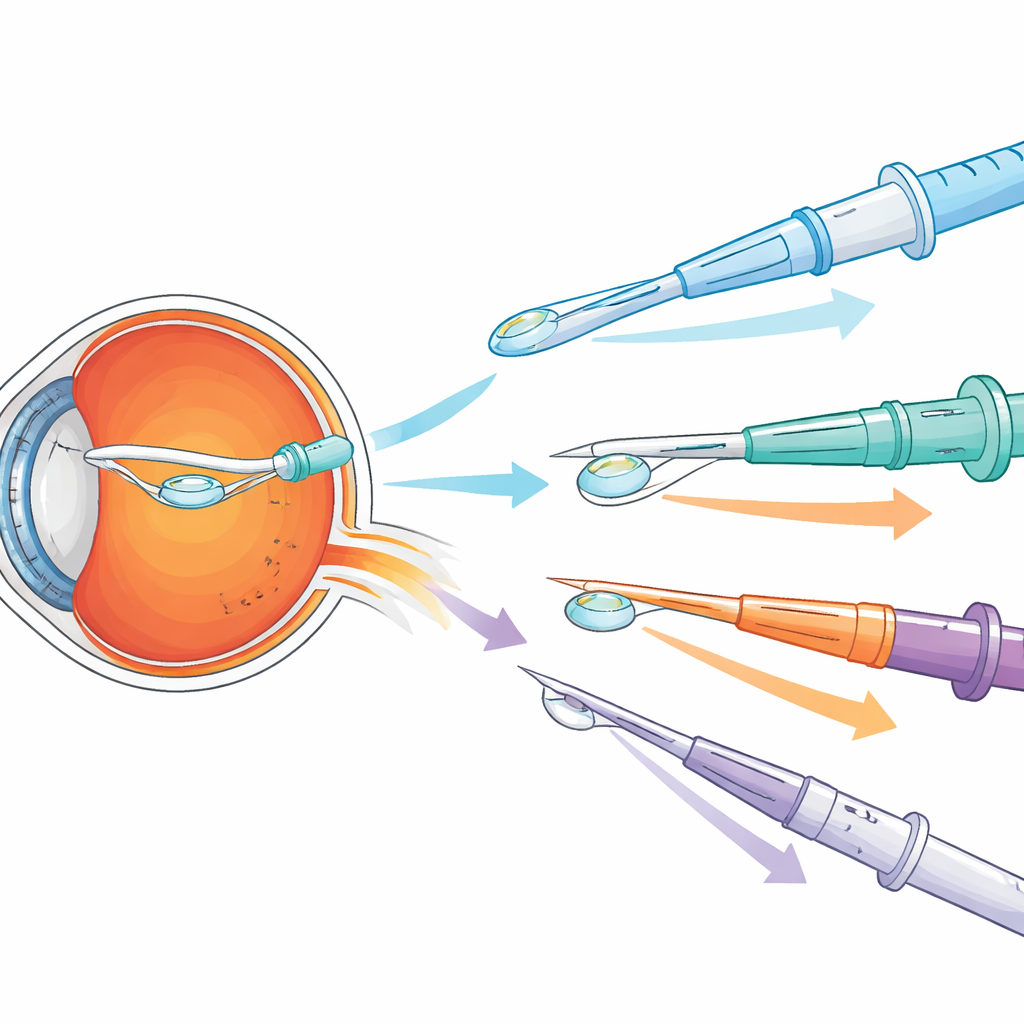
How New Lenses Get Into the Eye
When a cloudy natural lens is removed in cataract surgery, a clear plastic replacement called an intraocular lens is folded and inserted through a narrow tube, or injector, into the eye. Using an injector instead of forceps lets surgeons work through smaller cuts, which can mean quicker recovery and fewer changes to the eye’s shape. But not all injectors are built the same. Their materials, tip shape, and how the lens is packed can all change how smoothly the lens slides through—and how much effort the surgeon must apply on the plunger.
Putting Five Injectors to the Test
The researchers compared five widely used injector systems from different manufacturers in a laboratory setting designed to mimic an operating room. Each injector delivered the same strength lens, and all were prepared with a gel‑like lubricant, just as in real surgery. Instead of into real eyes, though, the lenses were pushed into petri dishes while an automated device measured the force on the plunger from start to finish. This produced a force–over–time curve for each injection, from which the team noted the highest push needed and calculated the total “effort” over the entire injection, represented by the area under the curve.
Different Tools, Different Feel
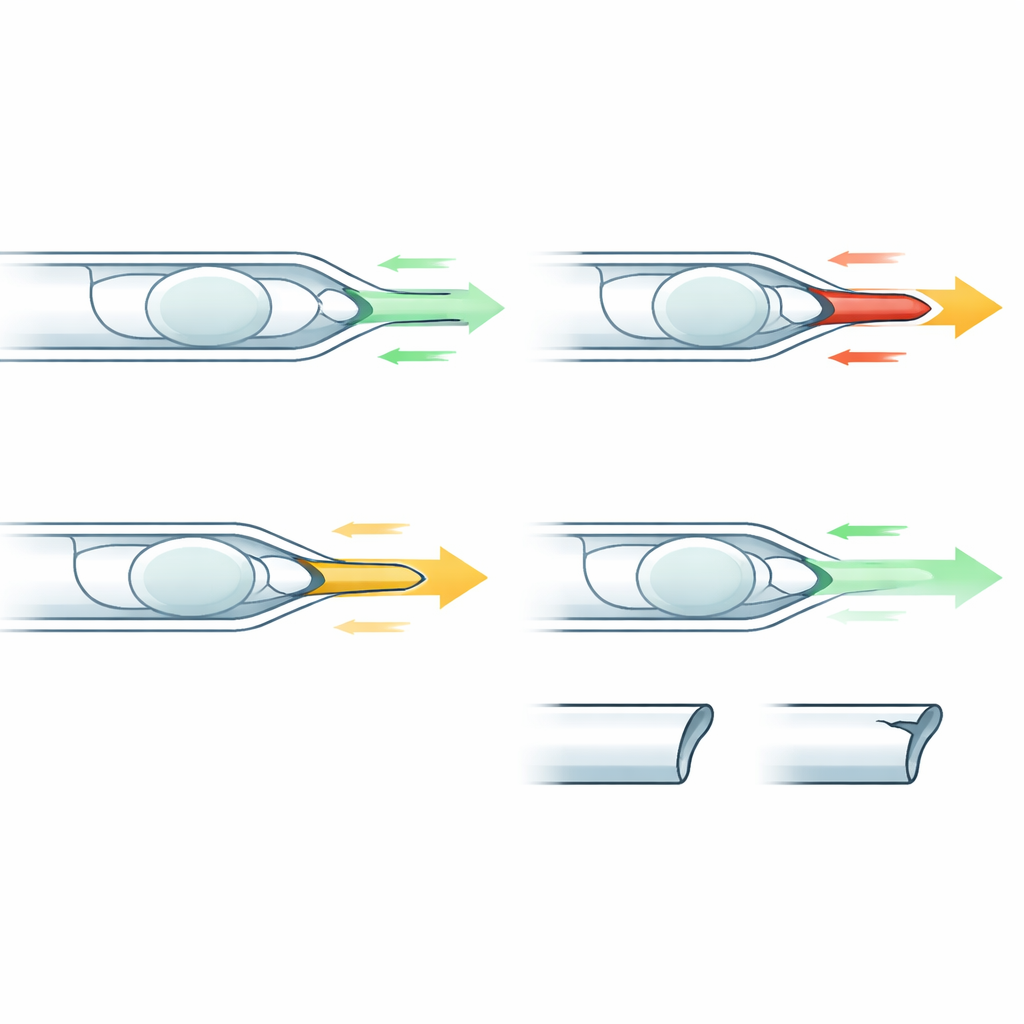
The five injectors behaved very differently. Two systems produced smooth, relatively flat curves, meaning the plunger moved with steady, modest effort and no sudden spikes. The other three showed sharper rises, clear peaks, and quick drop‑offs once the lens came out—indicating brief moments when much higher force was needed. Statistical tests confirmed that both the peak force and total effort varied significantly between brands. In practical terms, some injectors likely feel easier and more controllable to surgeons, while others may feel stiffer and more sudden as the lens finally pops into the eye.
When the Nozzle Takes a Beating
Force is only part of the story. After each injection, the team placed the injector tips under a microscope and graded any damage with a previously developed scale called the HeiScore. Four injector models showed only light, superficial marks. One, however, consistently displayed deep cracks running all the way through the nozzle wall, even though its overall push forces were not the highest. This suggests that the way stress concentrates inside the tip—shaped by its geometry and material—can matter more than the raw size of the force. In real surgery, such cracks could, at least in theory, release tiny fragments into the eye or affect how the lens exits the injector.
What This Means for Patients and Surgeons
Because these tests were done in the lab using petri dishes and only one lens strength and material type, the results do not map perfectly onto every real‑world scenario. Nevertheless, they reveal that modern injectors differ meaningfully in how much effort they demand and in how well their tips hold up. Systems with lower, smoother forces may offer surgeons finer control, while designs that show structural weakness at the tip could pose extra risks, even when the push feels gentle. For patients, the message is that seemingly small engineering choices in surgical tools can influence how smoothly a cataract operation proceeds. For surgeons, independent data like these can help in choosing injector systems that promise both gentle delivery and durable hardware, supporting safer, more predictable vision‑restoring surgery.
Citation: Friedrich, M., Augustin, V.A., Munro, D.J. et al. Variation in resistance force during intraocular lenses injection by modern injectors and assessment of damage to the injector: a laboratory analysis. Sci Rep 16, 14415 (2026). https://doi.org/10.1038/s41598-026-41145-7
Keywords: cataract surgery, intraocular lens injectors, surgical device safety, ophthalmology, medical instrument design