Clear Sky Science · en
Kynurenine promotes angiogenesis through mTOR signaling in head and neck squamous cell carcinoma
Why blood vessels matter in head and neck cancer
Head and neck cancers often grow in tight, complex spaces that control our ability to speak, swallow, and breathe. For these tumors to expand, they must build their own blood supply, recruiting fresh vessels that deliver oxygen and nutrients. This study explores a surprising fuel for that process: a breakdown product of the common amino acid tryptophan, called kynurenine. By uncovering how this small molecule helps tumors grow new blood vessels, the work points to fresh ways to starve cancers while sparing healthy tissue. 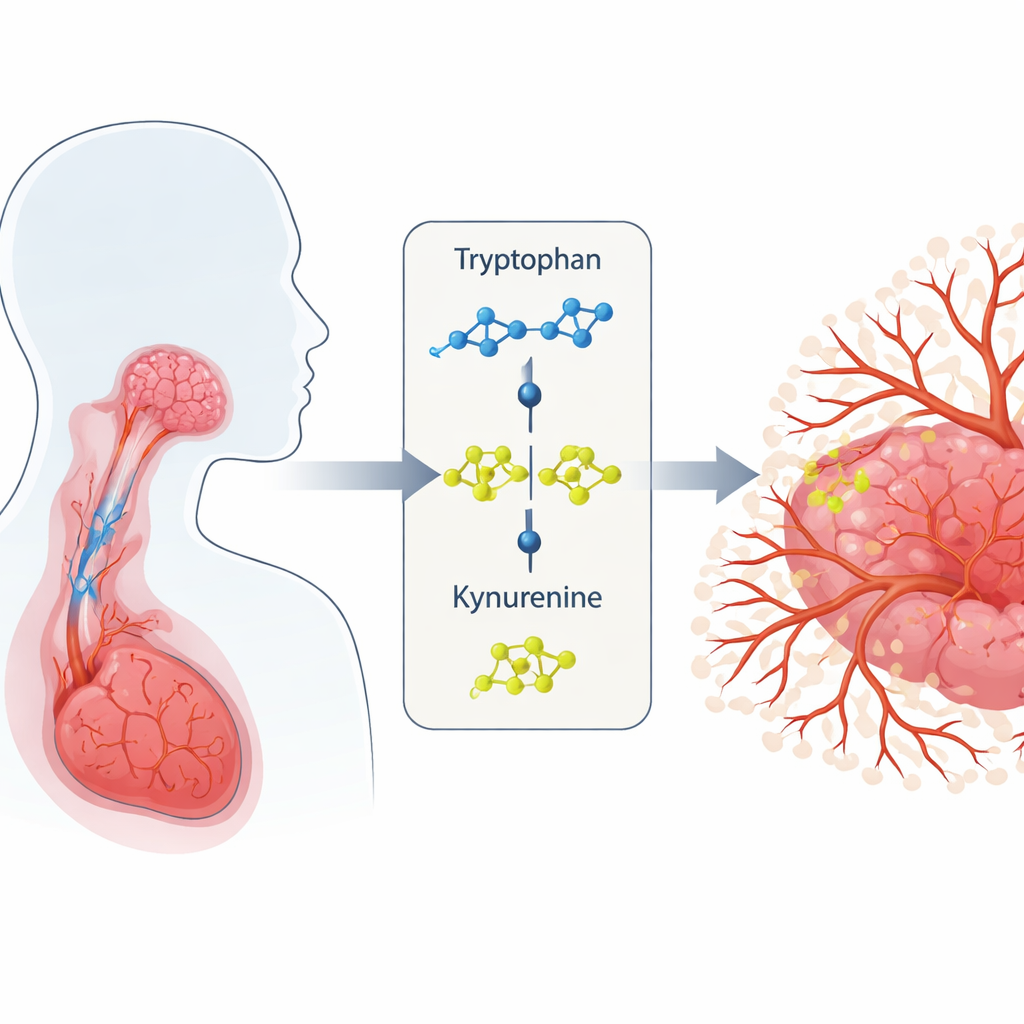
A chemical shift inside the tumor
The researchers began by comparing the small molecules present in head and neck squamous cell carcinoma (HNSCC) tissue with those in nearby normal tissue. Using advanced chemical profiling, they showed that cancer cells rewire how they use tryptophan. Instead of handling it in the usual way, tumors preferentially convert tryptophan into kynurenine, which was found at significantly higher levels in cancer samples. This chemical “reprogramming” marks kynurenine as more than just metabolic waste: it appears to be actively involved in shaping the tumor environment.
Linking a key enzyme to new blood vessels
Kynurenine is made by an enzyme called IDO1. To see whether this enzyme is tied to blood vessel growth, the authors analyzed large public gene datasets from patients with HNSCC. Tumors with higher IDO1 levels also showed higher activity of several genes that mark blood vessel cells or encourage vessel formation. Importantly, this pattern did not extend to markers of supporting cells that wrap vessels, suggesting a specific link between IDO1 and the sprouting of new capillaries. When the team examined tumor samples from 28 patients under the microscope, cancers rich in IDO1 also contained more vessel markers, reinforcing the connection between this metabolic enzyme and angiogenesis.
How kynurenine changes blood vessel cell behavior
To move from correlations to cause, the researchers turned to human endothelial cells, the cells that line blood vessels. Adding kynurenine did not make these cells multiply faster, but it did make them more mobile and better at forming tube-like networks, both hallmarks of vessel growth. The cells also stuck more readily to head and neck cancer cells, a behavior that could help them settle into tumors and assemble new vessels. In contrast, blocking IDO1 with a drug that lowers kynurenine reduced cell migration, adhesion, and tube formation. In a chick embryo membrane model and in mice implanted with tumor cells engineered to make extra IDO1, higher kynurenine production went hand in hand with denser, more elaborate blood vessel networks and faster-growing tumors. 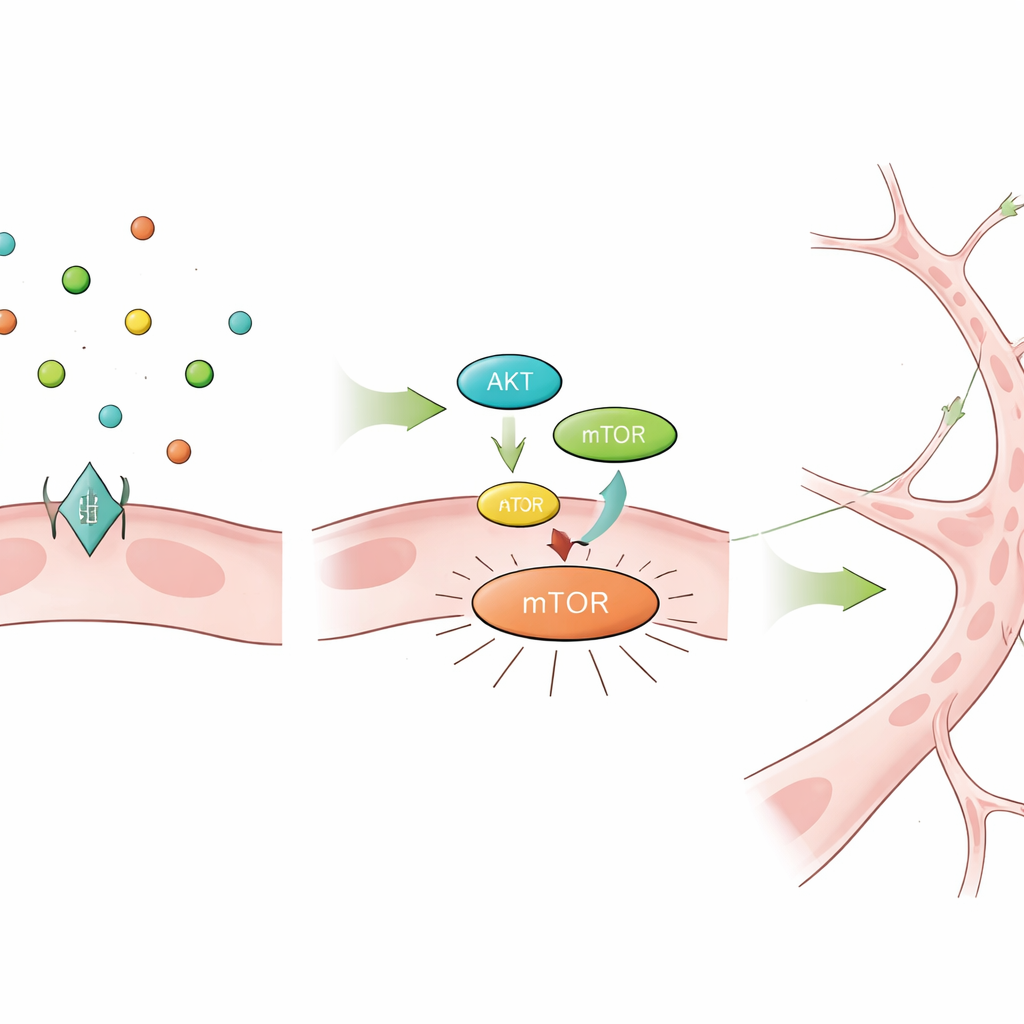
Inside the signal wiring of vessel growth
The authors next asked how kynurenine carries its message inside endothelial cells. In some tissues, kynurenine acts through a receptor called AhR, but in this study, kynurenine did not activate that route. Instead, it boosted activity of a central growth controller known as the mTOR pathway, along with an upstream switch called AKT. When kynurenine levels were reduced by silencing IDO1, the activation of these signals dropped. Treating endothelial cells with the mTOR-blocking drug rapamycin erased kynurenine’s ability to enhance cell movement and tube building. At the same time, kynurenine raised the activity of several genes and factors associated with vessel formation and remodeling, including molecules that help cells respond to low oxygen or attract supporting cells. Together, these findings suggest that kynurenine acts as a metabolic trigger that turns on a pro-angiogenic program via mTOR.
What this could mean for future treatments
For people facing head and neck cancer, these results highlight a new vulnerability. The study shows that a single altered metabolic pathway—tryptophan being shunted toward kynurenine—can help tumors lay down new blood vessels by energizing the mTOR signaling hub in vessel-lining cells. By targeting IDO1, kynurenine production, or the mTOR pathway itself, it may be possible to curb blood vessel growth and slow tumor expansion. The authors propose that combining drugs aimed at tryptophan metabolism with existing anti-angiogenic strategies could offer more precise and effective treatment options for this highly vascular cancer.
Citation: Lin, S., Liao, T., Wang, S. et al. Kynurenine promotes angiogenesis through mTOR signaling in head and neck squamous cell carcinoma. Sci Rep 16, 13852 (2026). https://doi.org/10.1038/s41598-026-41141-x
Keywords: head and neck cancer, tumor blood vessels, tryptophan metabolism, kynurenine, mTOR signaling