Clear Sky Science · en
Lipodystrophy and associated factors among patients with diabetes receiving insulin therapy: a multicenter study in Ethiopia
Why insulin shots can quietly reshape the body
For millions of people living with diabetes, daily insulin injections are as routine as brushing their teeth. Yet few are told that repeatedly injecting insulin into the same small patch of skin can change the fat just under the surface, creating lumps or hollows that make blood sugar control harder and lows less predictable. This Ethiopian study shines a light on how common these injection-site changes are and what everyday habits make them more likely, offering practical lessons for patients and health professionals everywhere. 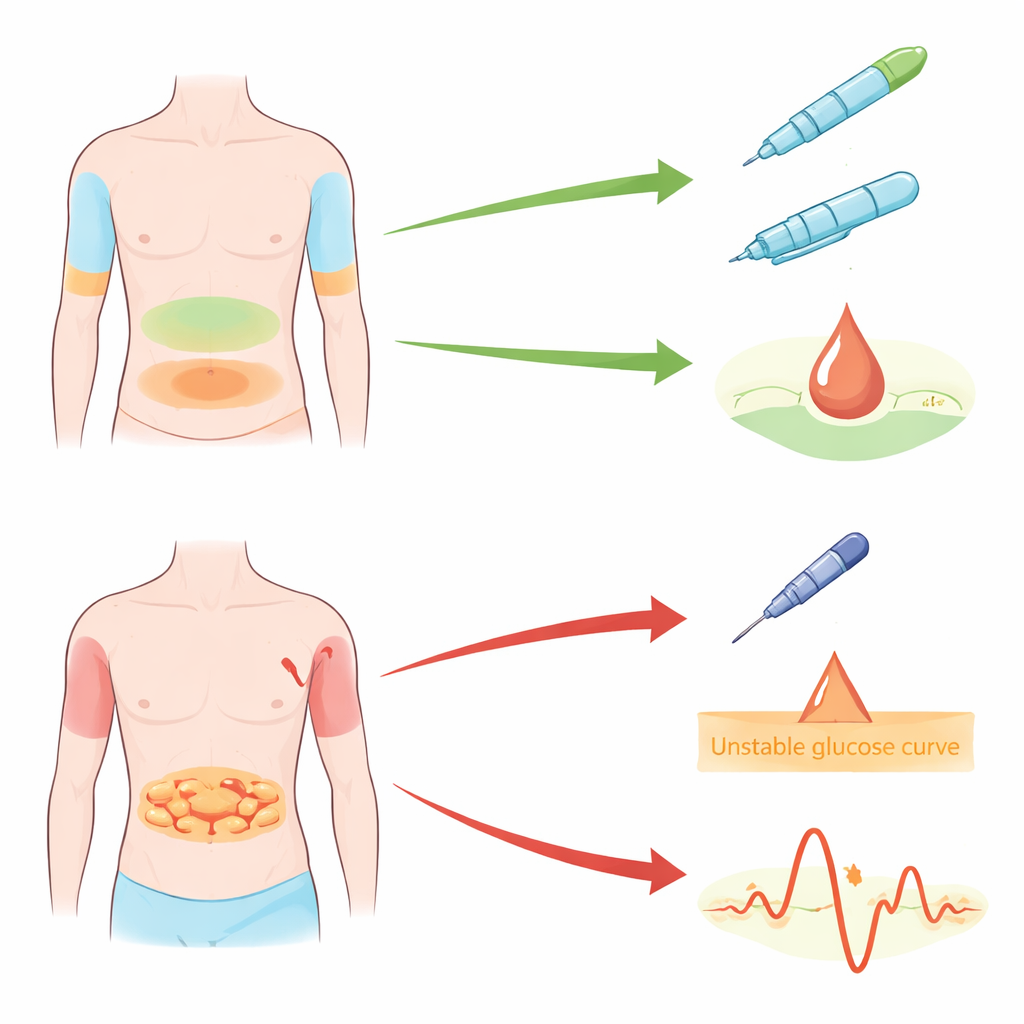
Hidden changes under the skin
The researchers focused on lipodystrophy, a broad term for abnormal fat at injection sites. In people using insulin, this usually appears as soft, rubbery swellings (lipohypertrophy) and, more rarely, as sunken areas where fat has melted away (lipoatrophy). These changes are more than a cosmetic nuisance: they can slow or speed insulin absorption in unpredictable ways. That means the same dose can act differently from day to day, raising the risk of sudden hypoglycemia and making long-term blood sugar control more difficult.
A snapshot from three busy hospitals
From April to September 2023, the team examined 407 adults with diabetes who had been on insulin for at least a year at three large hospitals in Northwest Ethiopia. Just over half had type 1 diabetes, and most had lived with diabetes for more than five years. Trained clinical pharmacists carefully inspected and palpated common injection areas such as the abdomen, arms, and thighs, using a standardized bedside technique that closely matches ultrasound in detecting problem tissue. They also reviewed medical records and asked detailed questions about injection routines, insulin doses, exercise, and blood sugar control.
More than half had problem injection sites
The findings were striking: 53.1% of participants had insulin-induced lipodystrophy. Almost all of these cases were firm, thickened fat pads rather than hollows, with “grade 2” lipohypertrophy—clearly enlarged and rubbery tissue—being the most common. The abdomen was the single most affected site, though many patients had changes in more than one area. Despite this high burden, over 93% reported that no health professional had checked their injection sites in the previous year, suggesting that the problem remains largely overlooked in routine diabetes care. 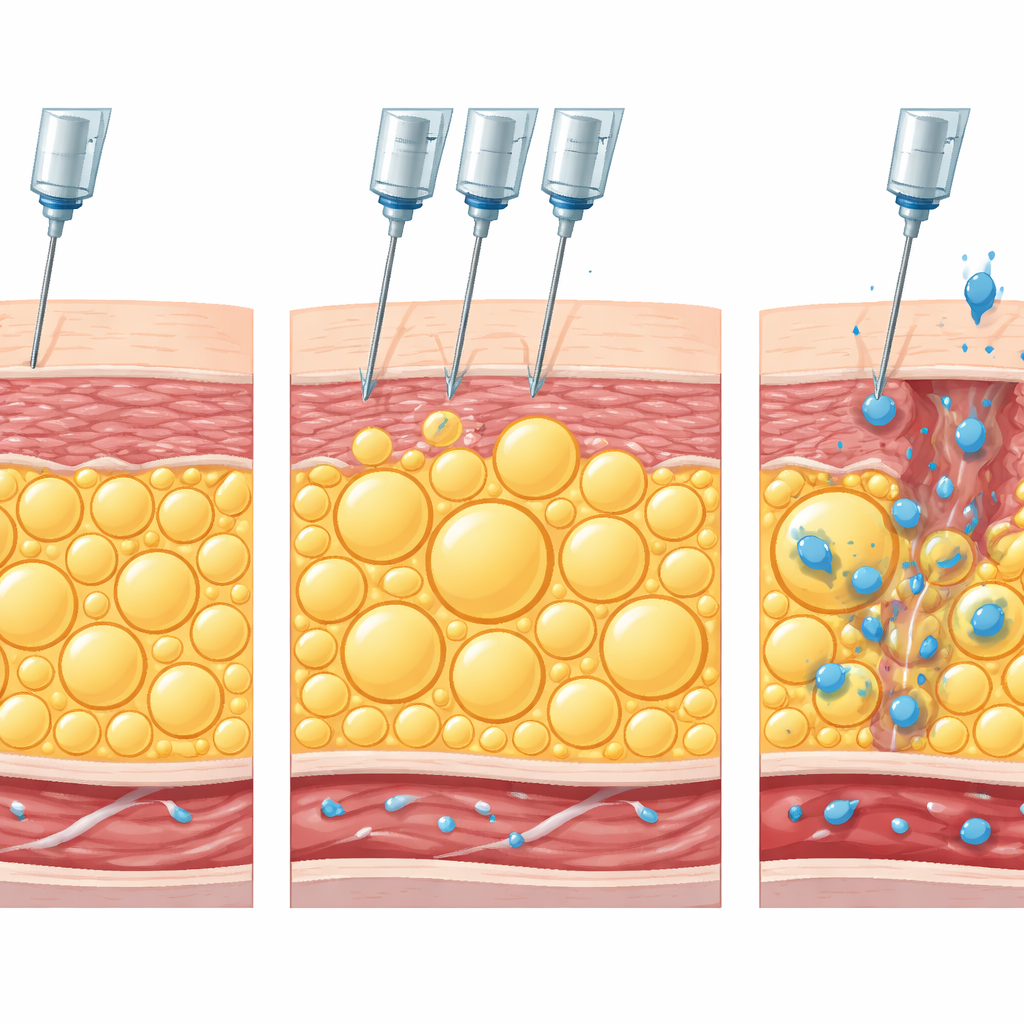
Everyday habits that raise the risk
The study pinpointed several practical factors that made lipodystrophy more likely. Reusing needles was one of the strongest: people who used the same needle 6–10 times had about three times the odds of having abnormal fat at their injection sites, and those who reused it more than 10 times had nearly four times the odds, compared with those who used it fewer than three times. Failing to rotate injection sites—sticking to the same patch instead of moving around—raised the risk by about 80%. Higher daily insulin doses per kilogram of body weight were also linked to more lipodystrophy, likely because the damaged tissue forces clinicians and patients to increase doses over time. Finally, people with poor long-term blood sugar control were about twice as likely to have lipodystrophy, underlining how damaged injection sites and unstable glucose feed into each other.
What this means for people with diabetes
For patients and clinicians, the take-home message is clear and practical. Lipodystrophy is common, mostly preventable, and directly tied to day-to-day injection habits. Using needles as few times as possible, rotating injection spots by at least a finger’s width each time, and regularly checking the skin for lumps or dents can help insulin work more reliably and may reduce the need for ever-higher doses. The authors argue that inspection of injection sites should become a routine part of diabetes visits, especially when insulin doses are being adjusted or when patients have frequent unexplained lows. By paying attention to the skin just under the needle, diabetes care can become safer, more effective, and more equitable—even in resource-limited settings.
Citation: Bazezew, Z.A., Zeleke, T.K., Negesse, C.T. et al. Lipodystrophy and associated factors among patients with diabetes receiving insulin therapy: a multicenter study in Ethiopia. Sci Rep 16, 13560 (2026). https://doi.org/10.1038/s41598-026-41108-y
Keywords: diabetes, insulin injections, lipodystrophy, Ethiopia, glycemic control