Clear Sky Science · en
Energy and exergy analysis of condensate and vapor management system: a case study of Urmia sugar plant
Why sugar factories and energy use matter
Sugar may seem like a simple kitchen staple, but producing it on an industrial scale is surprisingly energy-hungry. In many countries, sugar plants burn large amounts of fuel to make the steam and heat needed to turn beet or cane juice into white crystals. With rising energy prices, climate concerns, and pressure to use resources more wisely, it has become crucial to understand exactly where factories waste valuable energy and how that waste might be reduced. This study takes a close look inside one such plant in Urmia, Iran, focusing on how it handles steam, hot water, and vapor, and asking which parts of the system work efficiently and which behave like giant sinks of lost potential.
Following heat on its journey
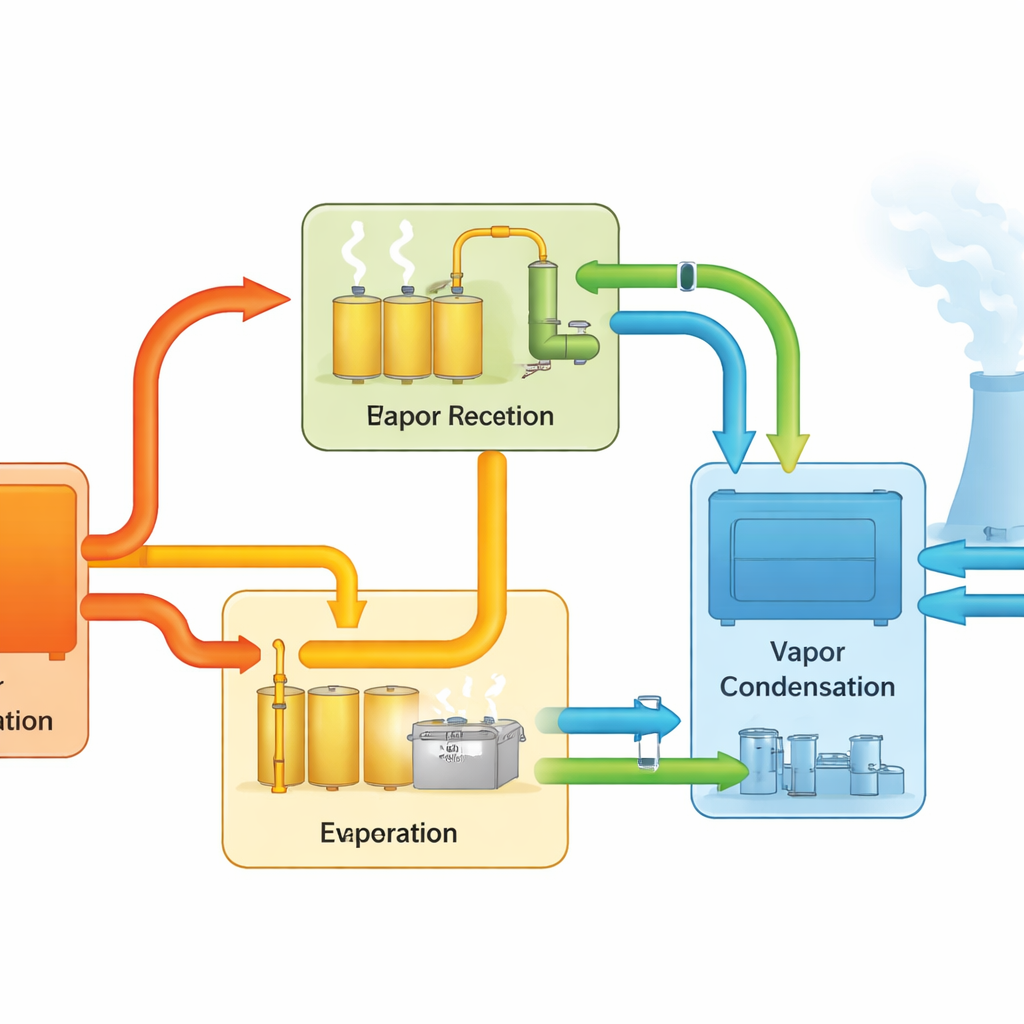
Inside a sugar factory, steam first heats watery juice in large evaporators, turning it into thicker syrup and creating condensate (hot water) and low-pressure vapor. Instead of throwing this heat away, engineers try to reuse it. The Urmia plant has two key subsystems for this purpose: a vapor recovery unit that captures heat from condensate and flashes part of it back into useful vapor, and a vapor condensation unit that cools and condenses low-pressure vapor so that equipment can run under vacuum. The researchers mapped the paths of steam, condensate, and vapor through these units, measuring temperatures, pressures, and flow rates over two production seasons. They then used thermodynamic calculations to see not just how much energy flowed, but how much of it could actually do useful work.
From energy to "useful" energy
Standard energy accounting treats all heat as equal, but in practice, hot, high-pressure steam is far more valuable than lukewarm water. To capture this difference, the team used both energy analysis and a more revealing method called exergy analysis, which tracks the portion of energy that can be converted into work. By comparing incoming and outgoing exergy in each component—such as flash drums, heat exchangers, pumps, condensers, and the cooling tower—they identified where irreversibilities, like large temperature gaps and intense mixing, destroy the most usable energy. They also calculated a "sustainability index" that grows as a unit makes better use of exergy, and an "improvement potential" that shows how much room there is to do better.
A strong performer and a serious weak link
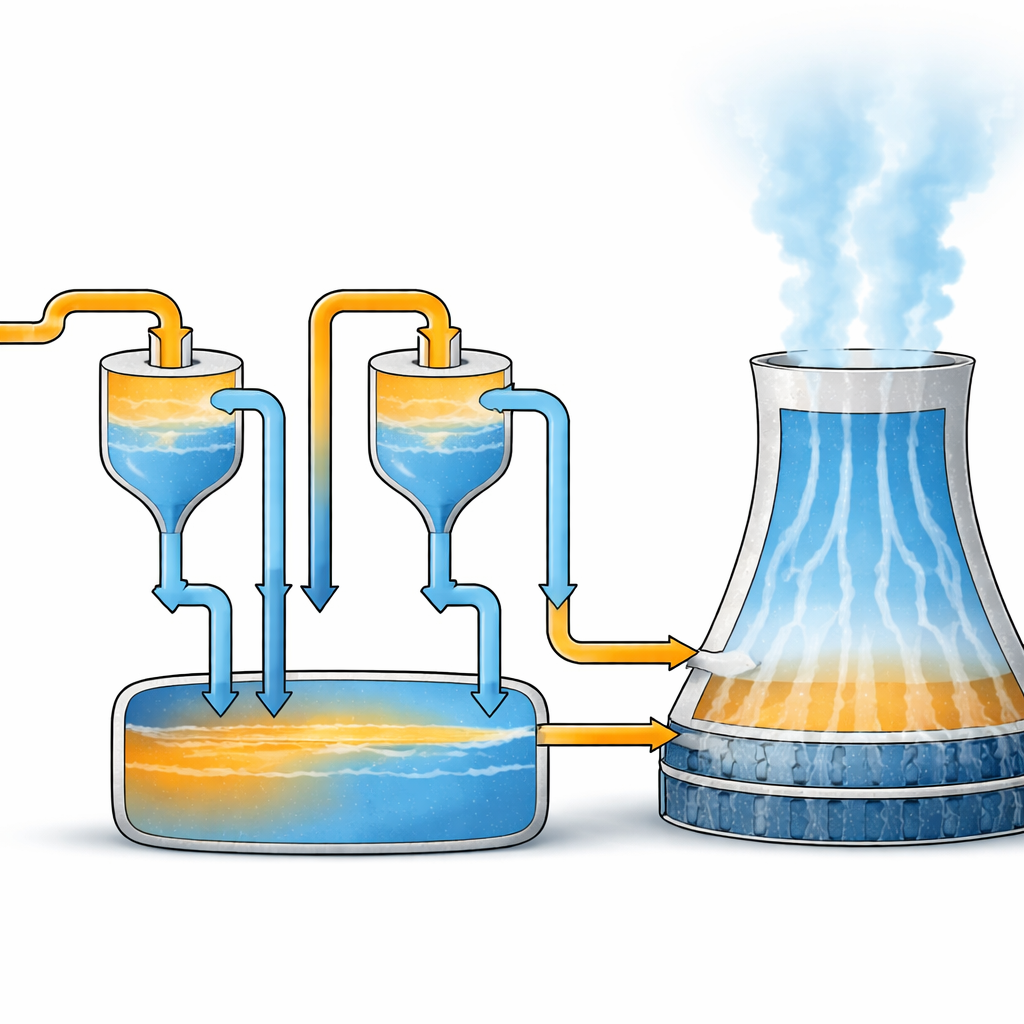
The vapor recovery unit turned out to be a relative success story. It reused steam condensate in several flash drums and heat exchangers to preheat syrup and generate secondary vapor, with only a small share of its incoming exergy lost. Its exergy efficiency was about 86 percent, and its sustainability index was high. Most of the remaining losses came from three heat exchangers with large temperature differences between hot and cold streams, suggesting that better designs—such as multi-effect exchangers with smaller temperature steps and improved insulation—could trim further waste. In contrast, the vapor condensation unit looked almost like a disposal system for useful energy: over 98 percent of its incoming exergy was destroyed, and its exergy efficiency was effectively near zero. The worst offender was the cooling tower, where water releases heat to air and partially evaporates, followed by the barometric condensers that mix vapor and cooling water. Together, these pieces act as major drains of energy quality.
Turning waste vapor into a resource
Because so much exergy is destroyed in the condensation and cooling steps, the study concludes that the best way to improve the plant is not to try to recapture lukewarm exhaust, but to keep as much vapor as possible from reaching the condensation unit in the first place. The low-pressure vapors coming from the last evaporation and crystallization stages cannot currently be used for heating—they are simply too cool. However, the authors show that if this vapor were mechanically or thermally compressed, raising its temperature and pressure, it could be reused as a heating source in additional evaporation effects or other process steps. That would dramatically cut the load on the condensers and cooling tower, reduce fuel consumption in the boiler house, and shrink both costs and environmental impacts.
What this means for cleaner sugar
For a lay reader, the headline message is simple: in this sugar factory almost all of the "useful" energy thrown into the vapor condensation and cooling system is squandered, while the recovery system already does a reasonable job of recycling heat. By pinpointing where and how exergy is destroyed, the study shows sugar producers where upgrades will have the biggest payoff. Technologies such as vapor recompression and better-designed heat exchangers could turn what is now waste vapor into a valuable resource, helping sugar plants use less fuel and emit fewer greenhouse gases—without changing the taste of the sugar on your table.
Citation: Samadzadeh, N., Fanaei, A.R., Piri, A. et al. Energy and exergy analysis of condensate and vapor management system: a case study of Urmia sugar plant. Sci Rep 16, 10011 (2026). https://doi.org/10.1038/s41598-026-41065-6
Keywords: sugar factory energy, exergy analysis, vapor recovery, cooling tower losses, industrial efficiency