Clear Sky Science · en
Pan-cancer analysis reveals the oncogenic and immunomodulatory roles of PTGFRN across human cancers
Why this hidden cancer switch matters
Cancer doctors have long known that tumors can grow aggressively while also hiding from the body’s defenses, but the molecular "switches" that control both behaviors at once are still being uncovered. This study shines a spotlight on one such switch, a little-known surface protein called PTGFRN. By scanning data from thousands of patients with many different cancers, and then testing lung cancer cells in the lab, the researchers show that PTGFRN is often cranked up in tumors, linked to worse survival, and tied to immune responses that favor the cancer rather than the patient.
A shared pattern across many cancers
Using large public datasets that catalog DNA, RNA, and protein changes in human tumors, the team first asked a simple question: how much PTGFRN do different cancers make compared to normal tissues? They found that PTGFRN is markedly higher in most of the 33 cancer types examined, including breast, liver, skin, brain, and especially lung adenocarcinoma, a common form of lung cancer. This increase was seen not only in gene activity but also at the protein level. They further showed that chemical tags on DNA (methylation) and changes in chromosome structure (copy number variation) help drive this overproduction, suggesting that the tumor genome is actively rewired to favor PTGFRN. 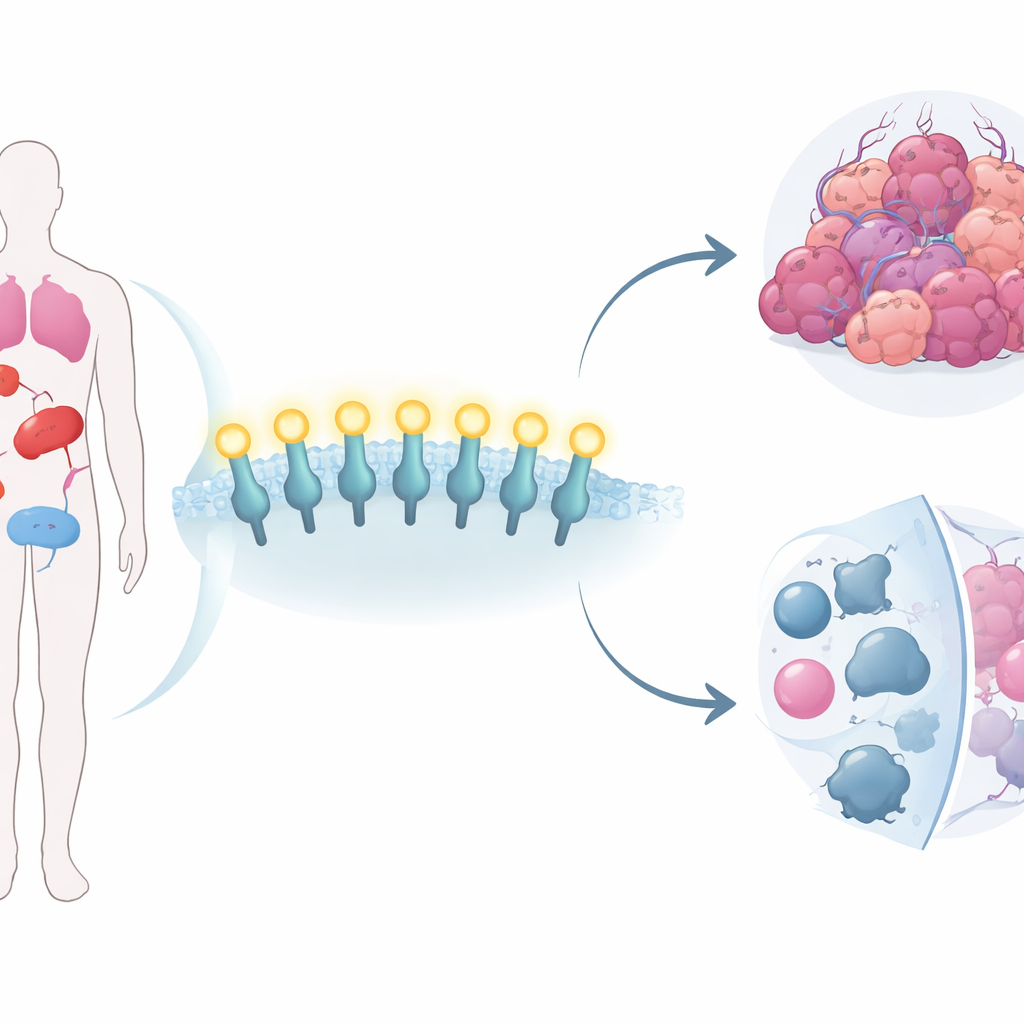
A marker of poor outcomes
The researchers then asked whether PTGFRN levels track with how patients fare over time. By dividing patients into high- and low-PTGFRN groups and following their survival, they found a consistent pattern across many cancer types: people whose tumors made more PTGFRN tended to die sooner or see their disease return more quickly. This held true for several different measures, including overall survival and time without disease progression. In lung adenocarcinoma in particular, results from multiple independent patient cohorts all pointed in the same direction—high PTGFRN signaled a worse outlook—highlighting its potential as a prognostic marker that could help stratify risk.
Shaping a friendly neighborhood for tumors
Beyond growth speed, the study explored how PTGFRN may help tumors remodel their local “neighborhood,” known as the tumor microenvironment. By combining tumor gene data with computational estimates of which immune cells are present, the authors found that high PTGFRN is associated with more cancer-supporting cells such as fibroblasts and certain macrophages, and fewer cancer-fighting cells like CD8 “killer” T cells. PTGFRN-rich tumors also correlated with higher levels of well-known immune brakes—molecules that dampen T cell activity—and with features linked to stem‑like, therapy‑resistant cancer cells. Together, these patterns suggest that PTGFRN marks, and may help create, an immune-silent or immune-excluded setting in which tumors can thrive despite the presence of the body’s defenses.
Zooming in on lung cancer cells
To move beyond correlations, the team performed experiments in lung adenocarcinoma cells grown in the lab. When they used small RNA molecules to dial down PTGFRN, the cancer cells divided more slowly, migrated less in wound-like assays, and were less able to invade through a barrier that mimics tissue. These changes confirm that PTGFRN does more than merely accompany aggressive disease—it actively fuels behaviors that underlie tumor spread. The researchers also used drug sensitivity databases and computer docking models to identify several existing small molecules that may bind PTGFRN, hinting that it could be directly targeted or used to guide combination treatments. 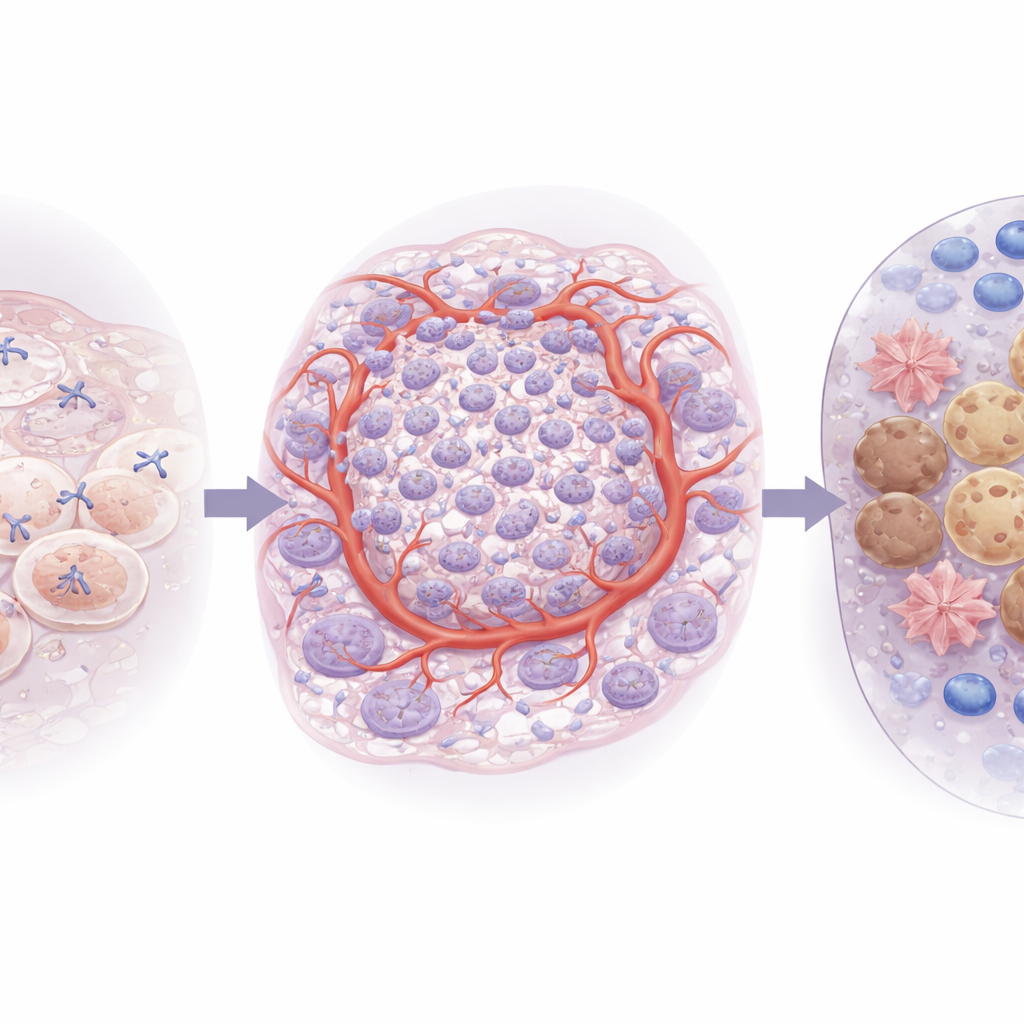
What this could mean for future care
Taken together, the work presents PTGFRN as a kind of double-edged helper for tumors: it supports cancer cell growth and movement while also tilting the surrounding immune landscape toward suppression. For patients, this means PTGFRN might serve two important roles. First, measuring its levels could help doctors gauge how aggressive a cancer is and how likely it is to resist standard therapies. Second, PTGFRN itself, or the pathways it influences, could become new points of attack for drugs designed to slow tumor growth or reawaken immune cells. While more clinical research is needed, this pan-cancer view suggests that blocking this hidden switch may eventually improve the reach and effectiveness of cancer immunotherapy.
Citation: Mu, N., Dong, T., Sheng, Q. et al. Pan-cancer analysis reveals the oncogenic and immunomodulatory roles of PTGFRN across human cancers. Sci Rep 16, 11266 (2026). https://doi.org/10.1038/s41598-026-41027-y
Keywords: PTGFRN, cancer biomarker, tumor microenvironment, lung adenocarcinoma, cancer immunotherapy