Clear Sky Science · en
Antimicrobial strategies of nanoparticles and chelating agents for mitigating Staphylococcus spp. contamination on slaughterhouse surfaces
Why Cleaning Meat Plants Matters to Everyone
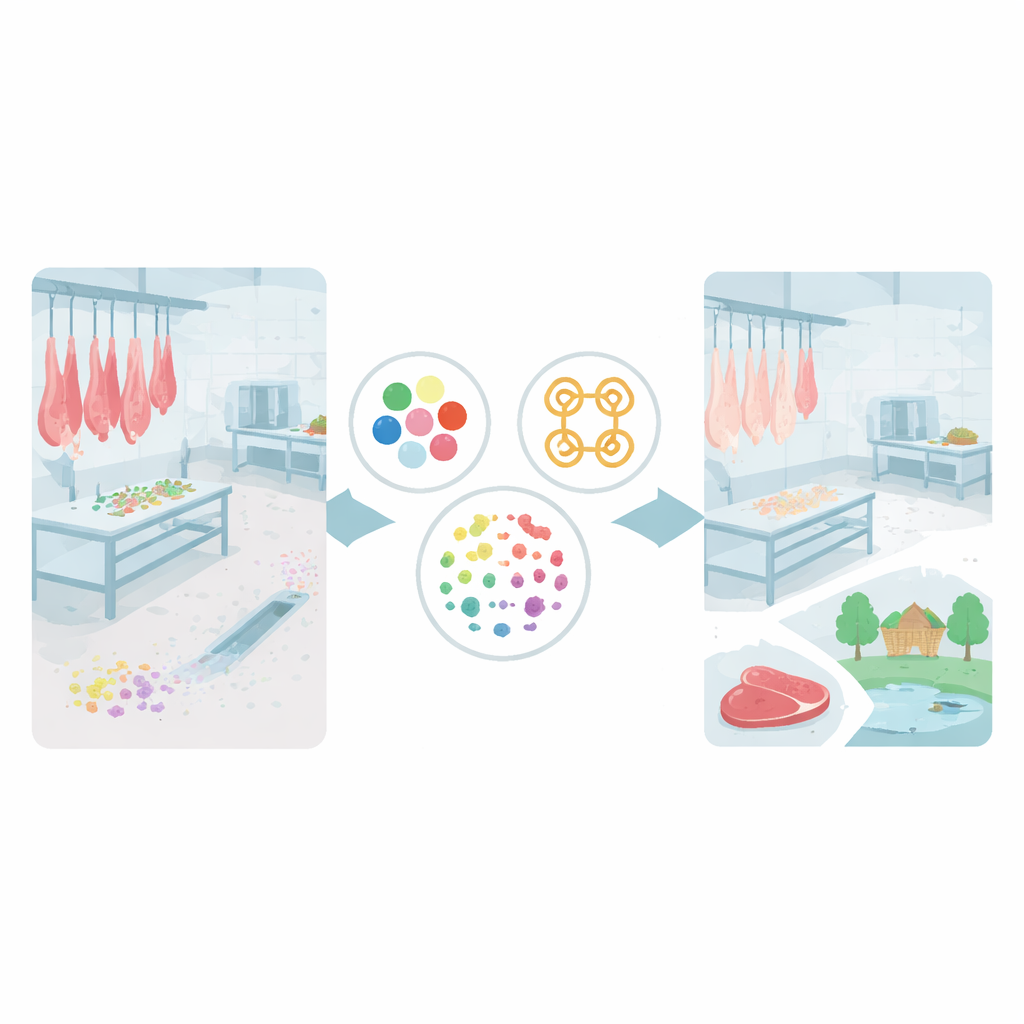
Behind every steak or chicken breast in the supermarket lies a web of pipes, tables, drains, and hooks in large slaughterhouses. On these surfaces, stubborn microbes can settle into slimy layers that are very hard to remove. Some of these bacteria are not only able to spoil food and make people sick; they also carry genes that help them survive antibiotics. This study explores a new way to clean those hidden corners using tiny particles of metals combined with helper chemicals, aiming to stop both the germs and the drug-resistance traits they spread.
Hidden Germs on Working Surfaces
The researchers focused on staphylococci, a group of bacteria that can cause skin infections, blood poisoning, and food poisoning in humans. They collected samples from different areas of a slaughterhouse—cutting rooms, cold rooms, slaughter areas, and restrooms—and identified several strains of Staphylococcus, including the well-known Staphylococcus aureus. Four of the six key strains turned out to be multidrug-resistant, meaning they could withstand many different antibiotics used in clinics. Even more worrying, these bacteria formed biofilms: thin, sticky communities attached to steel and plastic that protect the microbes from soaps, disinfectants, and drugs.
Tiny Metals and Smart Helpers Join Forces
To tackle these stubborn microbes, the team tested four types of metallic nanoparticles—gold, silver, zinc oxide, and copper oxide—alongside EDTA, a common “chelating” compound that binds metals, and a homemade disinfectant blend called HLE based on hydrogen peroxide, lactic acid, and EDTA. On their own, these agents showed mixed results, with some nanoparticles needing relatively high doses to stop bacterial growth. However, when nanoparticles were combined with EDTA or HLE, the picture changed. Several pairings, especially gold plus EDTA, silver plus HLE, and zinc oxide plus EDTA, worked together far better than each component alone. These mixtures were able to inhibit free‑swimming cells and also attack bacteria already living in biofilms stuck to surfaces.
Breaking Up Biofilms and Deep Cleaning
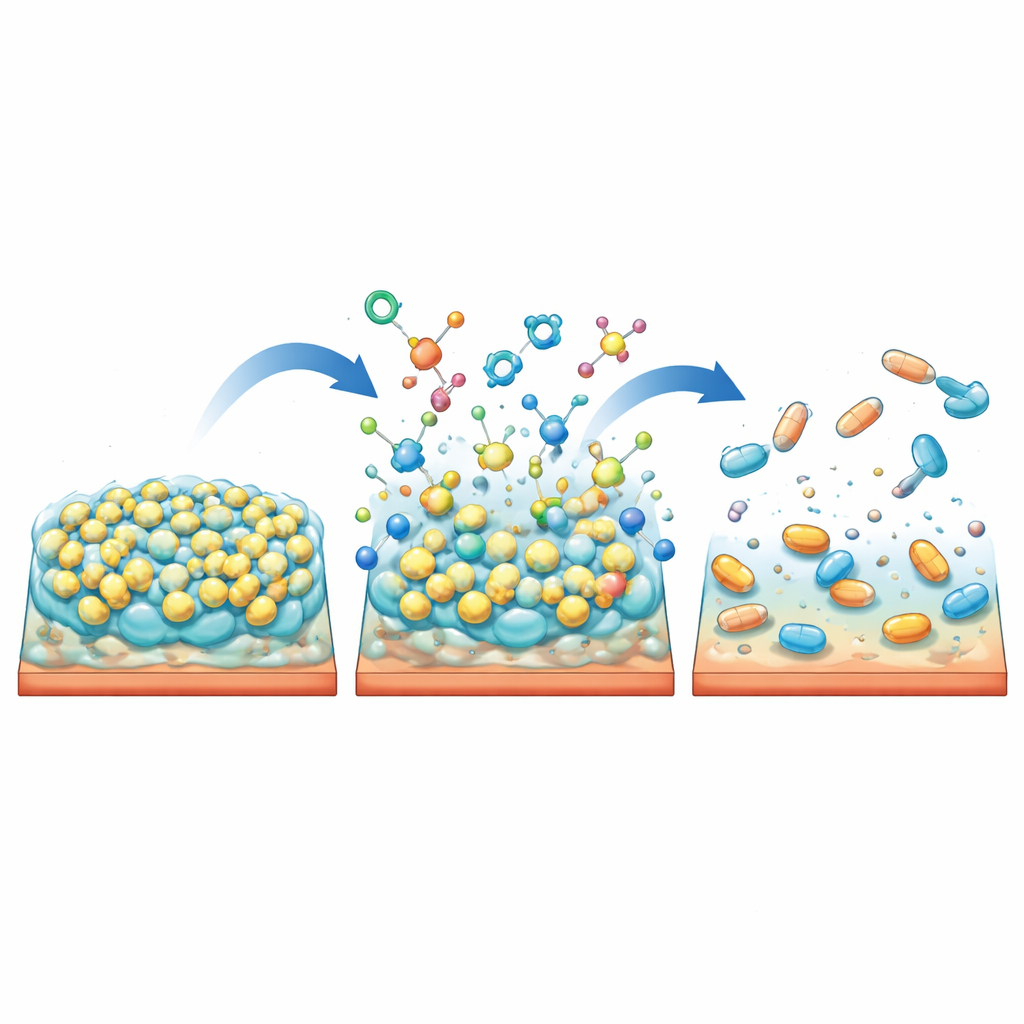
The scientists then zoomed in on three of the toughest strains to see how well the treatments handled biofilms, both while they were forming and after they were firmly established. Individual agents had some effect: for example, zinc oxide nanoparticles and HLE could partially slow down biofilm growth, and certain nanoparticles or EDTA alone could chip away at mature biofilms. But the most dramatic results came from combinations. Gold or silver nanoparticles paired with EDTA or HLE slashed the number of living cells in preformed biofilms by up to almost eight orders of magnitude. In practical terms, these blends did much more than just thin the slime layer; they nearly wiped out the protected communities clinging to the surfaces.
When Adaptation Makes Bacteria Less Dangerous
Using powerful antimicrobials raises an important concern: will bacteria adapt and become even harder to kill? To probe this, the team repeatedly exposed the most resistant strains to sublethal doses of the nanoparticles, then re‑tested how they responded to standard antibiotics. Surprisingly, instead of becoming tougher, many of the adapted bacteria became easier to treat. Their minimum inhibitory concentrations for key antibiotics dropped, in some cases flipping from resistant to clearly susceptible. Genetic tests showed that several known resistance genes, including those linked to macrolides, sulfonamides, chloramphenicol, and multidrug efflux pumps, were less active after nanoparticle adaptation. Microscopic observations and previous work suggest that the nanoparticles may disrupt cell envelopes and overall cell physiology in ways that make carrying resistance traits more costly for the bacteria.
What This Means for Safer Food
Altogether, the study shows that metallic nanoparticles combined with chelating agents such as EDTA or the HLE disinfectant can do double duty in slaughterhouses. First, they act as powerful cleaners that penetrate and destroy biofilms, greatly reducing the number of multidrug‑resistant staphylococci on working surfaces. Second, long‑term adaptation to these nanoparticles can push some bacteria to dial down or even lose their antibiotic resistance, rather than sharpening it. While real‑world implementation will require careful safety and environmental assessments, these formulations offer a promising new tool for keeping the food chain and surrounding environments freer of hard‑to‑treat bacterial “superbugs.”
Citation: Naim, W., Caballero Gómez, N., González Romero, S. et al. Antimicrobial strategies of nanoparticles and chelating agents for mitigating Staphylococcus spp. contamination on slaughterhouse surfaces. Sci Rep 16, 11804 (2026). https://doi.org/10.1038/s41598-026-41026-z
Keywords: antimicrobial resistance, nanoparticles, food safety, biofilms, slaughterhouse hygiene