Clear Sky Science · en
Migratory geese adjust wintering movements to both short-term weather and long-term climatic change
Why these winter travels matter
As winters grow milder and weather swings become more extreme, migratory birds must constantly rethink where and when they travel to survive. This study follows Taiga Bean Geese that winter in Denmark to see how they cope with both slow, decades-long climate warming and sudden cold snaps. By combining tiny GPS collars on individual birds with thousands of birdwatcher reports, the researchers reveal how these geese finely tune their winter schedules and choice of sites in response to temperature. Their behaviour offers a window into how wildlife may — or may not — keep pace with a rapidly changing climate. 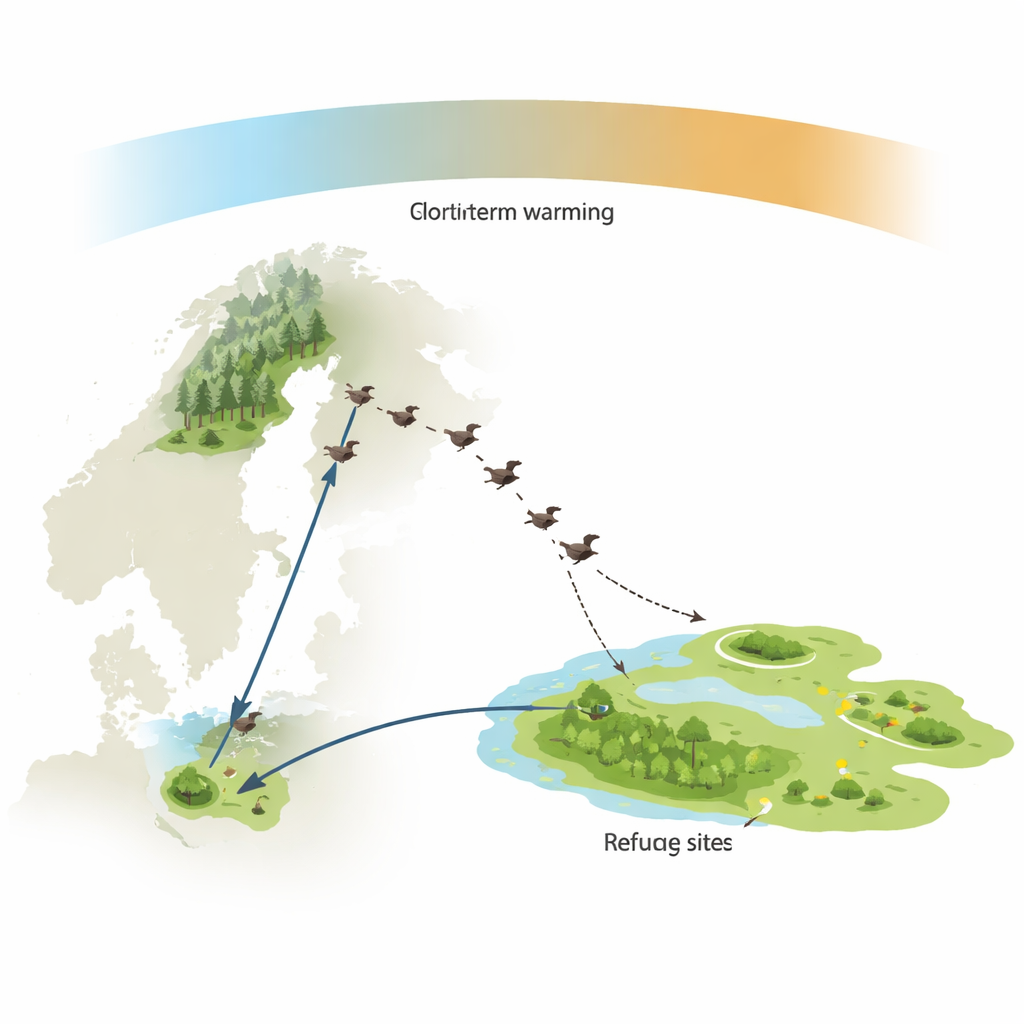
Following geese across northern Europe
The Taiga Bean Goose breeds in the far north of Europe and Russia and spends winter in more temperate areas such as Sweden, Denmark and Germany. The team focused on a subgroup of about 1,500 birds that regularly winters in northeastern Jutland, Denmark, especially at a key bog and farmland landscape called Lille Vildmose. They fitted 25 geese with solar-powered GPS collars and tracked them over multiple winters, and also drew on 19 years of systematic counts from a Danish citizen-science database. Weather records from Sweden and Denmark provided daily temperature data reaching back several decades, allowing the scientists to relate movements to both short-lived cold spells and long-term warming trends.
Timing the start and end of winter
The researchers looked first at when geese arrive in Denmark in late autumn and when they leave in late winter or early spring. They found that arrival did not simply track gradual autumn warming or cooling from year to year. Instead, geese tended to depart their last major stopover in southern Sweden and arrive in Denmark right after sharp local temperature drops, even if conditions were not yet icy. Those short-lived cold shocks seemed to act as travel triggers. By contrast, departure in spring was tightly linked to the seasonal progression of warmth at the Danish wintering grounds. In years when spring temperatures climbed quickly, geese left noticeably earlier; when spring came late, their departure was delayed.
A shorter stay as springs move forward
Looking across roughly two decades, the team found a clear long-term shift in spring behaviour. Although year-to-year temperatures were highly variable, the overall pattern in Denmark has been toward earlier spring onset over the past half-century. Taiga Bean Geese have responded by moving their spring departure forward by about two weeks. Their arrival dates, however, have not changed in a consistent way. The result is a shorter winter stay in Denmark, with many birds now leaving in early February. Some individuals take a detour to a distant Arctic island to moult their flight feathers after breeding failure, but this extra journey mainly delays their autumn arrival; it does not seem to change how they respond to temperature cues.
Shifting between home base and cold-weather havens
Within each winter, the geese also reshuffle their use of sites depending on daily weather. Most GPS locations were in Lille Vildmose, confirming it as the primary winter home. Yet when temperatures dipped toward or below freezing, birds were much more likely to leave this main site and move to “refuge” areas in central Jutland, where running rivers stay unfrozen and cropped fields provide rich food. When the cold eased, the geese moved back. These moves could happen several times in a single winter, showing that the birds react quickly and repeatedly to changing conditions. This pattern underlines how crucial it is to have a whole network of suitable sites available, not just one protected core area. 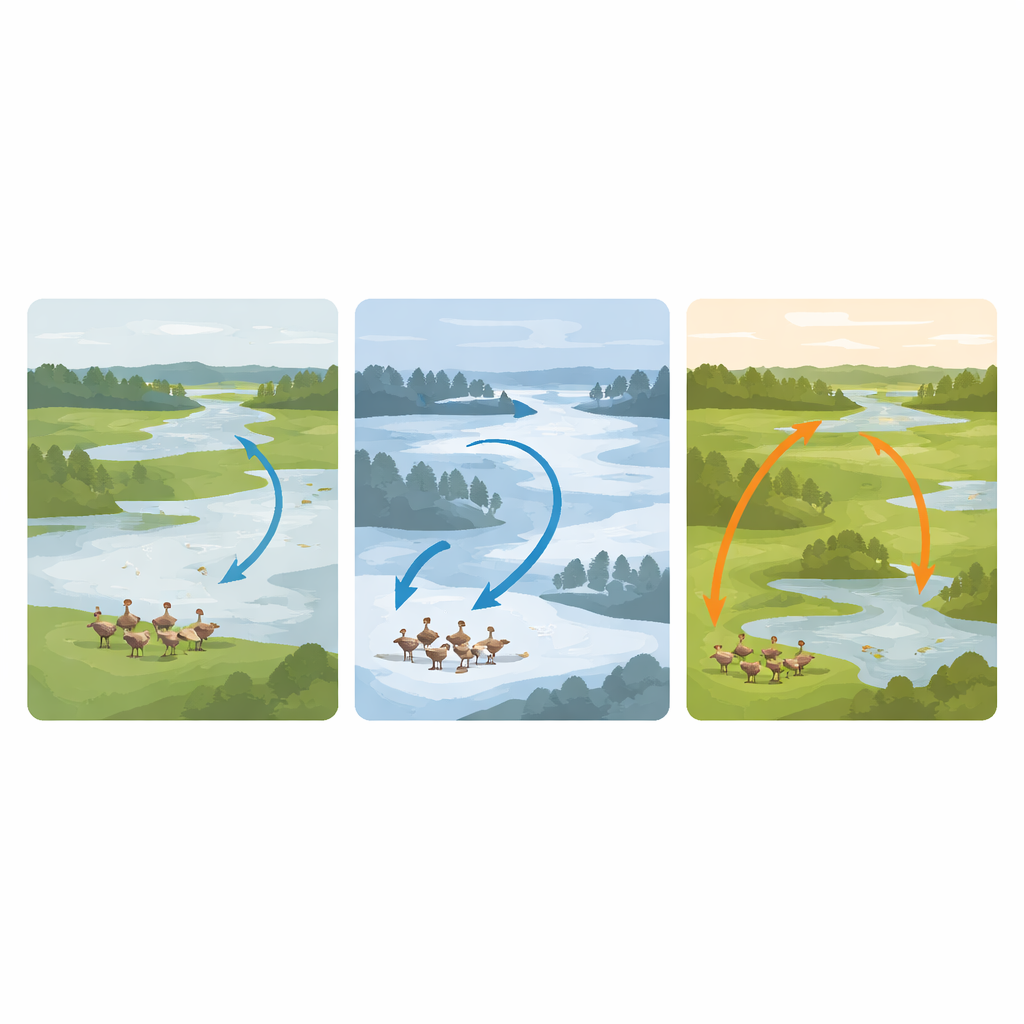
What this means for geese and for conservation
Overall, the study shows that Taiga Bean Geese are not passive victims of climate change. They use short-term weather signals to time autumn movements and fine-tune their winter locations, and they have shifted their spring schedule to keep pace with earlier springs. This flexibility suggests some capacity to adapt as the climate warms and becomes more erratic. However, their strong loyalty to a limited set of wintering and refuge sites also makes them vulnerable if those places are disturbed or lost. Protecting a connected network of winter wetlands and farmland refuges will be essential to help these geese, and other migratory birds like them, continue to adjust their journeys in an increasingly unpredictable world.
Citation: Vergin, L., Madsen, J., Fox, A.D. et al. Migratory geese adjust wintering movements to both short-term weather and long-term climatic change. Sci Rep 16, 10014 (2026). https://doi.org/10.1038/s41598-026-41003-6
Keywords: migratory birds, climate change, geese, winter habitat, animal migration