Clear Sky Science · en
Response surface and TQM-ML analysis of a PCCI engine fueled with PO and microalgae biodiesel
Cleaner power from familiar engines
Most cars, trucks, and generators still rely on diesel engines, which are efficient but notorious for smoky exhaust and climate‑warming emissions. This study explores whether we can keep the basic diesel engine, but run it on a smarter mix of renewable fuels and data‑driven tuning so it burns cleaner without a major hardware makeover. By blending pine‑derived oil with biodiesel from microalgae, and then using advanced statistics, machine learning, and quality‑control methods, the authors map out how to get more useful power with less soot and carbon monoxide—while being honest about a remaining challenge: nitrogen oxide pollution.
A new way to feed a diesel engine
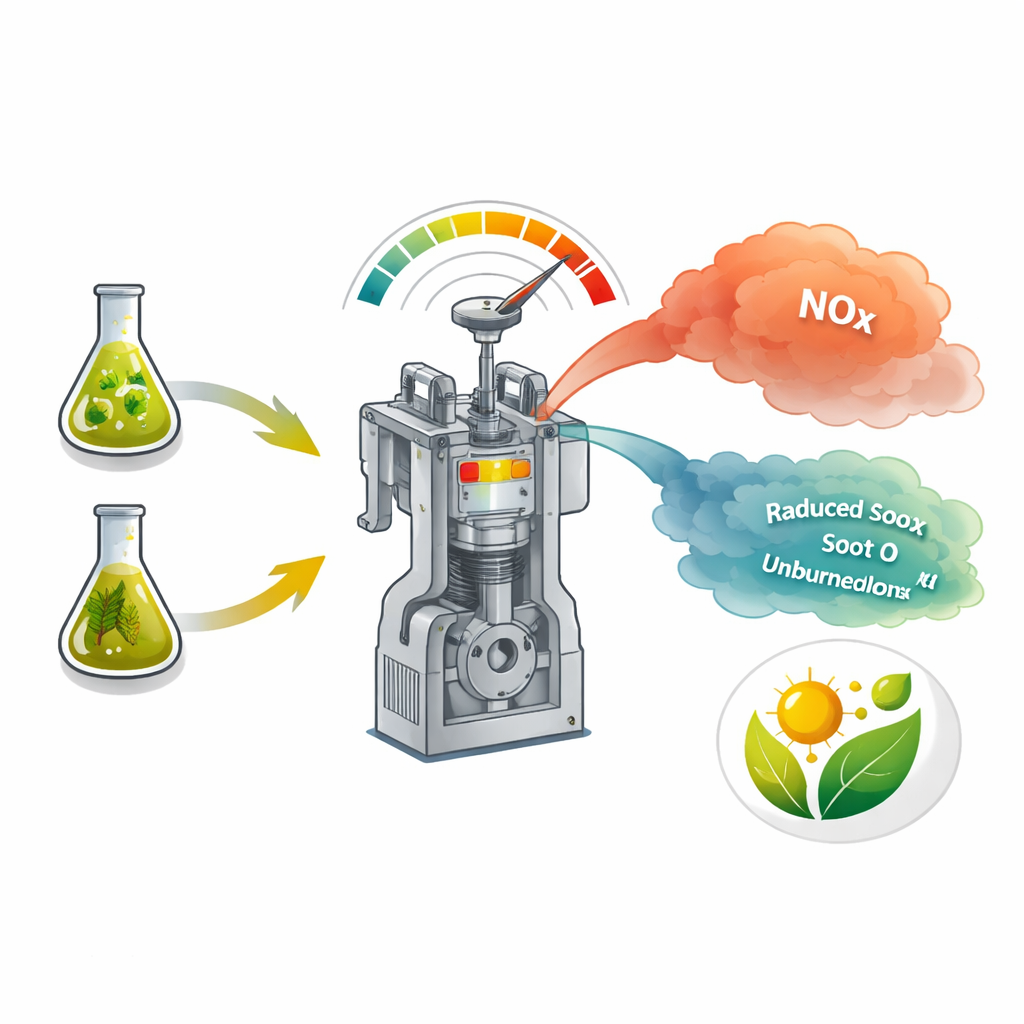
The researchers worked with a single‑cylinder diesel engine whose compression ratio—the amount the air‑fuel mixture is squeezed—can be varied. Instead of relying only on fossil diesel, they used a dual‑fuel setup. A small "pilot" squirt of fuel (either pure diesel or diesel blended with 10 or 20 percent microalgae biodiesel) was injected directly into the cylinder to trigger ignition. At the same time, pine oil was sprayed into the intake so it could mix thoroughly with the incoming air before compression. Pine oil is oxygen‑rich, thin, and very volatile, which helps it vaporize and mix; microalgae biodiesel is more reactive and helps reliable ignition. By adjusting compression ratio, engine load, and how much pine oil replaced conventional fuel (10, 20, or 30 percent), the team systematically explored how this combination behaved.
Measuring performance and exhaust
Across dozens of carefully repeated tests, the team measured how efficiently the engine turned fuel into power and how much pollution it produced. They focused on brake thermal efficiency (how much of the fuel’s energy reaches the crankshaft), fuel consumption per unit power, and key exhaust components: carbon monoxide, unburned hydrocarbons, nitrogen oxides, and visible smoke. They found that efficiency generally rose as engine load and compression ratio increased, peaking around 60–80 percent of full load. Adding pine oil up to about 30 percent, especially together with a 10 percent microalgae biodiesel blend as pilot fuel, slightly reduced fuel consumption at useful loads and cut smoke and unburned hydrocarbons dramatically. The price of these gains was a rise in nitrogen oxides, which tend to form at higher temperatures when there is plenty of oxygen.
Letting data guide the sweet spot
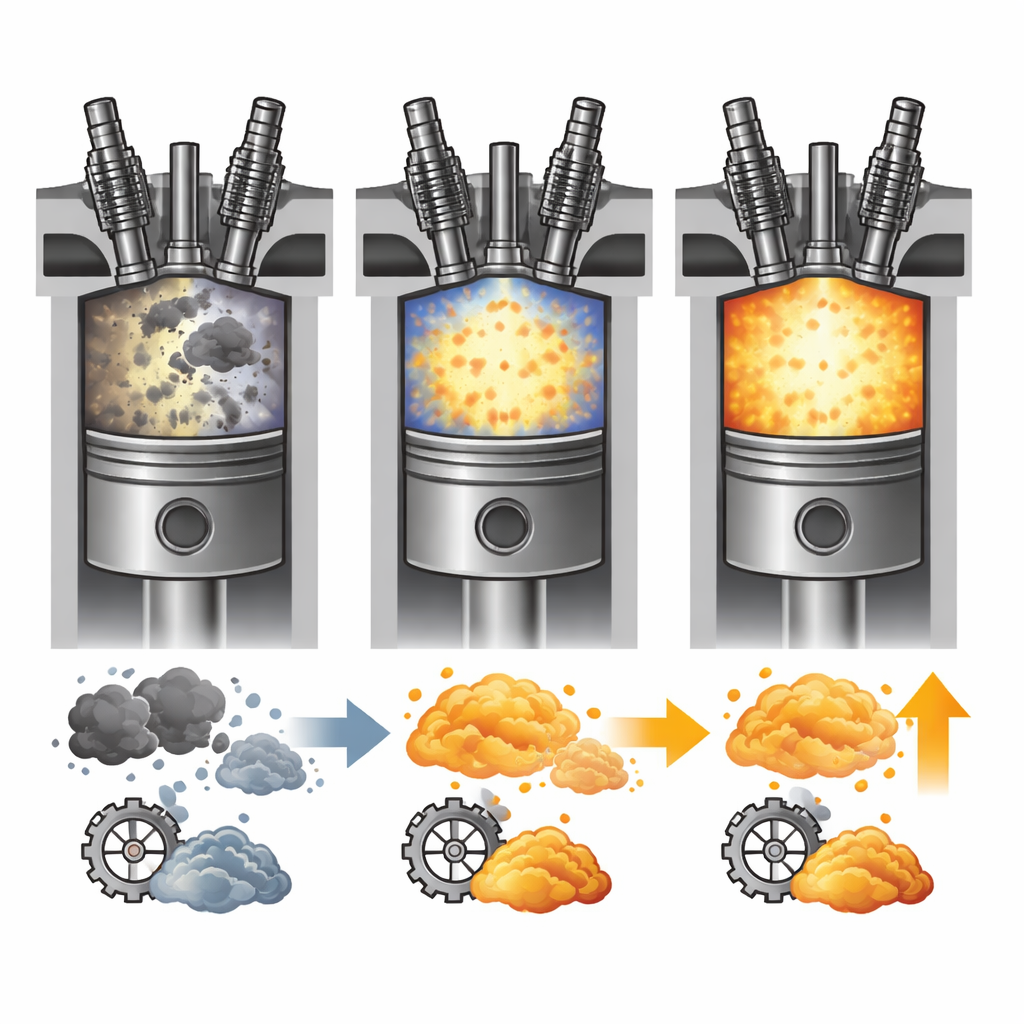
Because compression ratio, load, and fuel mix all interact in complex ways, the authors turned to statistical and machine‑learning tools to find the "sweet spot" instead of changing one setting at a time. Using response surface methodology—a structured way to fit curved surfaces through experimental data—they built equations linking engine settings to performance and emissions and then asked the software to maximize efficiency while minimizing pollutants. In parallel, they trained nine different machine‑learning models on the same data. Gradient boosting, a modern ensemble technique, proved most accurate, predicting most outcomes within a few percent of measured values. To avoid "black box" decisions, they used a method called SHAP to show which factors mattered most: engine load and compression ratio dominated efficiency and nitrogen oxides, while the share of pine oil strongly influenced smoke, carbon monoxide, and unburned fuel.
Checking reliability and long‑term impact
Beyond raw numbers, the study applied industrial quality‑management ideas—commonly used in factories—to the engine lab. Repeated tests, formal uncertainty estimates, and "process capability" checks confirmed that measurements were stable and that the optimized operating region was not a fluke. Finally, the authors compared different fuel strategies with a decision matrix that weighed efficiency, emissions, renewability, carbon footprint, practicality, and safety. The combination of a 10 percent microalgae biodiesel pilot fuel, 30 percent pine oil, and a high compression ratio consistently scored highest, thanks to better efficiency, much lower smoke and carbon monoxide, and a larger renewable share, even after accounting for its higher nitrogen oxide output and slightly more demanding handling.
What this means for future engines
In plain terms, the work shows that an ordinary diesel engine, fed with a thoughtfully chosen mixture of pine oil and microalgae biodiesel and tuned with the help of modern data tools, can deliver more useful work while emitting less visible soot and some other harmful gases. The approach does not yet solve the nitrogen oxide problem, but it shifts the trade‑off in a cleaner direction and offers a practical path to use more renewable fuels in existing engines. With further tweaks—such as exhaust gas recirculation or finer control of injection timing—this kind of dual‑fuel, data‑optimized setup could help bridge the gap between today’s fossil‑based engines and a lower‑carbon future.
Citation: Al Awadh, M., Michael, G.K.O. Response surface and TQM-ML analysis of a PCCI engine fueled with PO and microalgae biodiesel. Sci Rep 16, 10256 (2026). https://doi.org/10.1038/s41598-026-40929-1
Keywords: diesel engines, biofuels, pine oil, microalgae biodiesel, machine learning in combustion